- The attack raises questions over cockpit security, crew screening and the fragile recovery of regional air travel
- Investigators face complex jurisdictional puzzle as Dubai, Saudi Arabia, Israel and Boeing examine what happened
LONDON: On Sept. 28, two days before the terrifying incident that unfolded on board flydubai Flight 1073 on Wednesday, the airline was setting up its stand at the inaugural Syria Travel Show at the Dama Rose Hotel in Damascus.
For Syria’s Ministry of Tourism, the event was a central part of efforts dedicated to “revitalizing and promoting Syria’s travel, tourism, culture and hospitality sectors.”
For the government-owned Dubai airline, participation in the show was part of a broader and much-needed effort to rebuild the emirate’s valuable business-travel and tourism markets, which have been badly hit by the war with Iran.
In June 2025, flydubai became the first UAE carrier to resume direct flights to post-Assad Syria. As the airline’s chief commercial officer said before the opening of the show on Monday, Syria “represents a key strategic market for flydubai.”
But on Wednesday, as the Syria Travel Show was winding up, Dubai’s efforts to regenerate its all-important travel sector suffered another setback when the nightmare on Flight 1073 made headlines around the world.
It remains unclear what unfolded on the flightdeck of the twin-engined Boeing 737 MAX 8. Reports suggest that the aircraft’s co-pilot attacked the pilot and tried to take control of the aircraft, perhaps with the intention of crashing it.
Investigations to determine exactly what happened are underway in Saudi Arabia, Israel and the UAE.
On Thursday, a statement from the office of UAE Attorney-General Hamad Saif Al-Shamsi said that measures were being taken “to collect information and evidence, to determine the truth of the incident, its circumstances, details and motives, and to verify the extent of its connection to any terrorist activity or purpose, or the existence of prior planning or direction for it.”
A tussle over jurisdiction seems likely. Also on Thursday, Israel’s National Security Minister Itamar Ben-Gvir said that he was calling for the suspect co-pilot’s extradition from the UAE to Israel.
Among concerns about potential security lapses in Dubai, Miri Regev, Israel’s transport minister, has called for all flydubai flights to Israel to be halted while investigations continue.
Some reports have suggested that the accused co-pilot is an Omani. According to a report yesterday in The Jerusalem Post, flydubai’s agreement to operate in Israel “explicitly states that all pilots must be from countries that have normalized relations with Israel, which does not include Oman.”
But although Israel was the destination of the flight, it has no automatic right to be involved in the investigation.
Under international aviation law, any investigation into an accident or incident involving an aircraft in flight would be led by the “State of Occurrence” — the country in which it took place — as set out in Annex 13 to the Convention on International Civil Aviation.
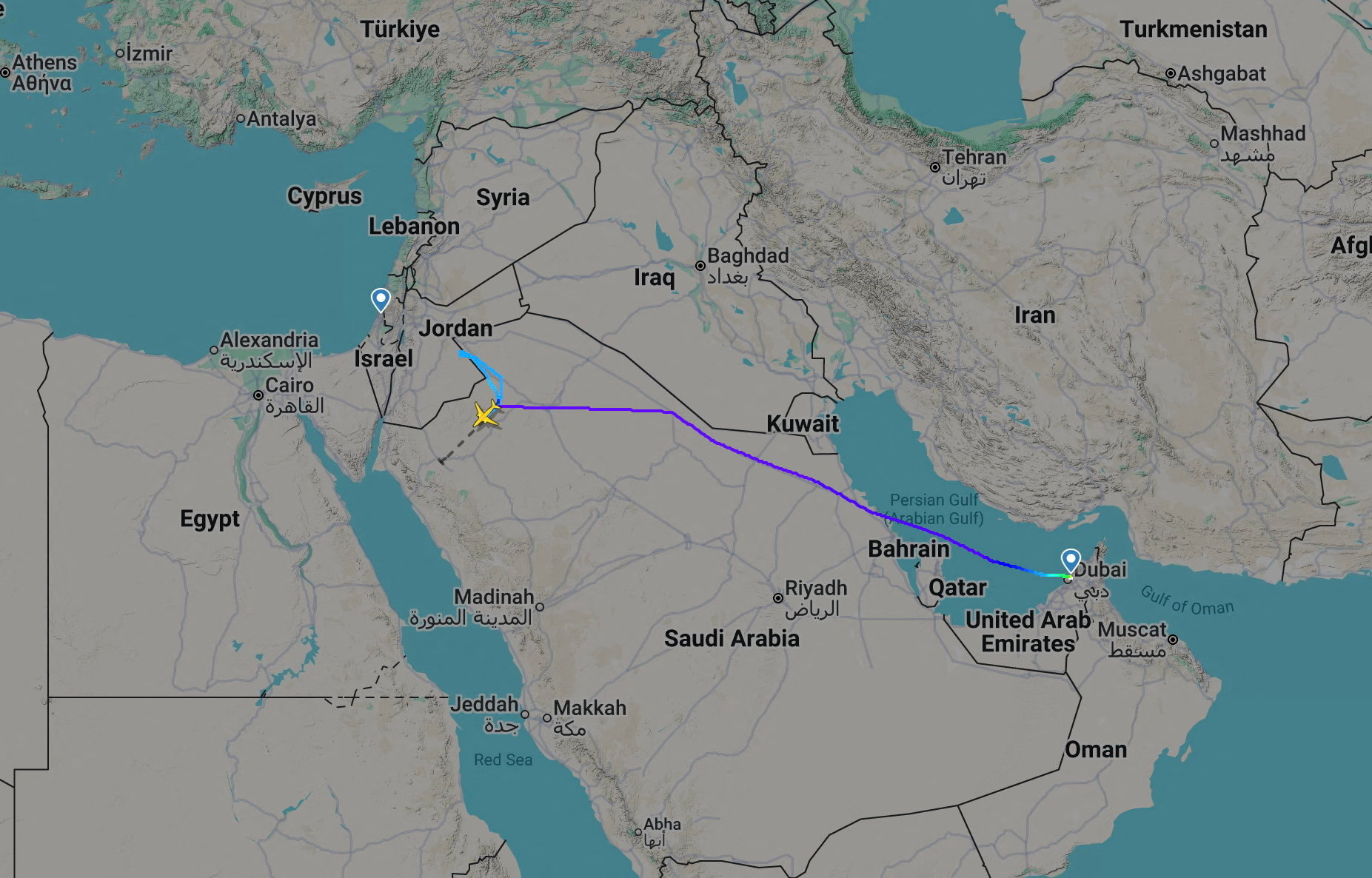
According to tracking data obtained by FlightRadar24, the incident began and remained almost entirely over Saudi Arabia, other than for a few minutes when the aircraft briefly veered into Jordanian airspace.
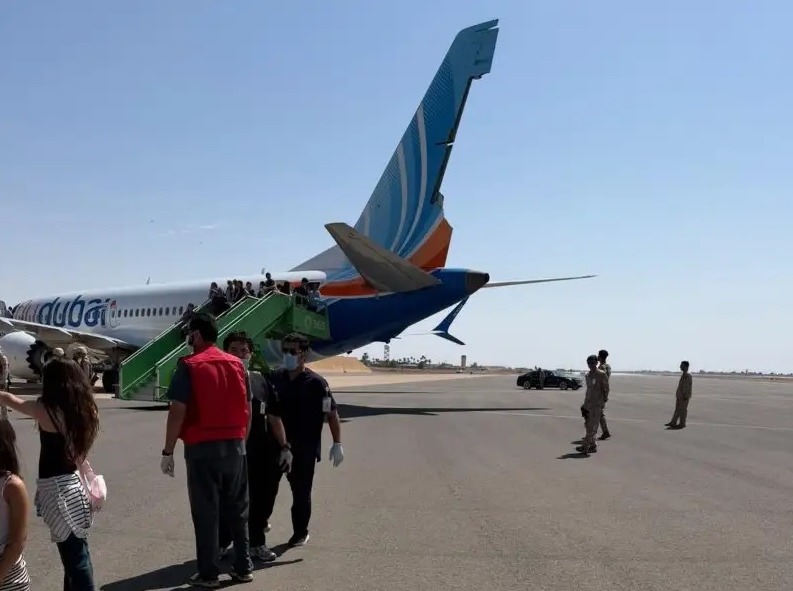
The ordeal ended when two flydubai relief pilots, traveling on board Flight 1073 as passengers, took control of the aircraft and landed it at Prince Sultan bin Abdulaziz International Airport in Tabuk, in northwestern Saudi Arabia.

Other interested parties can appoint representatives to participate in the investigation — the UAE as the state where the aircraft was registered and operated, and the US as the country where the aircraft was designed and manufactured — but unless it chooses to delegate the role to another state, overall jurisdiction clearly belongs to Saudi Arabia.
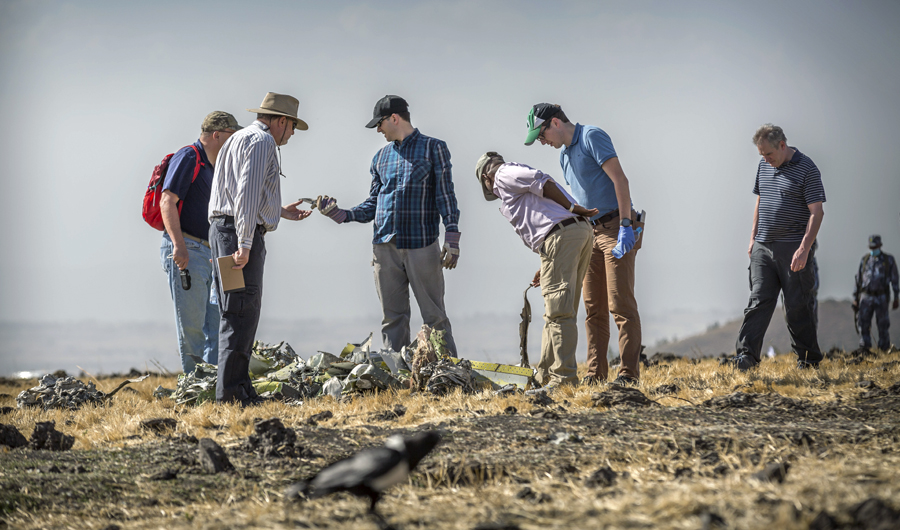
Boeing, which manufactured the aircraft, is certain to be involved in any investigation. Photographs taken while the aircraft was on the ground at Tabuk showed its rudder had been seriously damaged.
Boeing — and its many customer airlines around the world — will want to know why the four-year-old 737 sustained such serious and unusual damage during or after the high-speed descent that took place during the incident.
A hunt for the missing rudder section, which must have fallen to Earth somewhere in the mountainous terrain east of Tabuk, is likely to be underway.
During the investigation, the service record of this particular aircraft, registration A6-FKR, will come under scrutiny, as will the safety record of all Boeing 737 MAX 8s, which first entered service in 2016.
According to the accident database maintained by the US-based Flight Safety Foundation, since 2018 this type of aircraft has been involved in hundreds of incidents and accidents. Most have been minor, but two resulted in mass fatalities.
It was a Boeing 737 MAX 8 being operated by Lion Air that crashed into the sea shortly after takeoff from Jakarta airport in Indonesia on Oct. 29, 2018, killing all 189 people on board.
On March 10, 2019, a year-old Ethiopian Airlines aircraft crashed shortly after taking off from Addis Ababa-Bole airport. All 157 passengers and crew were killed.
In both cases the aircraft’s nose had been repeatedly forced down by a flight-control system called the Manoeuvring Characteristics Augmentation System (MCAS) which, triggered by a faulty sensor, had caused the pilots to lose control. Boeing responded by redesigning the system and improving the training for pilots using the system.
Whichever authorities investigate the incident, thanks to the survival of all the passengers and crew, the radar records of air traffic control centers and the existence of data from onboard systems, including the “black box” cockpit voice and flight data recorders, it will be relatively easy to establish a highly accurate timeline of events.
Analysis of all this data should reveal exactly what happened in the cockpit, including who was controlling the aircraft when the incident began, what verbal exchanges took place between the flight crew, whether the sudden descent was intentional or a consequence of a struggle or a malfunction, and how the door to the cockpit was opened.
Away from the aircraft and its systems, however, it will be the intense investigations now underway into every aspect of the lives of the two pilots that will ultimately determine the full truth of what happened on Flight 1073.
Not only at flydubai but also throughout the region, urgent reviews will also be undertaken of airline recruitment procedures, including background security checks, and security screening of airline staff at airports.
Yesterday, Israel announced it was going to introduce its own security checks on all pilots flying into the country.
“Every pilot that is going to be flying into Israel, we are going to know the pilots’ identities, know who they are, and do some type of security check,” a spokesman for the Israeli prime minister’s office told Reuters.
He said that Netanyahu had instructed authorities to “ramp up security” on all flights to Israel, whether operated by Israeli or non-Israeli carriers.
Aircrew are not exempt from aviation security rules, set by the International Civil Aviation Organization, which restrict items that can be brought on board aircraft. However, the responsibility for applying these rules and how aircrew and their bags are screened rests with the civil aviation authorities in each country, and the manner in which they are applied can vary.
According to Oded Ailam, a former head of counterterrorism at Mossad, the Israeli external intelligence agency, one question is currently at the heart of what he said was a joint investigation being carried out by Omani and Israeli security services: “How is it possible for a guy of this nationality to fly the aircraft?”
“One of the theories is that he had two passports, but that has to be answered in order to eliminate further incidents,” he told The Washington Post yesterday.
But whether the incident is ultimately determined to have been terrorism, or an isolated act carried out by a disturbed individual, the life-or-death struggle on board Flight 1073 will have done nothing to restore confidence in Dubai’s reputation as a safe destination for work and play.
The immediate effects were visible yesterday on the flight-status pages on flydubai’s website. On a normal Thursday, between 5.15 a.m. and 7.15 p.m. the airline operates 10 scheduled flights from Dubai to Tel Aviv’s Ben Gurion Airport in Israel.
Yesterday, and for the foreseeable future, the status of all ten daily flights, including the 6.20 a.m. Flight 1073, was “Cancelled.”
On Thursday, El Al, Israel’s national airline, announced that it was planning to operate a “rescue flight” for Israelis left stranded in the UAE by the flydubai cancelations.
It is a measure of the level of concern that has been generated by Wednesday’s incident that agents from Shin Bet, Israel’s security agency, are reported to have flown to Dubai to oversee security preparations for this flight.
It is almost six years since flydubai’s first scheduled commercial flight to Israel landed at Ben Gurion International airport, on Nov. 26, 2020. The new service was inaugurated by the government-owned airline just over two months after the signing of the Abraham Accords, and was widely seen as a high-profile implementation of the normalization of relations between the UAE and Israel.
Etihad, Abu Dhabi’s state-owned airline, followed suit, introducing scheduled flights to and from Tel Aviv on March 28, 2021.
Launching the service, Mohammad Al-Bulooki, Etihad’s chief operating officer, celebrated the “historic moment,” which would “not only promote direct inbound tourism to Abu Dhabi, but will also give Emiratis and UAE residents the opportunity to discover Israel’s historical sites, beaches, restaurants and nightlife.”
In June this year, even as most international airlines had yet to fully restore flights to Israel, Etihad increased its service to 42 flights a week — six a day. According to Etihad’s website, as of yesterday all six scheduled daily flights appeared to be operating as usual.
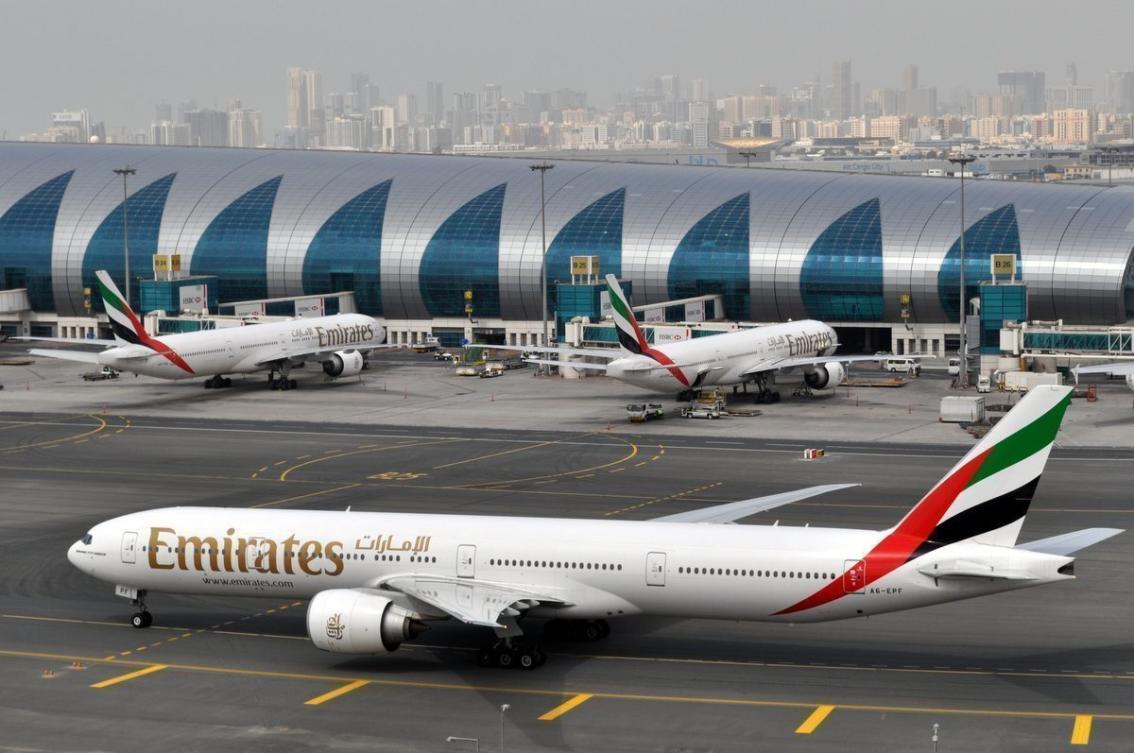
Emirates, the Dubai flag carrier and flydubai’s sister airline, launched daily flights to Tel Aviv in December 2021, but suspended operations in November 2023 in the wake of the Oct. 7 Hamas attack on Israel.
Until this week, partially restored Emirates flights were operated by flydubai aircraft under a codeshare agreement. On Wednesday, however, Emirates announced that these flights “are suspended with immediate effect, until further notice.”
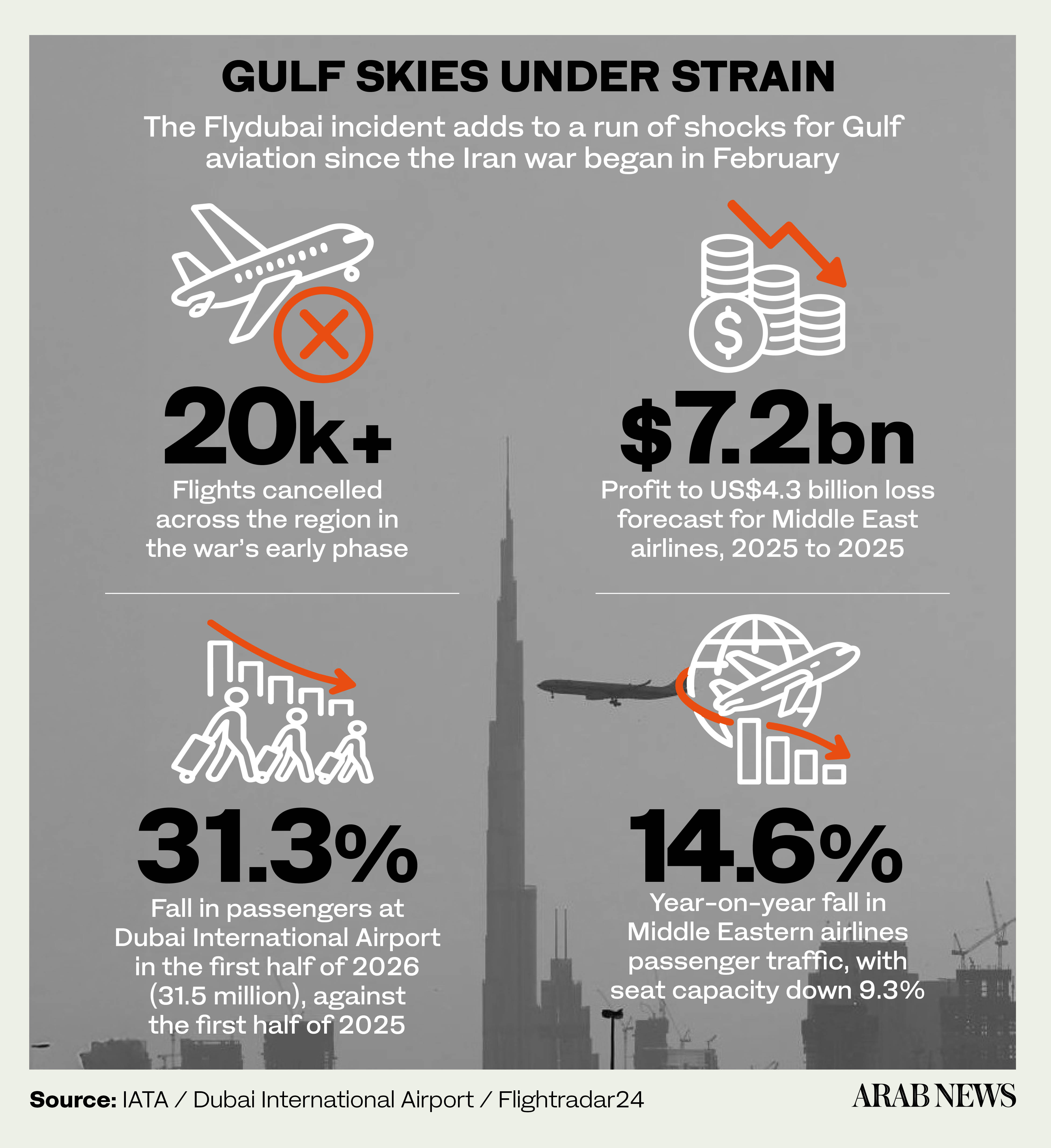
This week’s incident is a further blow to a regional air industry still struggling to recover from the impact of the war on Iran, which in the wake of the joint US-Israel attack on Feb. 28 threw air travel and tourism in the Middle East into chaos.
By coincidence, IATA, the trade association for the global airline industry, released its latest monthly report on the state of passenger demand on Wednesday, the same day that the drama of Flight 1073 was unfolding.
Marie Owens Thomsen, IATA’s chief economist, reported that in August global demand for air transport had contracted by 0.8 percent compared with the same month in 2025.
There was a simple reason for this, which illustrated the global importance of the regional market: “The recovery trajectory for carriers in the Middle East was interrupted.”
The region’s carriers reported that demand was down by 14.6 percent year-on-year, reversing what had been an improving trend.
The coming months, Thomsen added, “will reveal whether travelers, whose purchasing power has been reduced by higher energy prices, are adjusting their travel budgets, and might be discouraged from traveling due to the prevailing geopolitical instability.”
The drama of Flight 1073 will have done nothing to ease such concerns.