


Recent geopolitical and military developments across the Middle East have once again demonstrated how rapidly the regional security environment can shift and how profoundly the nature of warfare is evolving.
For Saudi Arabia and its fellow Gulf Cooperation Council states, the lesson is clear: Maintaining security and stability requires not only sustained investment in defense, but also a continuous reassessment of military readiness, force structures and armament priorities.
Readiness must increasingly be measured in terms of cost-effectiveness, operational efficiency and sustainability, while ensuring that military capabilities remain agile and adaptable to changing circumstances and emerging threats. Equally important is the ability of Saudi Arabia and its GCC partners to respond, individually and collectively, to an increasingly complex range of conventional and asymmetric challenges.
This brings to mind an apt analogy offered by Arab News Editor-in-Chief Faisal J. Abbas in his March 27 Semafor article, “What a month of war has taught us in the Gulf,” in which he described the region as a “gated garden surrounded by a wild jungle.” The analogy underscored the importance of protecting the prosperity and stability achieved across the Gulf through sustained investment in defense, while highlighting the changing economics of modern warfare. Subsequent developments across the region have only reinforced this argument.
The proliferation of low-cost drones, missiles and other asymmetric threats has brought the cost-effectiveness of defense systems into sharper focus. While expensive interceptors may be operationally necessary in certain circumstances, deploying them against threats costing a fraction of their price is neither economically efficient nor sustainable over the long term.
For Saudi Arabia and its GCC partners, this changing equation calls for a reassessment of defense priorities, with greater emphasis on cost-effective, scalable and adaptable capabilities that complement, rather than replace, the advanced conventional systems essential to deterrence and national defense.
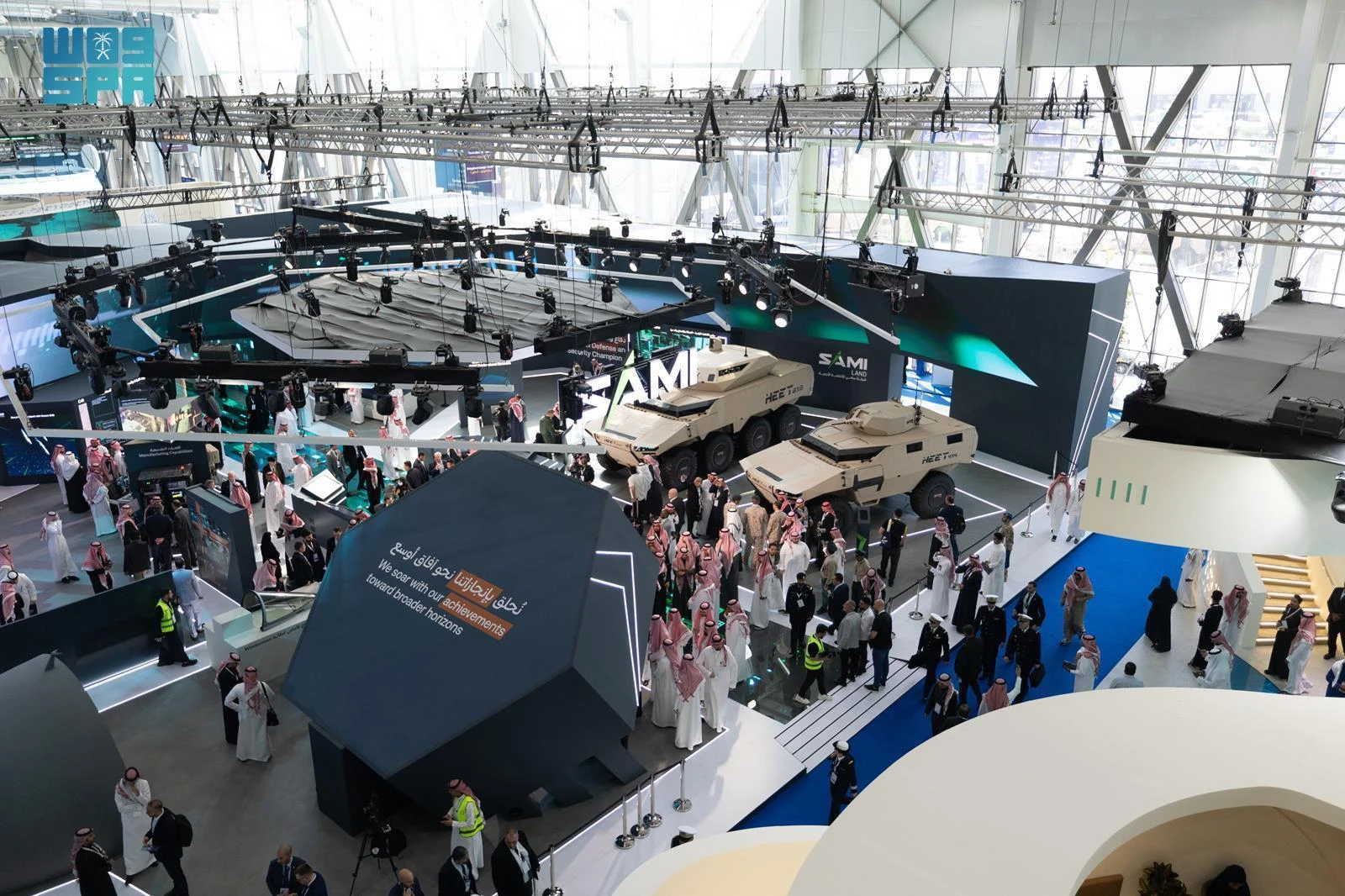
This reassessment is particularly timely following the Military Industries Forum held in Riyadh on Oct. 25. Organized by the General Authority for Military Industries, the forum highlighted the Kingdom’s progress in developing a more capable, sustainable and increasingly localized defense industrial base. The localization of Saudi military spending reached 27.3 percent by the end of 2025, up from just 4 percent in 2018, as the Kingdom advances toward its Vision 2030 target of localizing more than 50 percent of military spending.
However, localization should not be measured solely by the proportion of military expenditure retained within the national economy. It also offers an opportunity to reconsider which capabilities Saudi Arabia should develop and prioritize. As acting GAMI Gov. Bandar Alkhorayef emphasized at the forum, geopolitical tensions, disruptions to global supply chains and rapid advances in artificial intelligence, robotics and autonomous systems are reshaping the global defense industry.
These developments strengthen the case for directing localization efforts toward technologies that enhance readiness while improving cost-effectiveness, operational flexibility and long-term sustainability.
For Saudi Arabia, this could mean placing greater emphasis on developing indigenous unmanned and autonomous systems, robotics, AI, electronic warfare and counter-drone technologies, alongside the advanced conventional platforms that remain essential to national defense.
Such an approach would make localization not merely an economic objective, but a strategic instrument for building a defense architecture better equipped to respond to the changing nature and economics of modern warfare.
Central to this effort is increased investment in research and development, alongside an integrated defense innovation ecosystem connecting innovators, manufacturers and end-users. Such integration is essential to ensure that innovation addresses actual operational requirements, progresses efficiently from concept and testing to production, and is continually refined through feedback from those deploying the technologies.
Universities, research centers, emerging technology companies and the private sector should also be integral to this ecosystem, helping translate Saudi innovation into deployable capabilities.
The benefits of such an ecosystem extend well beyond localization. Developing domestic expertise in design, engineering, manufacturing, maintenance and technological development can reduce exposure to global supply-chain disruptions and dependence on external suppliers. This is particularly important during periods of geopolitical tension, when access to critical components, spare parts and technical support can become constrained.
A robust domestic defense industry therefore contributes not only to economic diversification, but also to operational readiness, supply-chain resilience and greater strategic autonomy.
For Saudi Arabia, the ultimate measure of localization should not simply be how much military equipment is produced domestically, but how effectively the Kingdom can develop, manufacture, sustain and continuously improve the capabilities it requires.
Ultimately, protecting the Gulf “garden” in an increasingly unpredictable geopolitical environment demands more than higher walls or more expensive weapons. As warfare evolves, military doctrine must evolve with it, ensuring that emerging capabilities, including drones, robotics, autonomous systems and AI, are effectively incorporated into operational concepts, training and force structures.
For Saudi Arabia and its GCC partners, the priority must therefore extend beyond acquiring and localizing advanced technologies to developing the skills, doctrine and institutional capacity required to deploy and sustain them effectively. The future of Gulf security will be shaped not by the size of arsenals alone, but by the ability to integrate capabilities, adapt swiftly to emerging threats and maintain readiness at an economically sustainable cost.
Saudi Arabia is well positioned to lead this transformation and advance a smarter, more integrated and increasingly self-reliant GCC defense architecture.
Talat Zaki Hafiz is an economist and financial analyst.
X:@TalatHafiz


