- As US sanctions squeeze Tehran’s oil exports, China’s independent refineries are turning to discounted Iraqi crude
- Shift could deepen Beijing’s economic ties with Baghdad while depriving Iran of a crucial source of revenue
LONDON: In the cat-and-mouse game of US naval blockades and oil sanctions, small, fleet-footed independent refineries in China may be gifting Washington the economic leverage over Tehran that it has been struggling to achieve.
It is not that China’s so-called teapot refineries are taking sides. Rather, it is pragmatic economic self-interest that is increasingly pushing the Chinese to replace sanctioned Iranian crude oil with supplies from Iraq and Qatar.
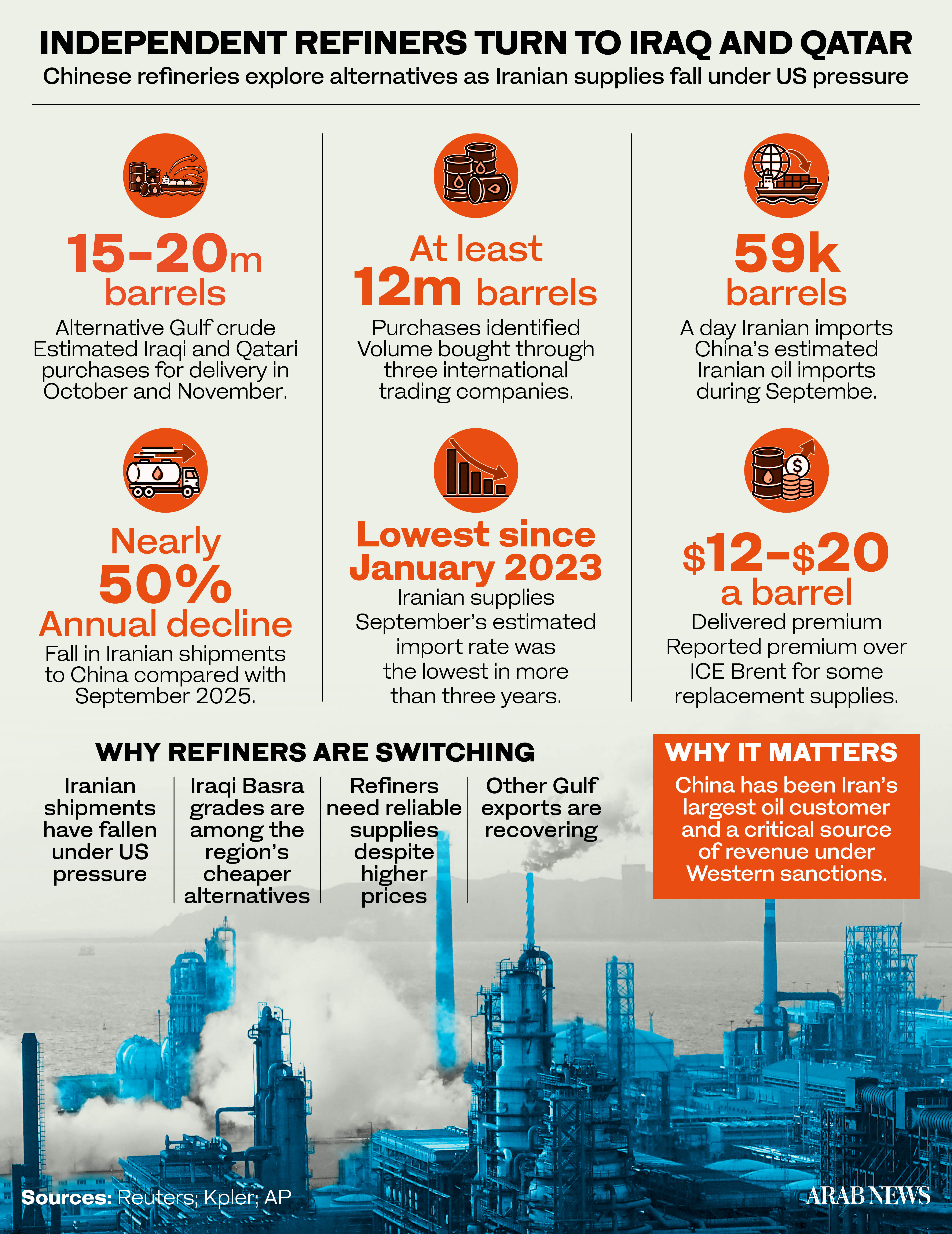
Citing three major oil-trading houses, Reuters on Tuesday reported that the Chinese refineries had closed deals for October and November for up to 20 million barrels of oil.
The deals are good news for Iraq, in particular, which has been struggling to export its oil, and bad news for Iran, which is suffering under the US blockade.
“Iraq has a lot of oil on hand that they need to get rid of to keep production going in the country,” Yesar Al-Maleki, Gulf analyst at the Middle East Economic Survey and a non-resident senior fellow at the Atlantic Council, told Arab News.
“Because of the restrictions (on Iranian crude) the independent Chinese refineries need to replenish what they have in storage.”
For several years, roughly 90 percent of Iranian oil exports have gone to China — about 1.4 million barrels a day in 2025.
By September, the US blockade of Iranian ports and shipping had slowed the flow to about a third of that, and since then, the tap has all but been turned off.
The first US blockade of Iranian ships and ports was imposed in April 2025. It lasted two months, during which time US Central Command said its forces “redirected more than 140 compliant vessels (and) disabled nine non-compliant ships.”
That blockade was lifted in June, following the signing of a memorandum of understanding between Tehran and Washington, in which Iran also agreed to allow shipping through the Strait of Hormuz to return to pre-war levels.
It did not last long. Following an escalation in military exchanges, the US returned to blockading Iran in mid-July, a development that saw oil prices jump more than 9 percent.
This time, the blockade was even more extensive, covering Iran’s entire coastline and all its ports and oil terminals, and was “much harsher than the first blockade in terms of implementation,” said Al-Maleki.
Evidence from ship tracking sources suggests that no tanker carrying Iranian crude oil has managed to get through the blockade since July.
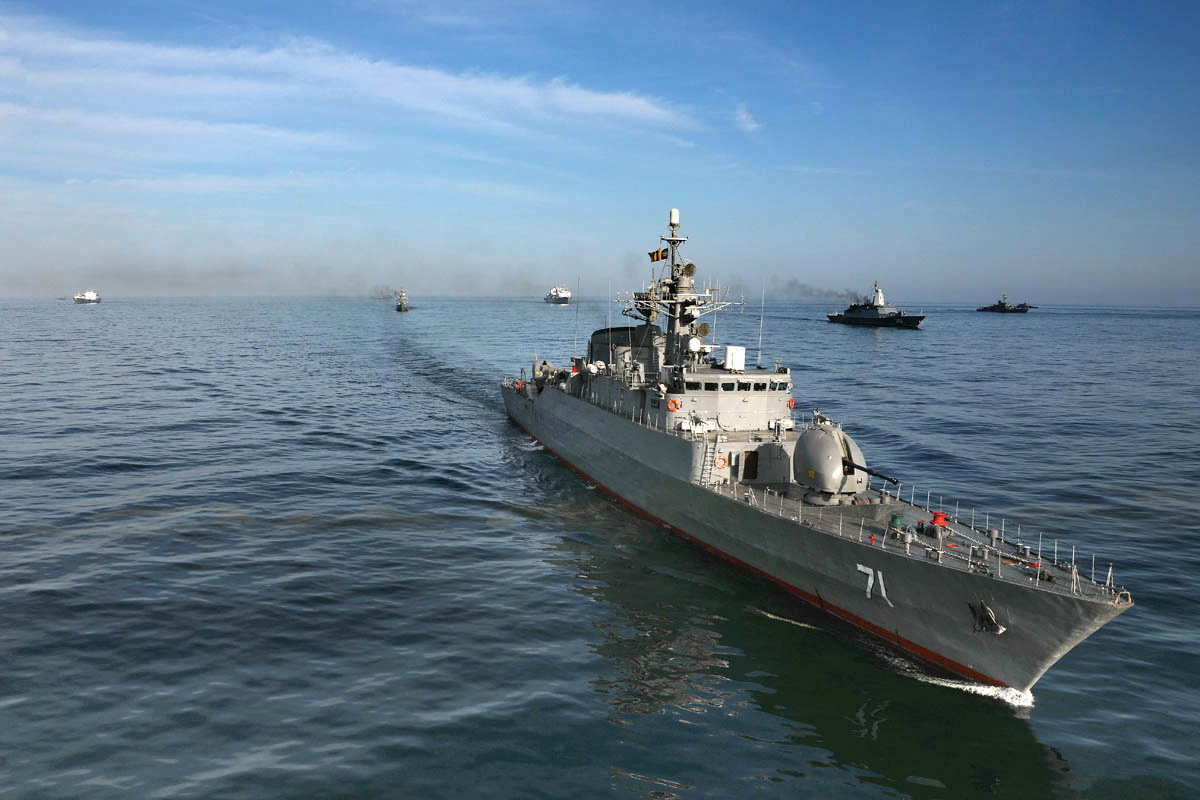
According to CENTCOM, as of Monday as many as 270 ships have been “redirected” by the US Navy, which has also destroyed about 24 vessels.
On Sept. 8 alone, US forces destroyed five Iranian crude carriers after first ordering their crews to abandon ship. CENTCOM released footage of the attacks that destroyed the oil tankers Kaviz, Charminar, Horizon 1 and Riesco in the Gulf of Oman, and the Derya near Kharg Island.
It is not just outbound Iranian vessels that are at risk.
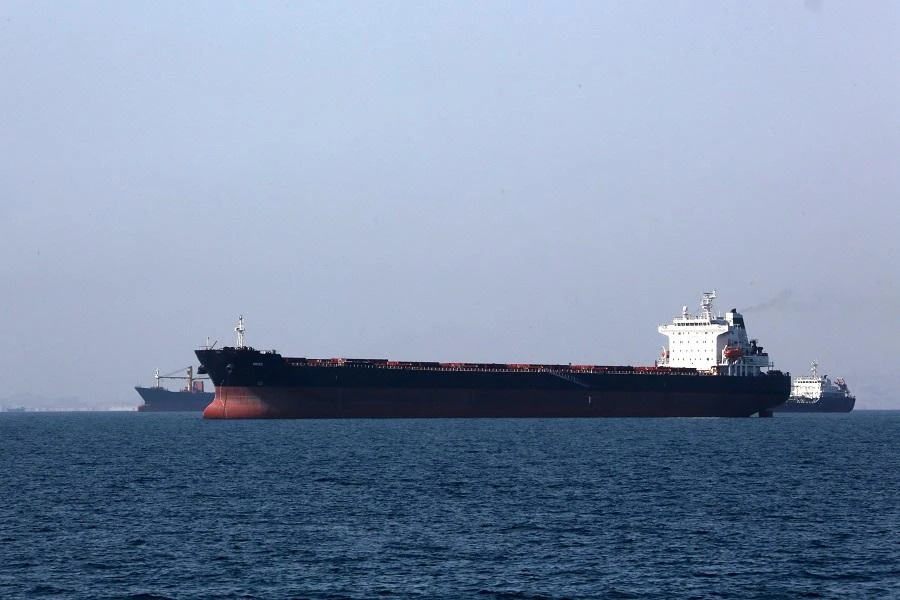
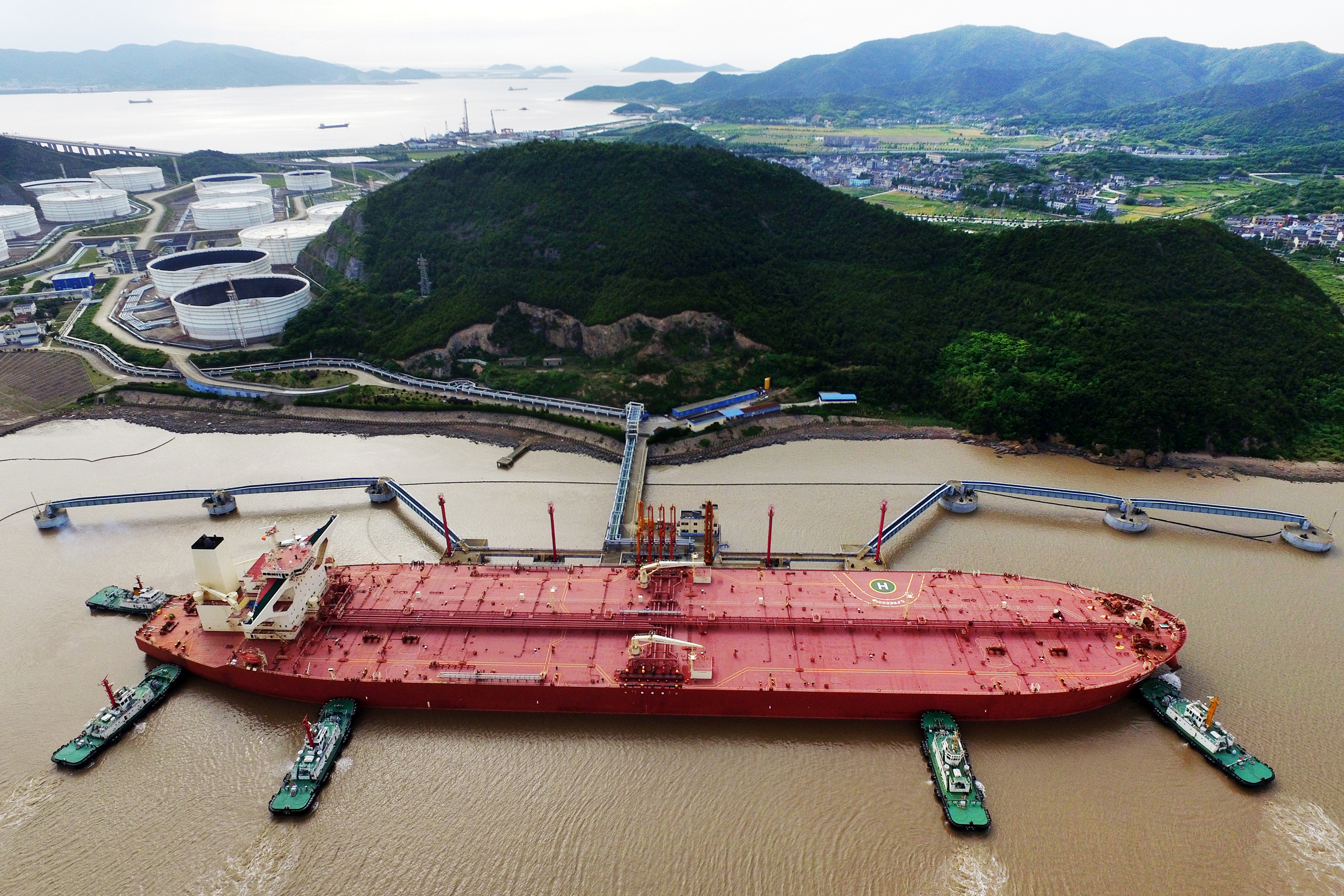
Iranian VLCCs (Very Large Crude Carriers), loaded with oil bound for customers in China, have been generally offloaded to middlemen, usually in the Strait of Malacca or in an anchorage area outside Malaysian and Indonesian territorial waters, known as the Eastern Outer Port Limits, used for clandestine ship-to-ship transfers.
The VLCCs return empty to Iran, but now a large number of “in ballast” tankers are stuck on the wrong side of the blockade, eradicating even the possibility of them loading and attempting to run the gauntlet of US forces.
In addition to Iran, China gets its oil from many sources, including Iraq — before the current war, China was already Iraq’s largest customer, buying about 1.2 million barrels a day.
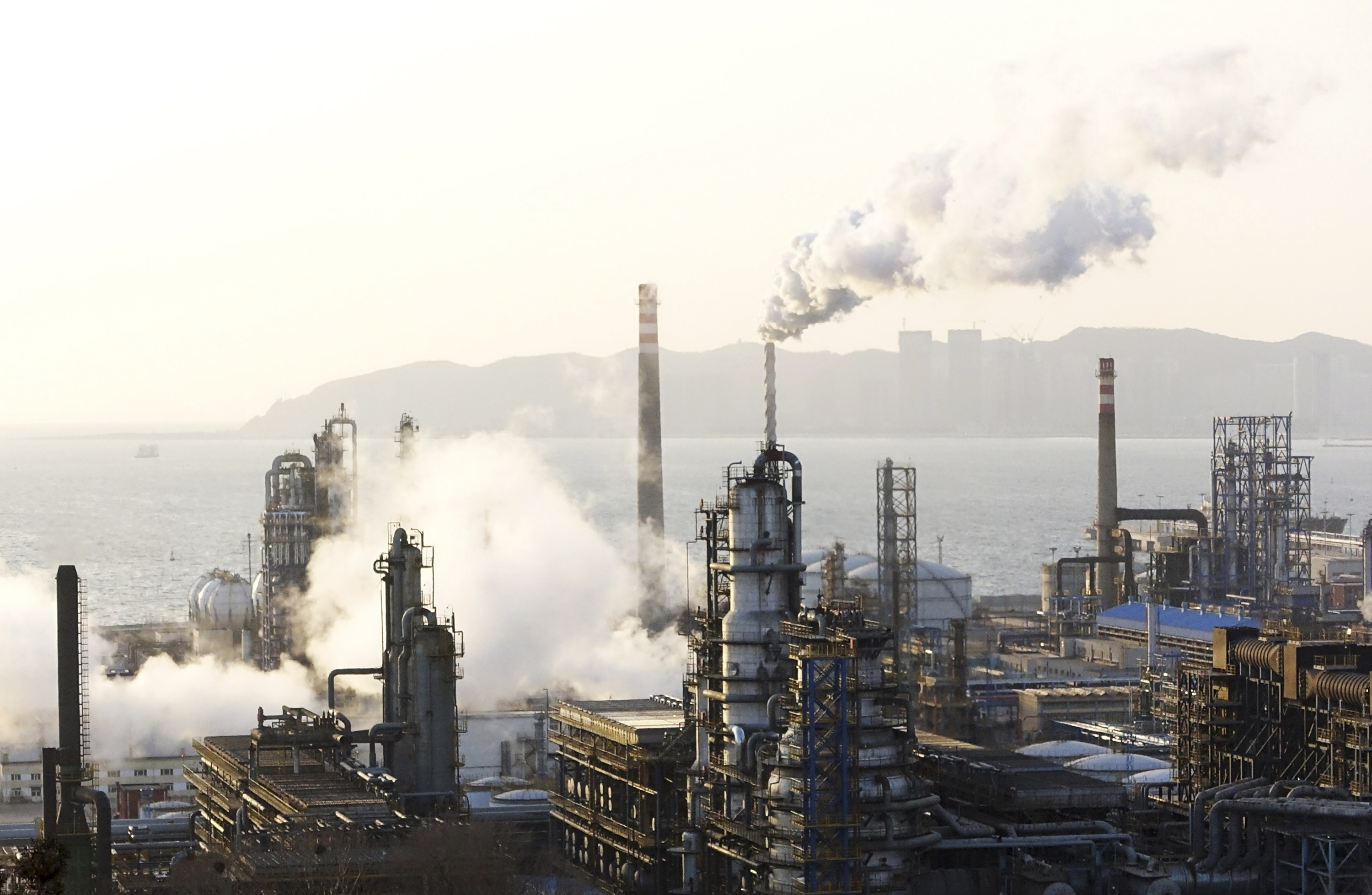
But the increased emphasis on Iraqi supplies shines a light on the complex and frequently murky world of China’s small private refineries, which convert crude oil to products such as diesel, petrol, jet fuel and marine fuel, but at very tight margins.
“They largely operate on sanctioned crudes — Russian, Iranian and, before the US intervention, Venezuelan,” said Al-Maleki.
“The Iranian crude has been really key because the Iranians give huge discounts to these buyers because of the sanctions.”
But now that trade has dried up — and Iraq is offering its own generous discounts.
Getting oil from the head of the Gulf to China is still a risky business for the teapot refineries, “but these guys are risk takers, and they operate on cheap crudes that they can get with a discount,” said Al-Maleki.
Unlike other Gulf producers, Iraq does not have its own tanker fleet. Instead, “they are really reliant on buyers and trading houses sending in their ships and taking the risk of passing through the Strait of Hormuz. To compensate buyers for taking that risk, they have been offering discounts of up to $37 a barrel.”
How the Chinese buyer handles that risk is up to them.
“They could be transiting through the American route, hugging Oman, or they could be transiting through the Iranian route and paying the Iranians,” said Al-Maleki. “Nobody really knows. I do know that the Iraqis tell them: ‘We recommend that you do not pay the Iranians, and that you go through the American route’.”
Trading houses have also purchased large volumes of discounted Iraqi oil over the past weeks, chartering ships and taking advantage of US naval cover to get the oil through the Strait of Hormuz to the Gulf of Oman, where it is transferred to the vessels of Chinese buyers.
“But either way, if you are a Chinese buyer and you are willing to take the risk, it’s a very good trade.
“If the benchmark price is $100 or $120, you’re getting the crude for $80 or $90, and in terms of refinery economics that’s going to make a big, big difference.”
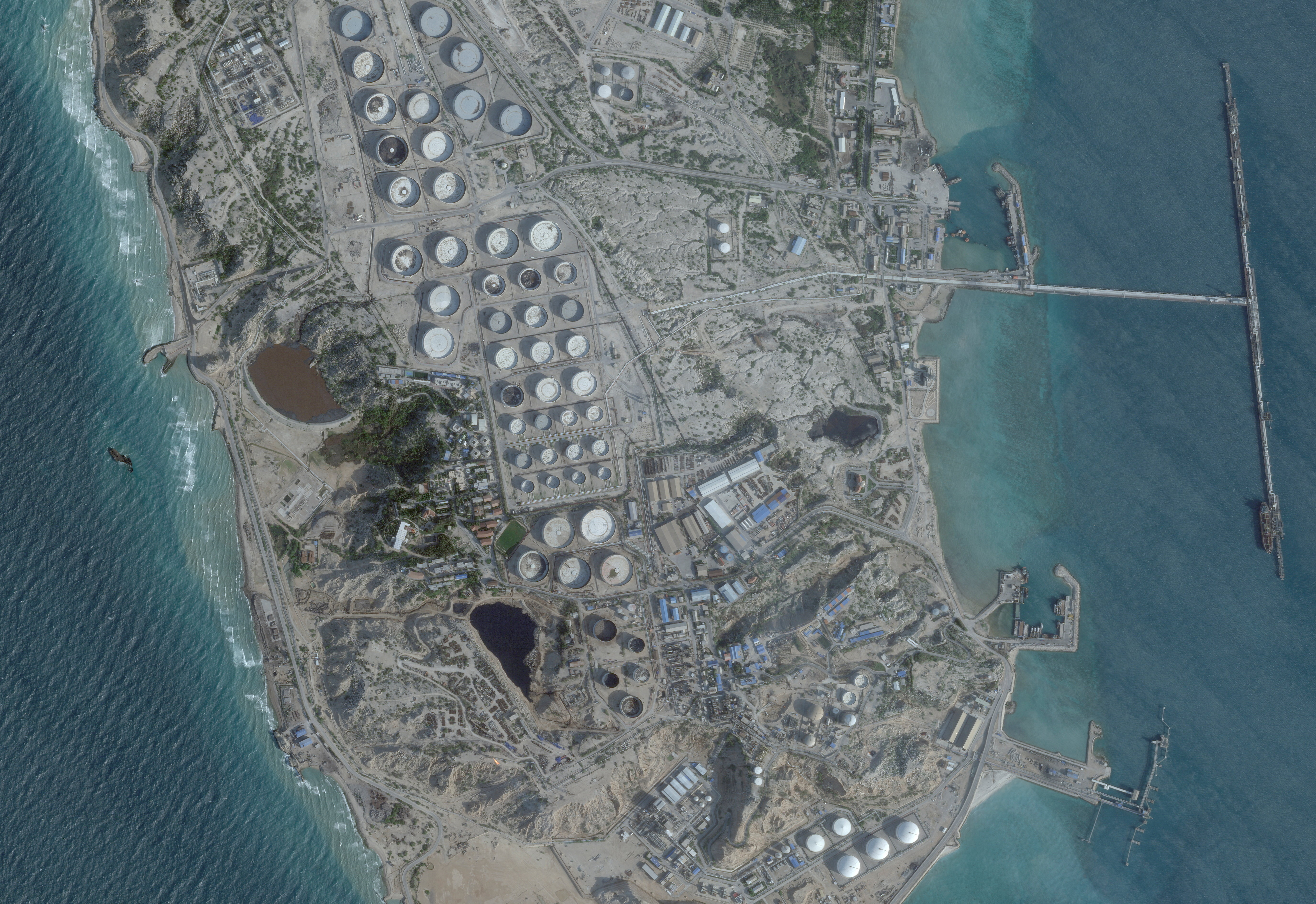
The US has been trying to dismantle the Chinese-Iranian oil trade for years, and since last year has been sanctioning Chinese oil terminals, brokers, insurers and shipping services providers.
However, much of Iran’s oil has been going to the privately owned teapot refineries situated in Shandong Province on China’s east coast.
Less easily targeted by sanctions than China’s large national companies, these have become major buyers of sanctioned but heavily discounted oil from Iran.
Recently, the US has taken specific steps to stop this. At the end of April, the US Treasury’s Office of Foreign Assets Control alerted global financial institutions “to the sanctions risks of dealing with independent oil refineries in China (known as teapot refineries), primarily in Shandong Province.”
Since March 2025, OFAC has designated multiple teapot refineries, “which collectively have purchased and refined billions of dollars’ worth of Iranian oil.”
China, it added, “is the world’s largest purchaser of Iranian oil, currently acquiring around 90 percent of Iran’s total oil exports” and “teapot refineries purchase the majority of that oil.”
Although choking off Iranian exports could ultimately bring the conflict to an end, doing so at China’s expense could have other, negative consequences for the global economy — consequences which the increased flow of oil from Iraq could help to avert.
Iran is not China’s main source of oil — it accounted for about 14 percent of the total in 2025 — but the Chinese economy is utterly dependent upon imported crude.
It does have its own reserves. But while it produced about 5.3 million barrels a day in 2024, it consumed 16.3 million, meaning it had to import 11 million barrels a day.
At the same time, China is one of the world’s largest exporters of refined petroleum products, such as diesel, petrol, jet fuel and marine fuel.
In 2024, China exported about 58 million tonnes of such products and, if Chinese exports of refined products dry up, global prices can be hit.
This is more than a maybe. At the beginning of October, the tight supply of incoming crude led Beijing to suspend exports beyond Hong Kong and Macau “until further notice.”
The move “highlights that the government’s focus remains domestic supply security,” Michal Meidan, head of China energy research at the Oxford Institute for Energy Studies, told Reuters. For Beijing, “international markets are an afterthought.”
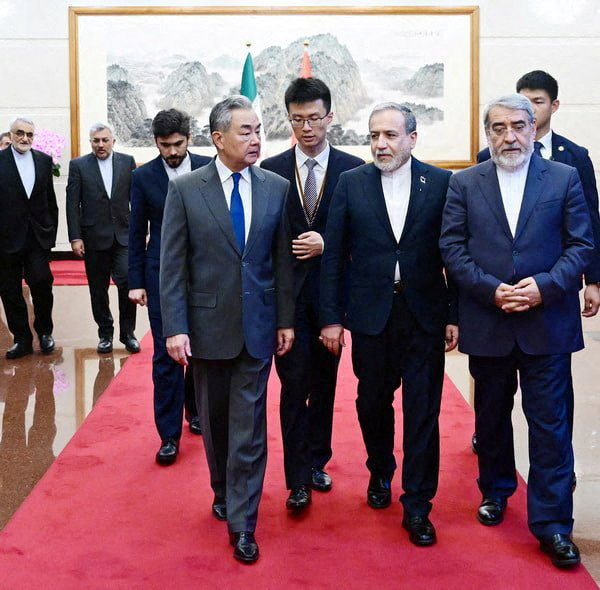
Although China will shop for its oil where it can be bought most cheaply, it has been heavily engaged in Iraq’s fossil-fuels industry for many years.
Chinese engineering, procurement and construction companies are to be found operating in the oil and gas industries throughout the Middle East, and especially in Iraq. Many are state-owned and can do things much cheaper, and more efficiently, than their Western competitors.
As far back as 2008, Baghdad’s first major oil deal following the 2003 US-led invasion of Iraq, to develop the Ahdab oil field, was a contract with Beijing worth $3 billion.
By 2010, according to an analysis by Middle East Business Intelligence, China had become the biggest single investor in Iraq’s oil and gas sector, with control of about a fifth of the reserves auctioned over the past year — equivalent to about 24 billion barrels.
In 2015, Iraq and China signed a strategic partnership agreement and in 2019 this was followed by the Oil for Reconstruction and Investment agreement between the two countries, which included discounts for China of up to 30 percent on oil and gas discoveries in Iraq.
By 2024 an estimated one-third of Iraq’s oil and gas reserves, and two-thirds of actual production, were being managed by Chinese companies.
Last year, the Iraqi cabinet approved a major oil pipeline project, designed to bypass the Strait of Hormuz by connecting Basra to Haditha and beyond to outlets in Syria, Turkiye and Jordan. The $5 billion project is being financed through the Iraq-China oil-for-infrastructure agreement.
As it has moved to expand its footprint in Iraq, China has also taken care to wield soft and hard power in addition to technical know-how and financial clout.
In 2015 it emerged that China had supplied armed CH-4 drones to Iraq’s military, and in 2021 the Chinese government signed a deal to build 1,000 schools as part of Baghdad’s effort to reconstruct an education system badly hit by years of war.
For China, though, Iraq will always be only part of a bigger picture.
“Iraqi oil is currently promptly available in a scarcely supplied market and competitively priced,” said Al-Maleki. “And the demand will help revive some of Baghdad’s finances.
“China has always been a large market for Iraq, but this doesn’t mean its market share is set to expand more than before the war and that Iraqi oil will replace Iranian barrels in the future.
“The Chinese market is well supplied and buyers there will always choose the most competitive crudes and adapt.”