
- Armed groups reportedly prevented about 100 employees and students from reaching their workplaces and examination centers
- Sweida governor highlighted deteriorating living conditions and ongoing security threats due to the armed groups' influence
- US envoy denounced the unacceptable behavior of the armed groups, noting risks of weapon smuggling and drug trafficking
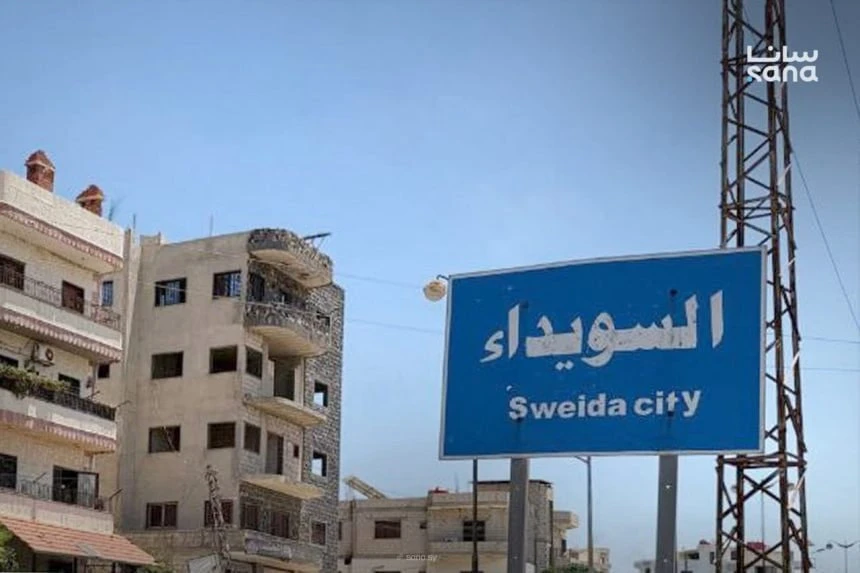
DAMASCUS: Armed groups in Syria’s southern Sweida governorate have completely closed the highway linking the city to Damascus, state news agency SANA reported on Saturday, as a US envoy voiced concern over the groups’ conduct and warned against the mistaken belief that Washington supports them.
Qutaiba Azzam, director of media relations at the Sweida Media Department, told SANA that the groups had blocked both directions of the highway at the Um al-Zaytoun checkpoint, which they control.
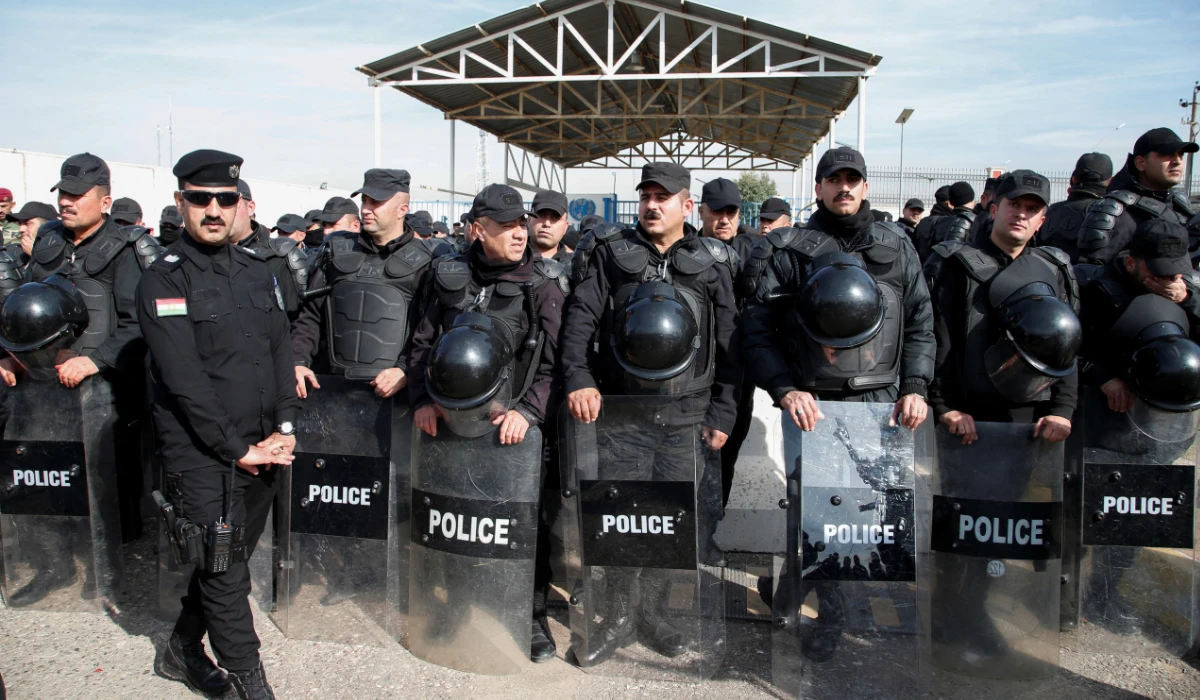
Internal Security Forces continued to provide facilities for travelers at the al-Matouna checkpoint, the report said.
The closure follows a series of restrictions on residents’ movement. On Wednesday, the groups prevented about 100 employees from reaching their workplaces in the Soura al-Sughra area of northern Sweida countryside after stopping them at the Um al-Zaytoun checkpoint, SANA reported.
The groups had also prevented students from leaving the area to sit for national examinations in previous months and continued to carry out attacks on security force positions in the governorate’s western countryside, according to the agency.
Sweida Governor Mustafa al-Bakour said on Oct. 18 that residents were facing difficult living conditions and deteriorating security, citing threats and kidnappings. He accused the armed groups of obstructing efforts to find solutions to preserve their own interests.
US envoy rejects claims of support
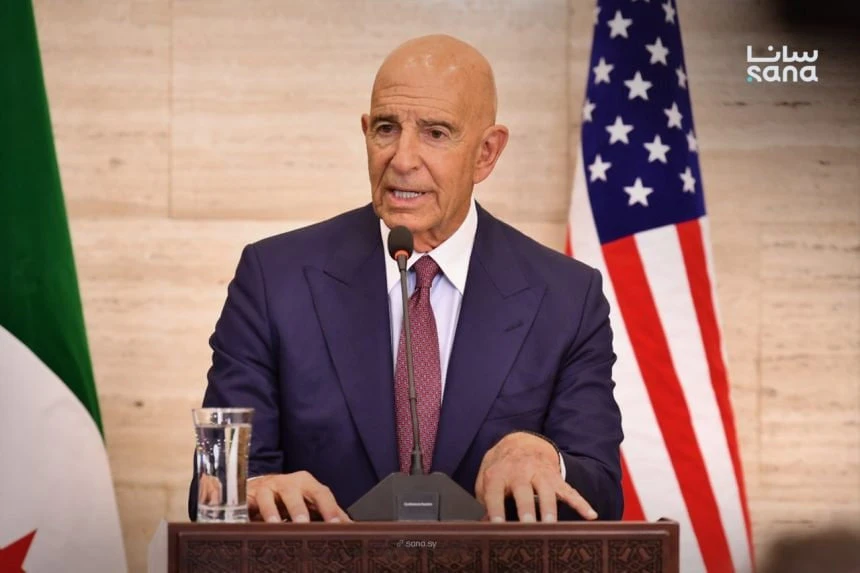
Tom Barrack, the US special presidential envoy for Syria and Iraq, expressed concern over the actions of armed groups in Sweida, saying that Sheikh Hikmat al-Hijri, a prominent Druze religious figure in the governorate, was mistaken if he believed he enjoyed US support.
“We stand alongside Syria, Jordan-Israel, and Lebanon to ensure that those borders remain quiet,” Barrack said in an interview with journalist Mario Nawfal published on X, according to SANA. He added that exchanging accusations would not help resolve the problems.
Barrack also warned that weapons could be moved across borders and that groups in Sweida could acquire arms using money generated from the Captagon trade, the report said. He described the groups’ conduct as unacceptable.
Syrian authorities have accused armed groups in the governorate of killings, kidnappings, extortion and attacks on public figures who advocate national unity and oppose separatist projects and weapons outside state control.
SANA also reported that the Drug Enforcement Department, working with Internal Security Forces, had thwarted numerous attempts in recent months to smuggle narcotics from Sweida countryside toward the Jordanian border.
Restrictions on students and residents
The latest highway closure adds to disruptions affecting daily life in the governorate. In August, al-Bakour said armed groups had prevented students from reaching examination centers despite efforts by local authorities to facilitate their attendance.
The dispute escalated into physical clashes between students and members of the groups, during which vehicles belonging to residents were damaged, the governor said in remarks reported by SANA. Authorities postponed the examinations by an hour to give students more time to reach their centers safely.
Government faces post-Assad challenges
Instability in Sweida remains among the challenges facing Syria’s government following the ouster of Bashar Assad in December 2024. The authorities have sought to restore state control, improve security and preserve national unity amid disputes over local authority, armed groups and the role of the state in the predominantly Druze governorate.
The region was rocked by deadly sectarian violence in July 2025 involving Druze and Bedouin communities, followed by Israeli military intervention and airstrikes. The violence deepened tensions over security arrangements and the government’s ability to protect residents and restore order.
In a further effort to address the legacy of the violence, Syria’s Justice Ministry began judicial proceedings against suspects accused of involvement in the events, SANA reported in July. Ammar Ezzedin, spokesperson for the National Investigation Committee into the Sweida events, said cases had been referred through the military prosecution system to the Military Criminal Court in Damascus.
The first public hearing took place on July 1, with defendants and their legal representatives present, Ezzedin said, describing the proceedings as a shift from investigating the violence to judicial accountability.
The committee’s final report, issued on March 17, documented 1,760 fatalities and 2,188 injuries across the parties involved, according to figures reported by SANA. It said its investigation had included 769 case files and testimony from 213 witnesses and 437 victims and relatives, as well as representatives of different communities.
The government has said its efforts aim to uphold the rule of law, protect citizens’ rights and hold those responsible for violations accountable. The continuing restrictions on movement and reports of attacks on security positions, however, underscore the difficulties in