

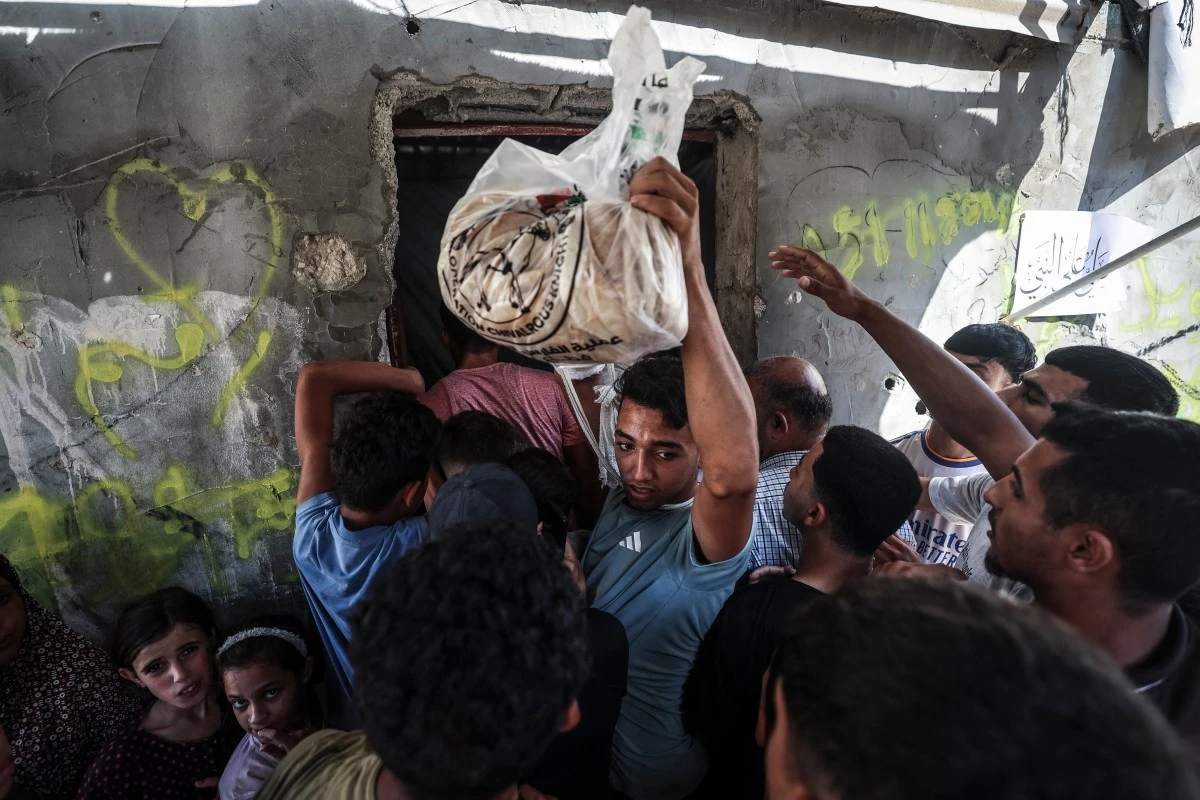
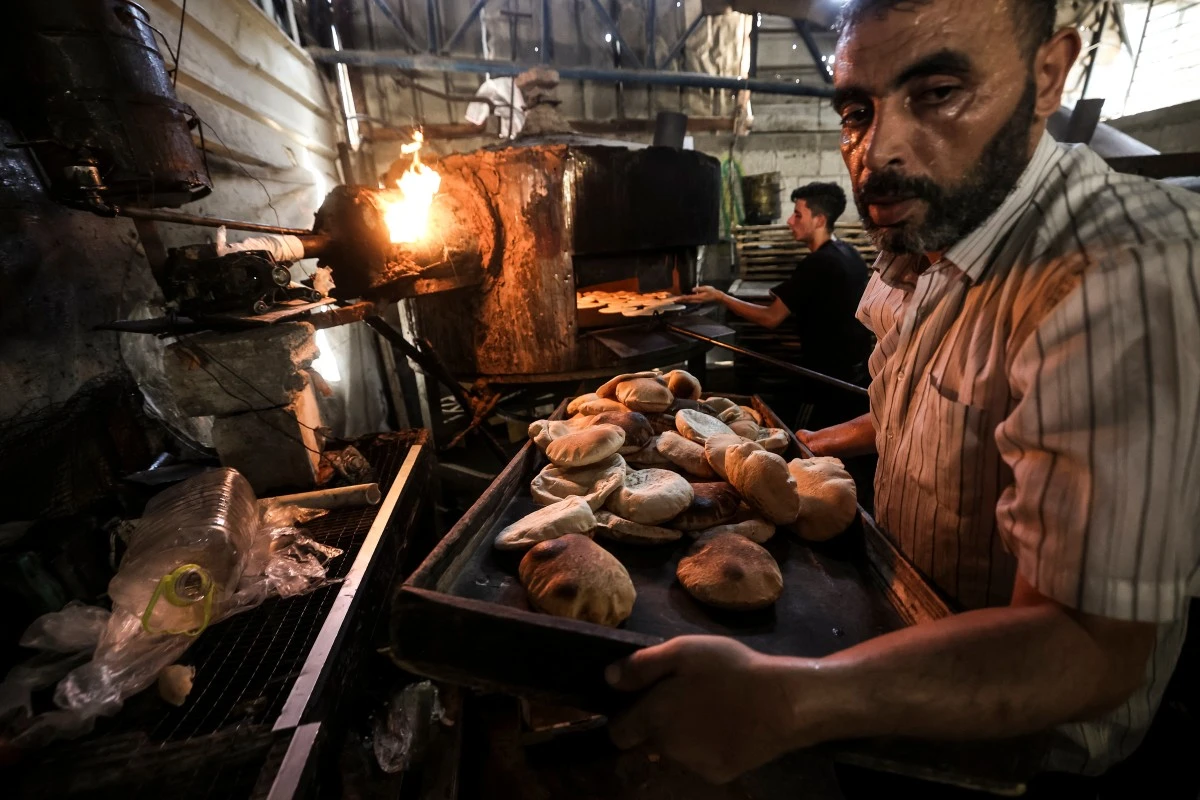
- Palestinians face severe food shortages, with many struggling to find the most basic items amid reports of continuing Israeli restrictions
- Community kitchens, upon which many families rely for survival, are overwhelmed and daily meal production drops
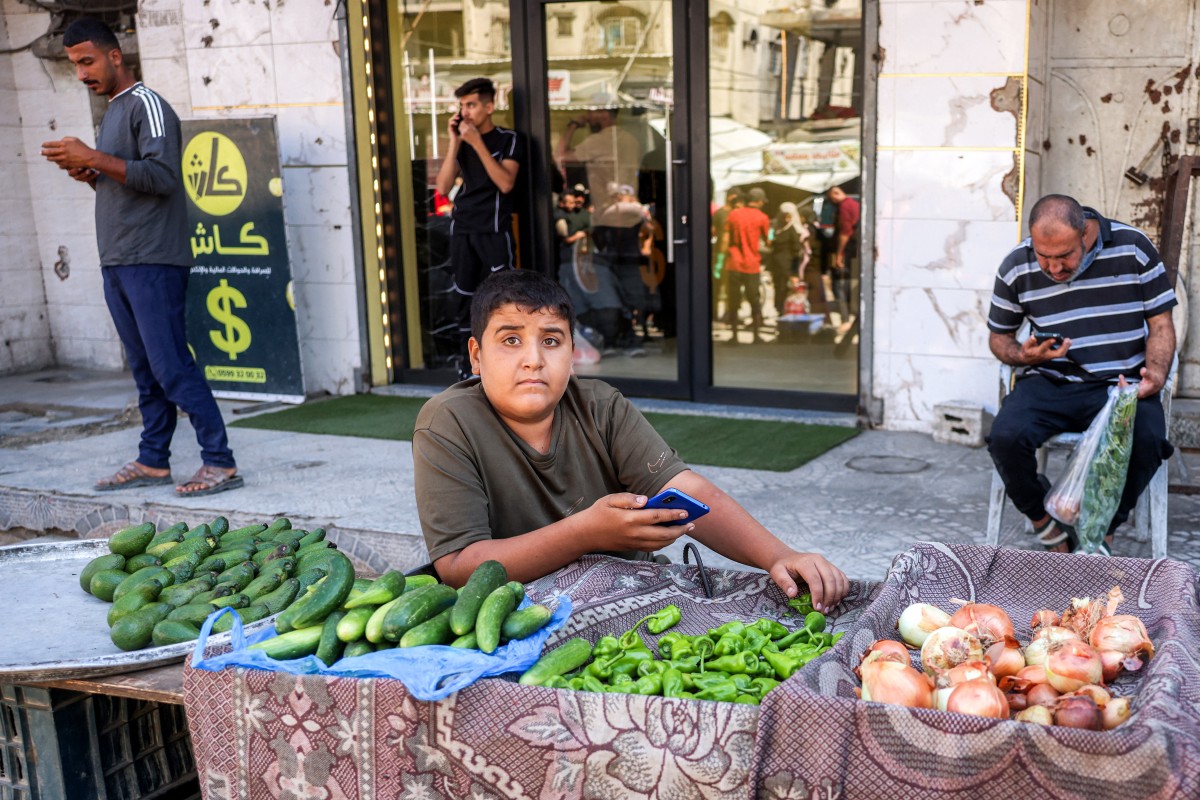
LONDON: Maysa Yousef’s husband went to a market in central Gaza on Thursday evening to buy food for the weekend but found little to bring home. “All I can find is a couple of grapefruits,” he told her.
For Yousef, an artist and mother of three, shopping has become an exercise in timing and improvisation. With the market closed on Friday, the main day off in Gaza, her family needed to buy provisions in advance, but without refrigeration they could not go shopping too early.
“Of course, there are no fridges, so we go late at night to buy frozen items, especially meat,” she told Arab News.
But even a simple meal seemed out of reach. When her husband called, she suggested mjaddara, a Levantine dish of rice and lentils, but he said he could find nothing.
“So now we’ll have to rely on whatever we have at home: a little rice, a little lentils, a little pasta,” Yousef said. “Anything. Anything will do.”
Her family’s dwindling options reflect a broader food crisis across Gaza, where shortages of flour and other staples threaten to close bakeries as residents exhaust their savings.
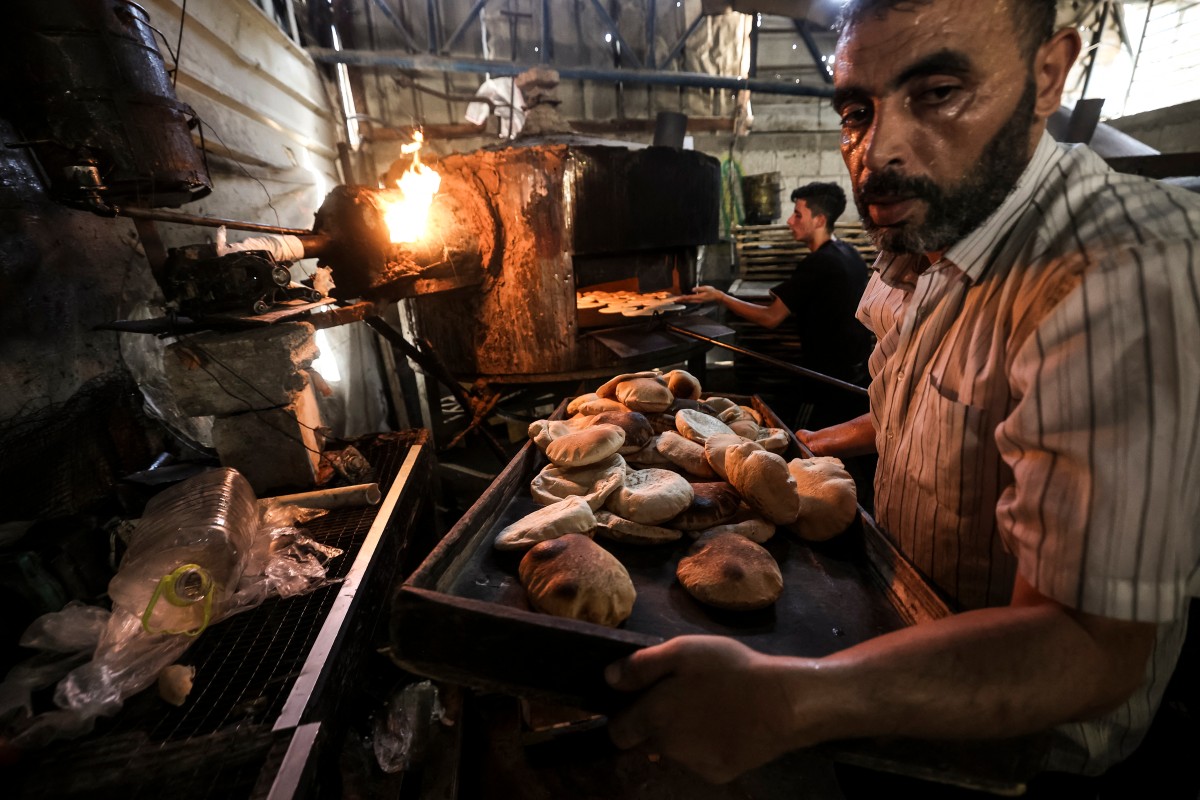
Continuing Israeli restrictions on humanitarian aid and commercial supplies have heightened fears of a return to the famine conditions the territory experienced in 2025.
The Euro-Mediterranean Human Rights Monitor said its field teams found severe shortages of fruit, vegetables and other essentials during market visits. Much of what remained was not affordable for people whose livelihoods and savings have been depleted by Israel’s blockade, the destruction caused by the war, and repeated displacements, the group said.
Bread supplies were also at risk. Flour stocks in warehouses across Gaza have run out, leaving the seven bakeries that remain operational in the territory at risk of closing within 48 hours unless deliveries resume, said Abdul Nasser Al-Ajrami, head of Gaza’s Bakeries Association.
Speaking on Thursday to the official Palestinian Wafa news agency, Al-Ajrami blamed the closure by Israel of crossings over the past week, and its continued refusal to admit commercial flour shipments despite a partial reopening.
Residents said some traders compounded the shortages by withholding basic goods when crossings closed, then selling older stock at inflated prices.
“During the previous famine, a (50 kg) sack of flour cost 200 shekels or more — about $65,” Yousef said. She added that 10 kilograms of potatoes recently cost her 20 shekels; now, the same amount buys just 1 kilogram — if potatoes are available at all.
“Prices are insane,” she said. “Anyone who has lost their source of income is starving, and no one knows about them.”
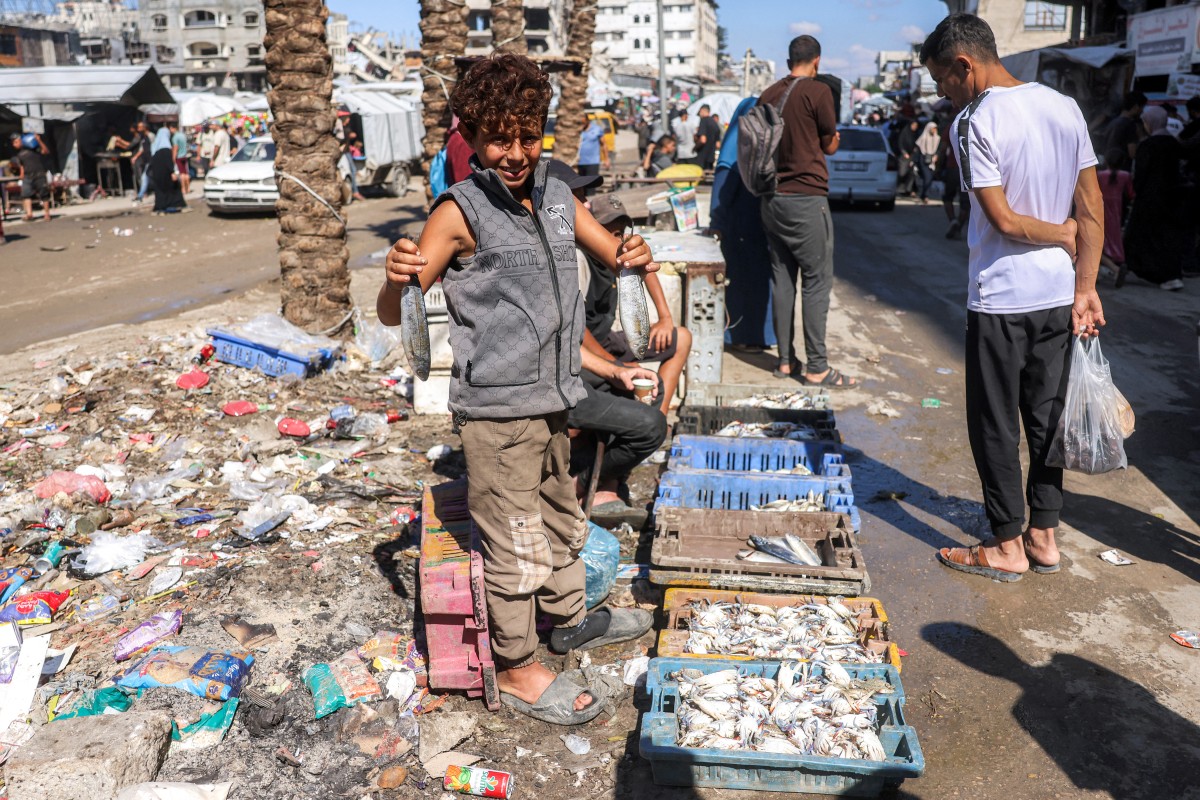
A tray of eggs that cost no more than 17 shekels before the war now sells for about 150 shekels, she continued. A kilogram of onions that used to cost about six shekels now costs about 10 shekels. Meat, when available, is expensive and of questionable quality.
“If there is any, it’s old, has been frozen more than once, and is expensive,” Yousef said. “A kilogram of meat used to cost 45 shekels; now it’s 70 shekels — almost double. And it isn’t fresh; it has a strange color.”
Israeli authorities blame a dispute between Palestinian merchants and Hamas for the halt in commercial deliveries, an account that is disputed by Hamas and the head of Gaza’s private truckers union.
On Oct. 15, Israeli authorities said no commercial goods had entered Gaza for two days, The Associated Press reported.
COGAT, the Israeli military body responsible for coordinating civilian affairs in the Palestinian territories, said merchants had halted shipments over a Hamas-imposed fee of 10,000 shekels per truck. It also said Hamas demanded that 30 percent of all sales in Gaza be conducted in cash.
Hamas’ media office this as a “blatant disinformation campaign and false statement.” It described the payment as a voluntary contribution to a fund that supports people in need, including widows and orphans.
Nahed Sheheiber, head of Gaza’s private truckers union, also disputed Israel’s explanation.
“The merchants are not the ones who stopped the shipments,” he told the Associated Press. “The Israeli coordinator is claiming that Gaza’s merchants are responsible, but the truth is that the Israelis are the ones who imposed the restrictions.”
Palestinian news outlets on Thursday quoted Sheheiber as saying shortages of vegetables and bread “will end at the start of next week.” He cited assurances given to traders that all goods, including vegetables, fruit, meat, flour and other essential foods, would be allowed into Gaza by Sunday at the latest.
As commercial supplies falter, the humanitarian assistance on which most residents depend is also shrinking.
The World Food Programme said on Oct. 19 that funding shortages had forced it to reduce food assistance in Gaza by about a third, leaving half a million people without access to critical support.
The cuts come as winter approaches, threatening modest improvements in food security. An estimated 1.4 million people, or 67 percent of Gaza’s population, face crisis levels of acute food insecurity or worse, according to the Integrated Food Security Phase Classification, an international hunger-monitoring system.
That is a reduction from 1.6 million people, or 77 percent of the population, at the end of 2025. But about 200,000 people remain at the system’s emergency level classification, which means they require immediate food assistance to prevent deaths from hunger, according to WFP.
More than 80 percent of Gaza’s population is unemployed, according to the UN. About 90 percent rely on humanitarian food assistance.
Community kitchens are struggling to meet that need. The UN Office for the Coordination of Humanitarian Affairs said on Oct. 19 that daily cooked-meal production had fallen by 12 percent, from 695,000 meals in late September to 614,000 in early October, amid funding constraints. Some locations were only receiving meals every other day rather than daily, the agency said.
Funding shortfalls, reliance on a single operational cargo crossing and delays in inspections, customs clearance and cargo handling continued to restrict food deliveries.
The consequences are apparent in household hunger and children’s health. WFP monitoring during the first half of September found that 44 percent of surveyed households said someone had gone to bed hungry at least once in the previous 30 days. About 45 percent had completely run out of food during that period.
Only one in five children consumes a sufficiently diverse diet, and about 3,000 children between the ages of 6 months and 59 months continue to be admitted for malnutrition treatment each month.
For Yousef and her family, the crisis extends far beyond her own kitchen to families with no income who depend on community kitchens. She described scenes of children waiting outside schools sheltering displaced families, each holding a pot, bucket or basin to collect food.
“It breaks my heart, honestly,” she said. “The famine hasn’t really ended.”