
- Eisenkot could prove more receptive to Washington’s Gaza plan, but his prospective coalition remains divided over Palestinian governance
- Winter storms expose worsening humanitarian conditions as restrictions on shelter supplies and stalled reconstruction leave displaced families vulnerable
LONDON/DUBAI: US President Donald Trump did not wait for Israel’s coalition negotiations to end before demanding movement on Gaza.
In a phone call on Thursday, Trump told Benjamin Netanyahu, Israel’s caretaker prime minister, that he wanted Israel to begin implementing the next stage of his Gaza peace plan, Axios reported on Sunday.
The road map calls for Hamas to disarm, Gaza to be demilitarized and governance to pass to a Palestinian technocratic administration backed by an international force. It would unlock phased reconstruction after progress on disarmament.
The plan had stalled during Israel’s election campaign, when Netanyahu was reluctant to proceed.
With Netanyahu now heading a caretaker government and former army chief Gadi Eisenkot seeking coalition partners to replace him, Trump’s intervention has turned Gaza into an immediate test of Israel’s prospective new leadership.
That test extends beyond diplomacy and security. Gaza’s humanitarian crisis is deepening while its political future remains unresolved.
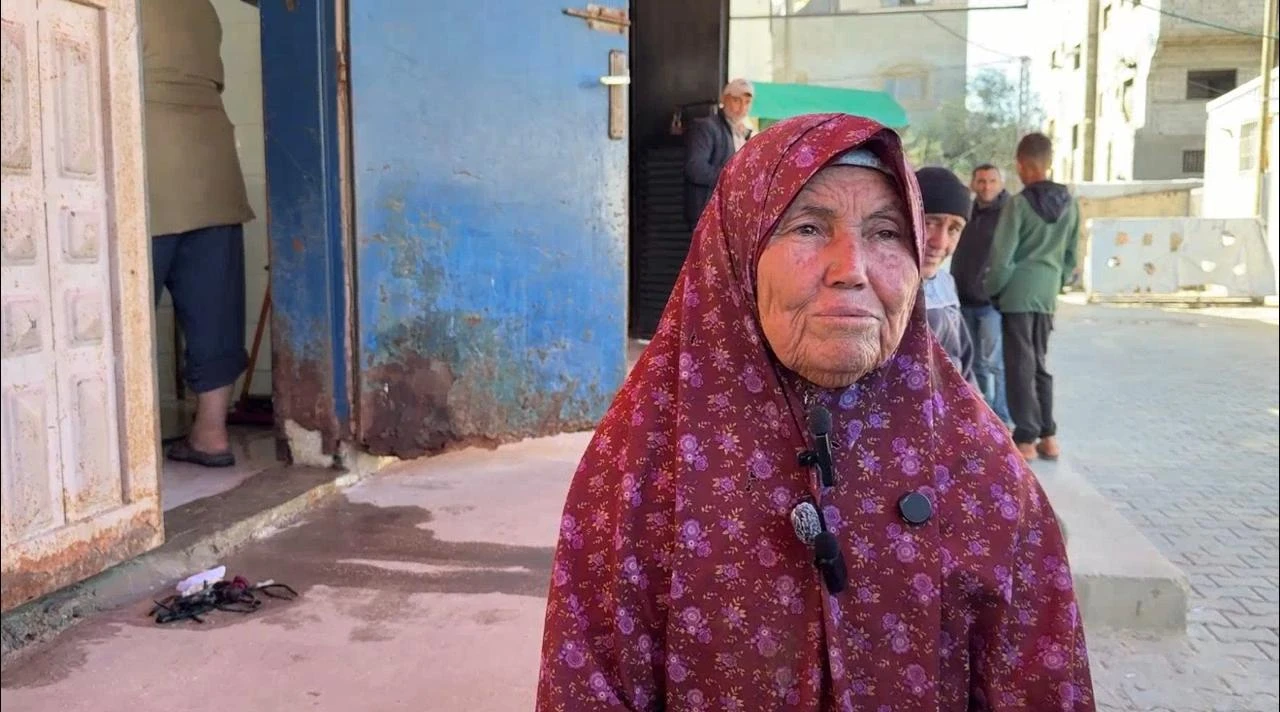
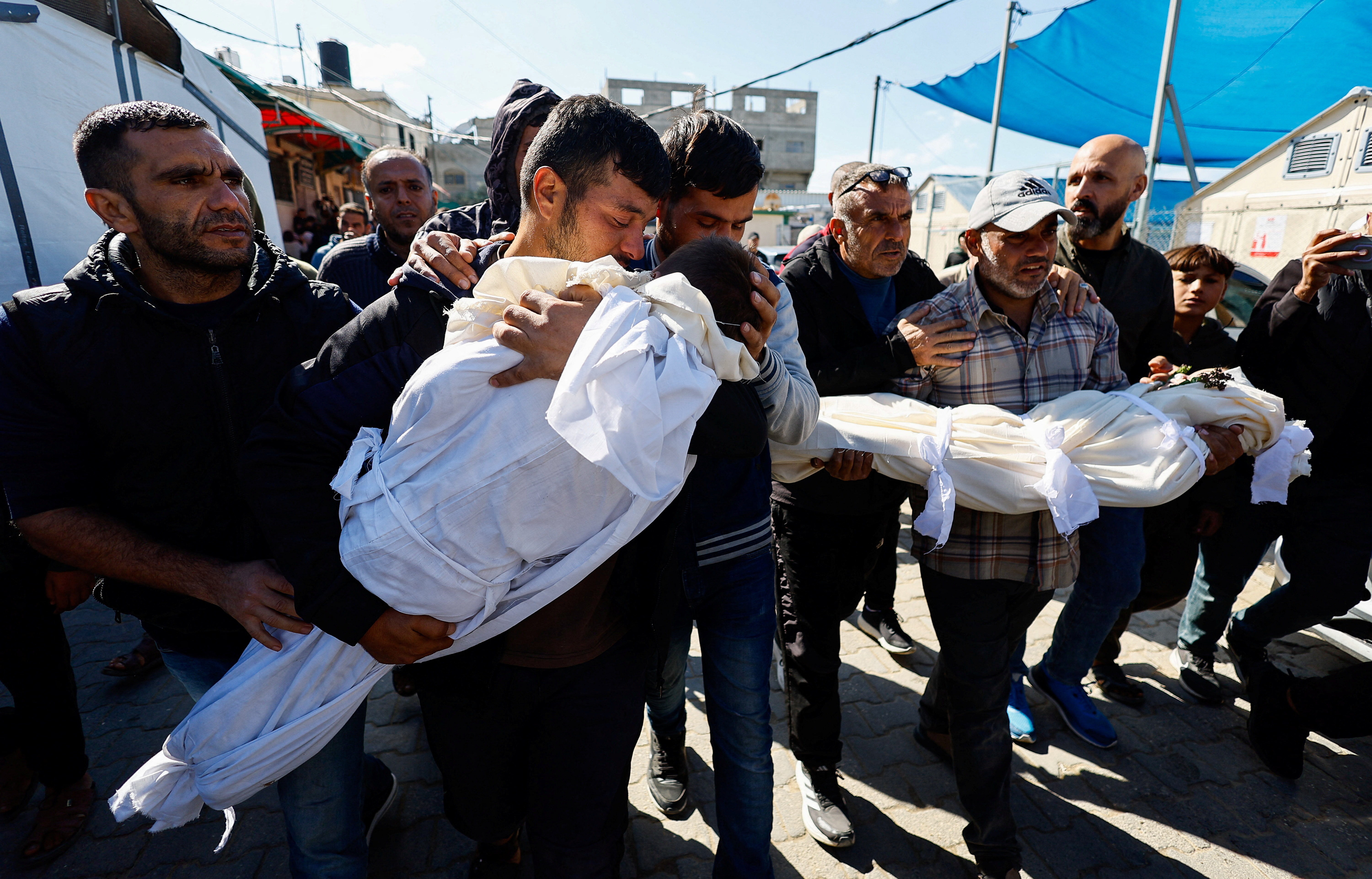
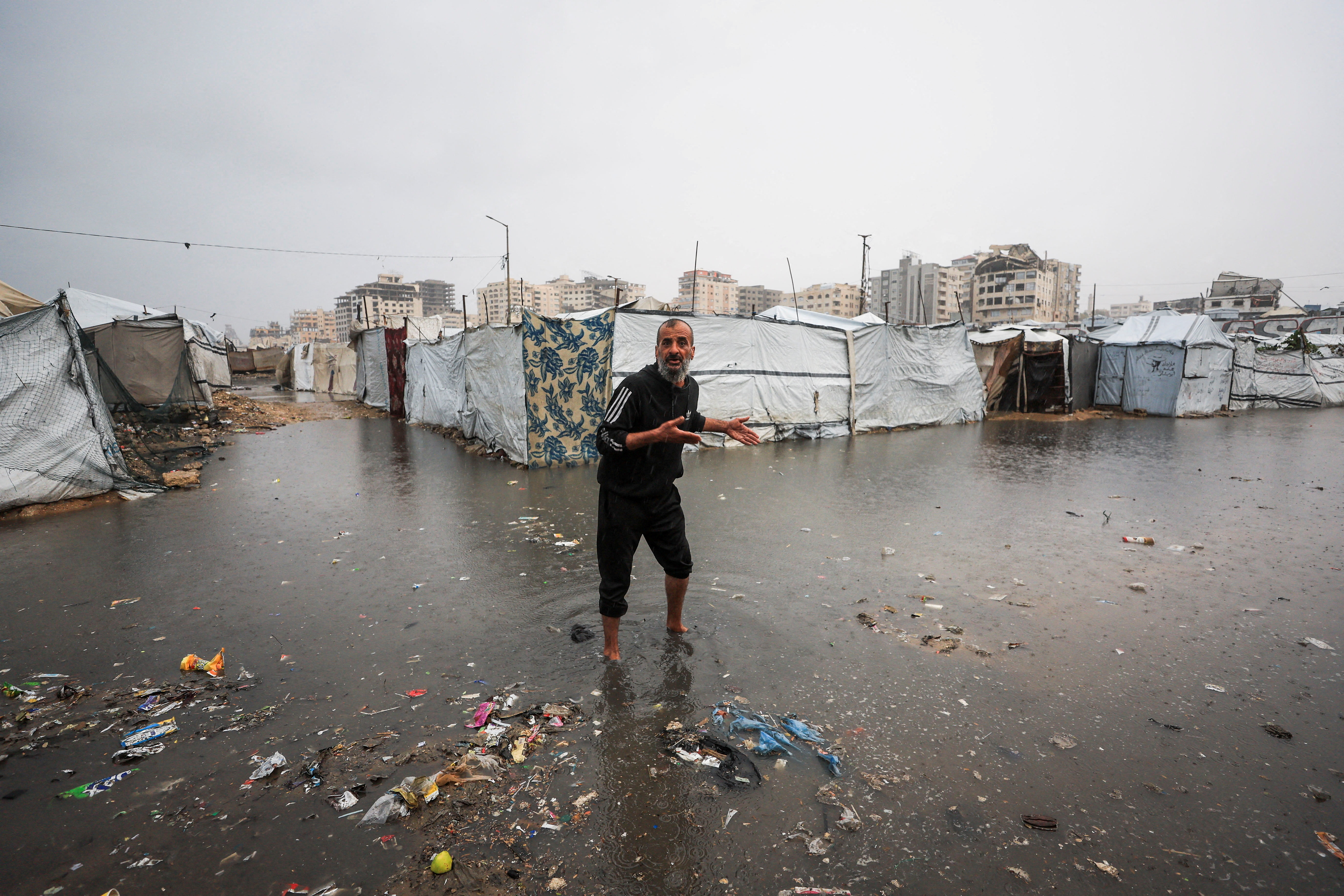
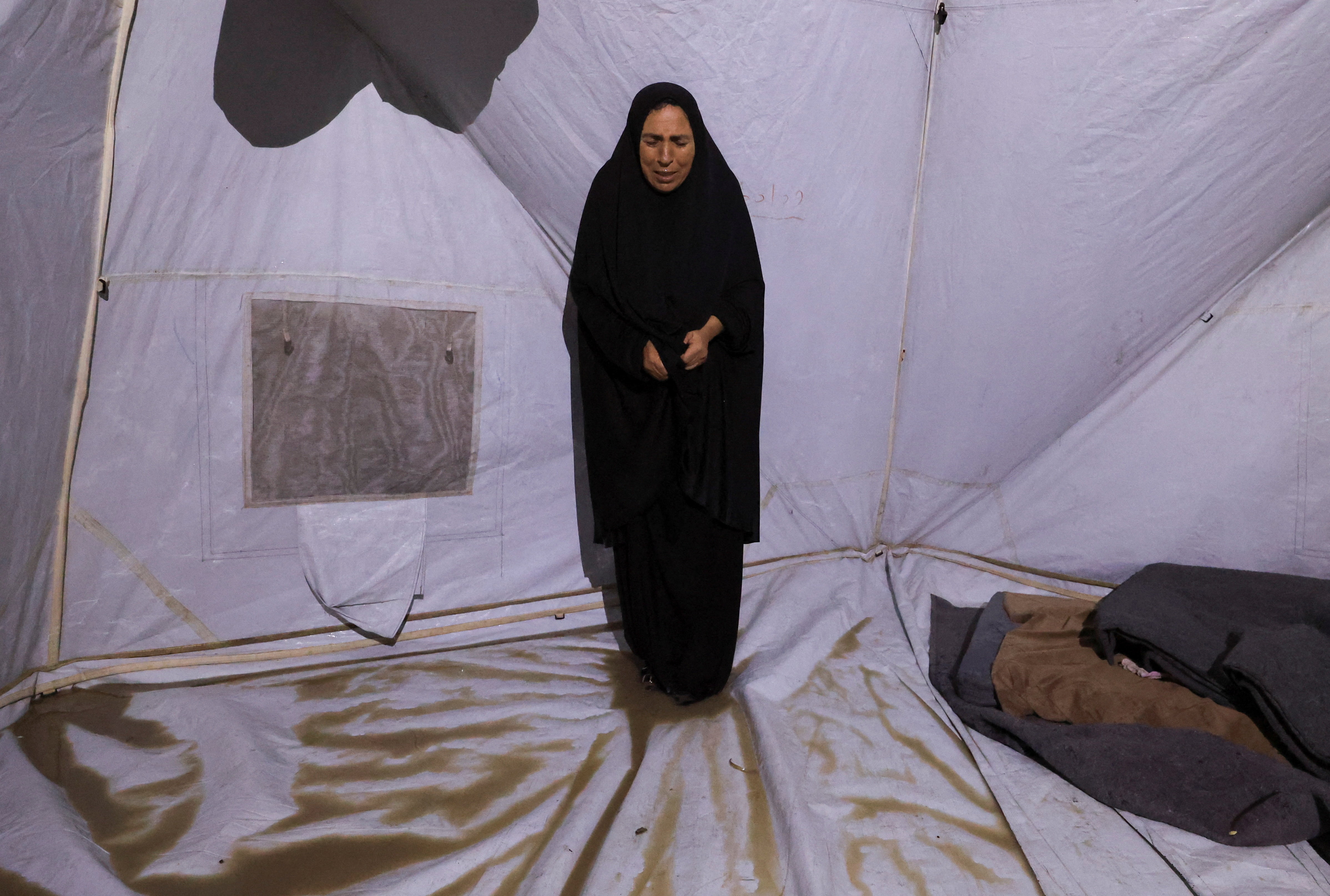
After a day of heavy rain on Monday, a sand embankment collapsed onto tents sheltering displaced families south of Deir Al-Balah in central Gaza. At least five people were killed, three of them children, according to Gaza’s civil defense.
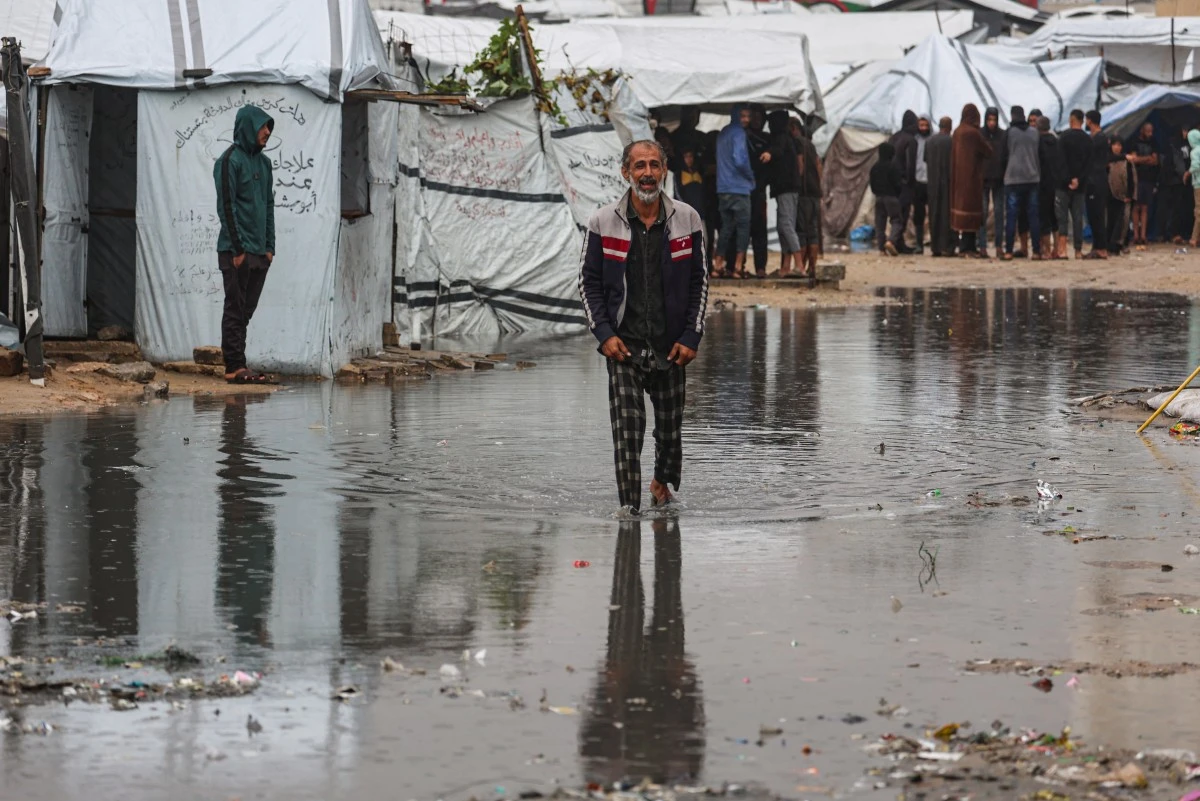
The embankment gave way during Gaza’s first winter storm of the season, with the deluge flooding at least 70,000 tents within 12 hours, according to the Gaza Government Media Office.
Mahmoud Basal, the Civil Defense spokesperson, told Arab News that crews received more than 1,500 calls for help within a few hours but lacked the equipment to answer them all. Israel, he said, had destroyed pumps used to drain flooded tents.
“The bigger disaster is what lies ahead,” he warned.
The ceasefire has largely held since October 2025, but has yet to deliver durable shelter or significant reconstruction.
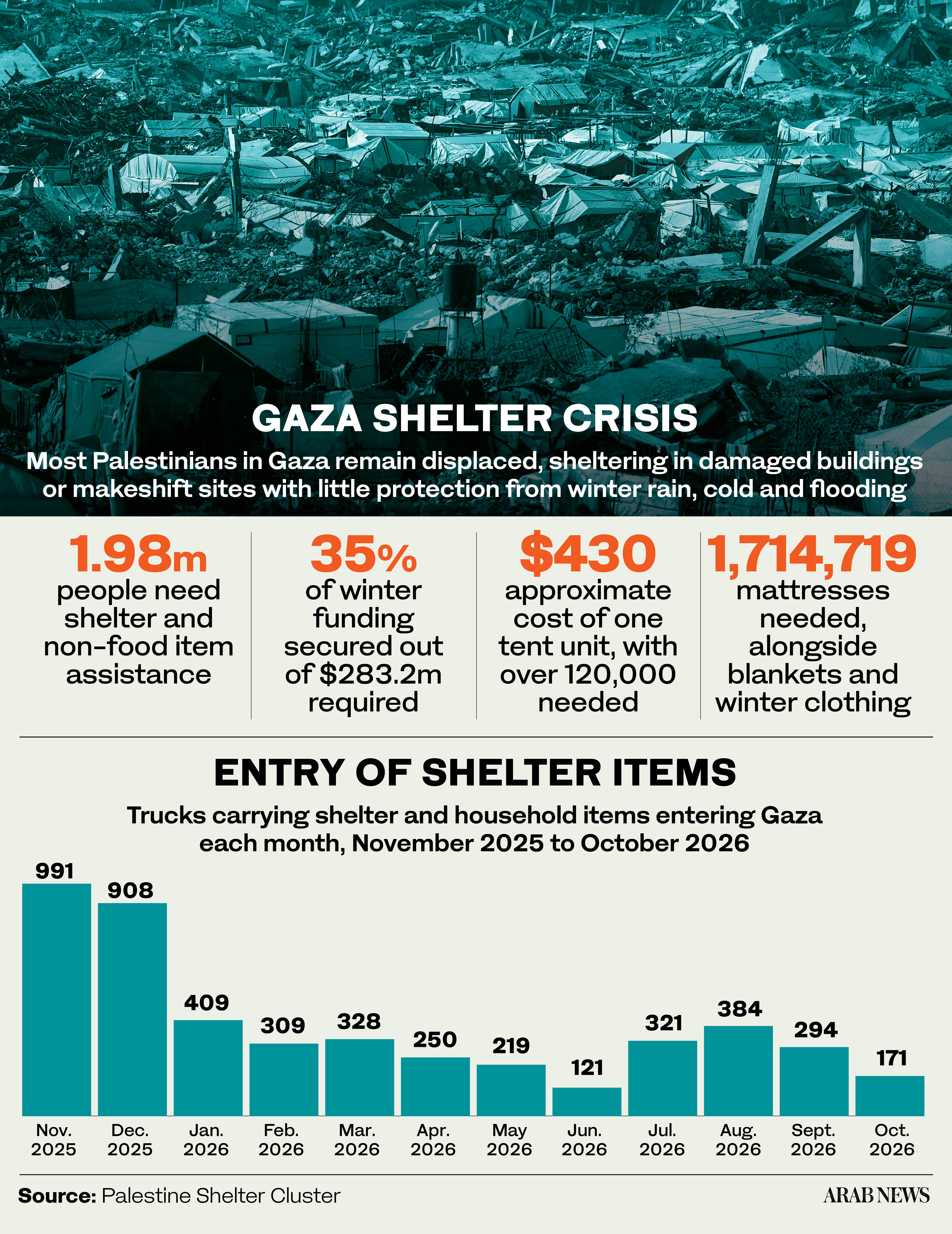
COGAT, Israel’s aid coordination body, says more than 91,000 tents have entered Gaza under its winter plan. However, some equipment has been restricted because, Israeli authorities say, it could benefit Hamas.
Save the Children told Arab News that Israeli authorities had not allowed enough tents through. More than half a million children face their fourth winter in tents or makeshift shelters, the charity said.
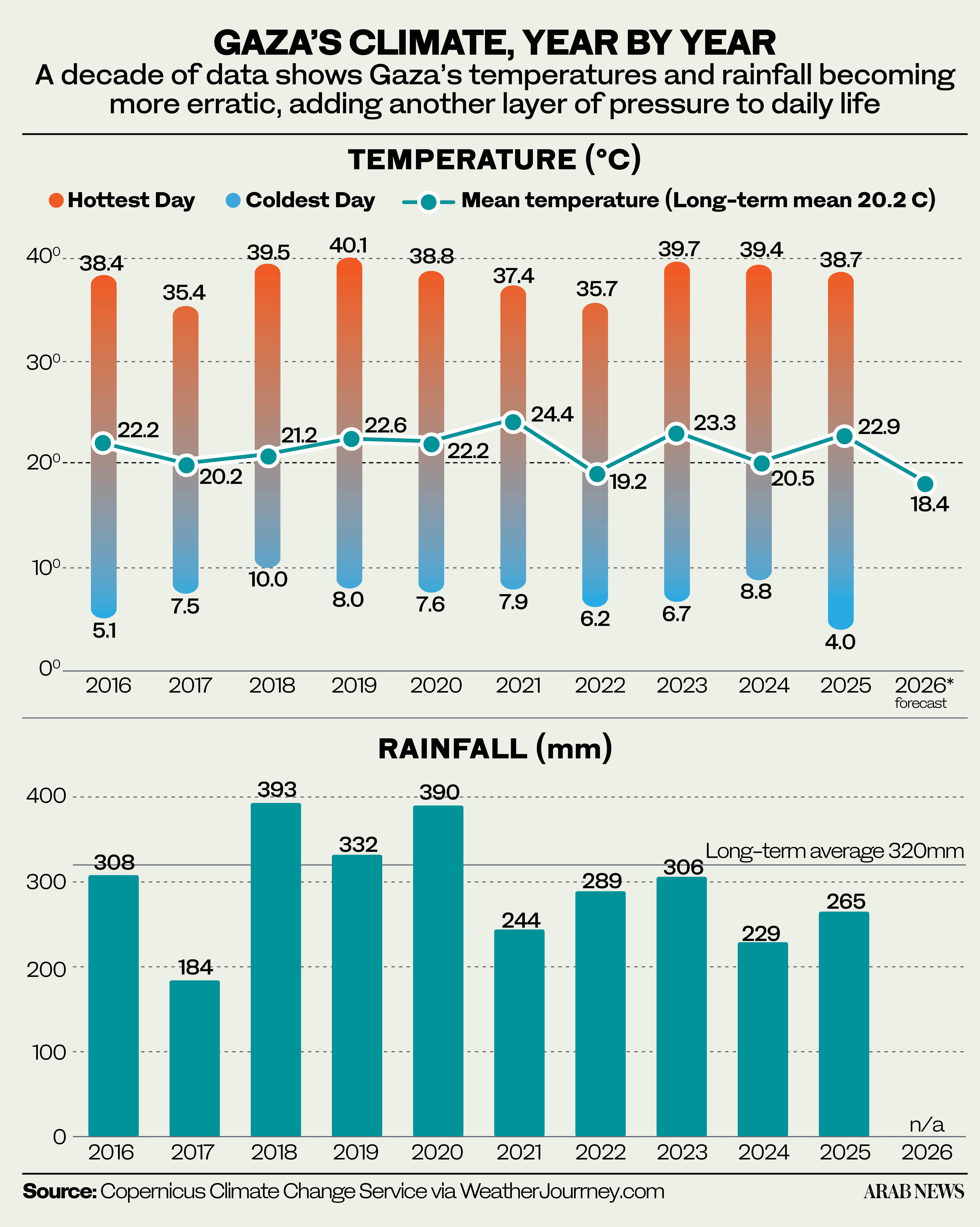
With temperatures falling as low as 5 C, it warned that such restrictions on shelter supplies were exposing families to potentially deadly conditions.
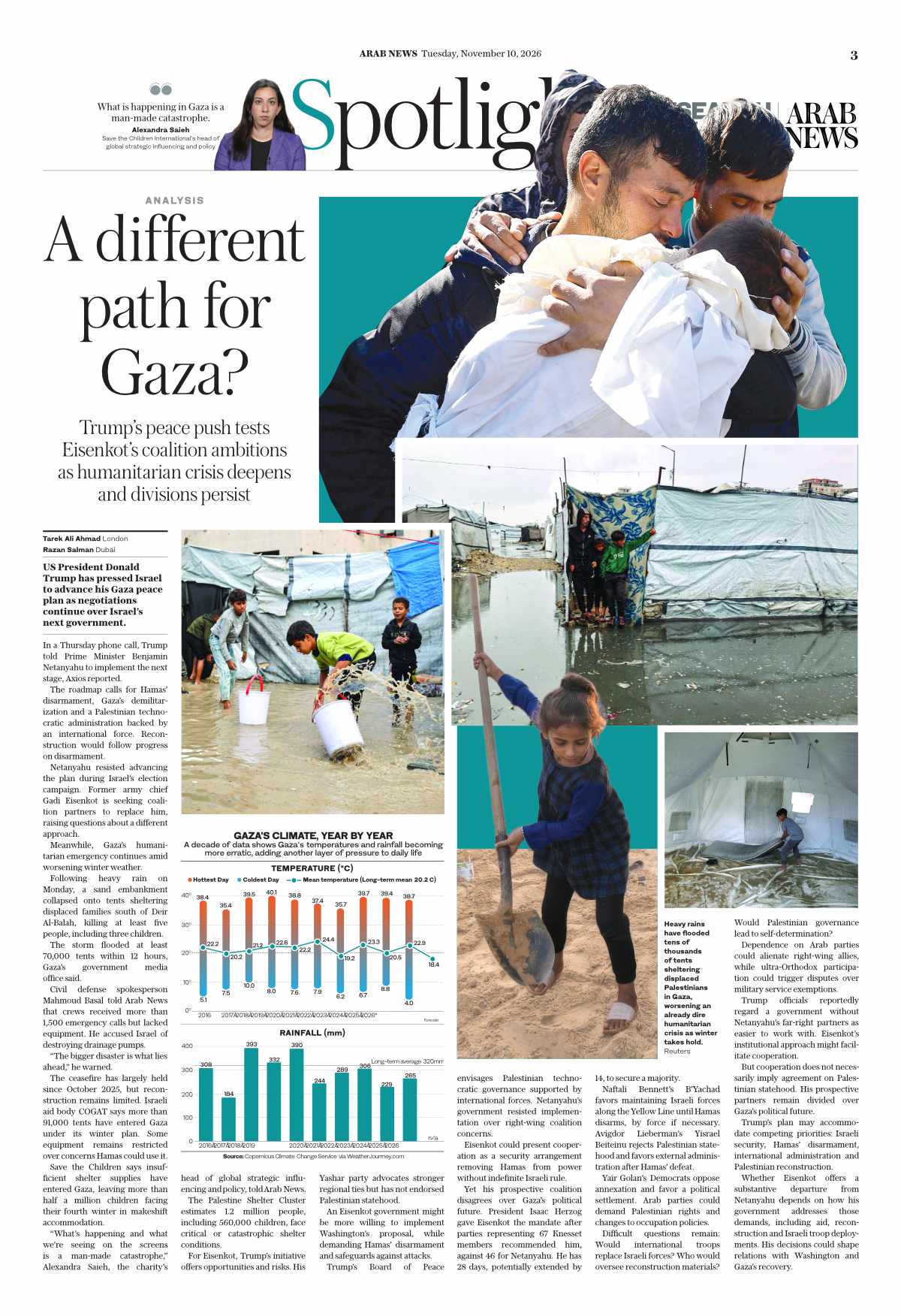
“What’s happening and what we’re seeing on the screens is a man-made catastrophe,” Alexandra Saieh, Save the Children International’s head of global strategic influencing and policy, told Arab News in a separate interview.
“Not only have not enough tents been allowed through by the Israeli authorities, but they have also prevented, through their restrictions on various items, any sort of recovery and reconstruction from taking place.”
The Palestine Shelter Cluster, a humanitarian coordination mechanism, found that about 1.2 million people — roughly 58 percent of Gaza’s population, including more than 560,000 children — were living in conditions classified as critical or catastrophic.
The question is therefore not simply whether Eisenkot can end Netanyahu’s long rule. It is whether his government would handle Gaza differently — and whether that difference would extend beyond tone and relations with Washington to humanitarian access, reconstruction and Palestinian governance.
Observers believe Eisenkot would be an easier partner for Trump, but not necessarily the architect of a fundamentally different approach. He is a security establishment figure whose Yashar party promises a new security doctrine and stronger regional ties, but does not clearly commit to Palestinian statehood.
His government could be more willing to test Trump’s phased plan and define an exit strategy. But it would still insist on Hamas’ disarmament, freedom to respond to threats, and safeguards against the group rebuilding its capabilities.
Analysts suggest that Trump’s plan could present Eisenkot with an opportunity, but also significant political risks.
Its security provisions could attract support across much of the Israeli political spectrum. More contentious questions concern who governs Gaza, when Israeli forces withdraw, who controls reconstruction materials and whether recovery is tied to a broader Palestinian political settlement.
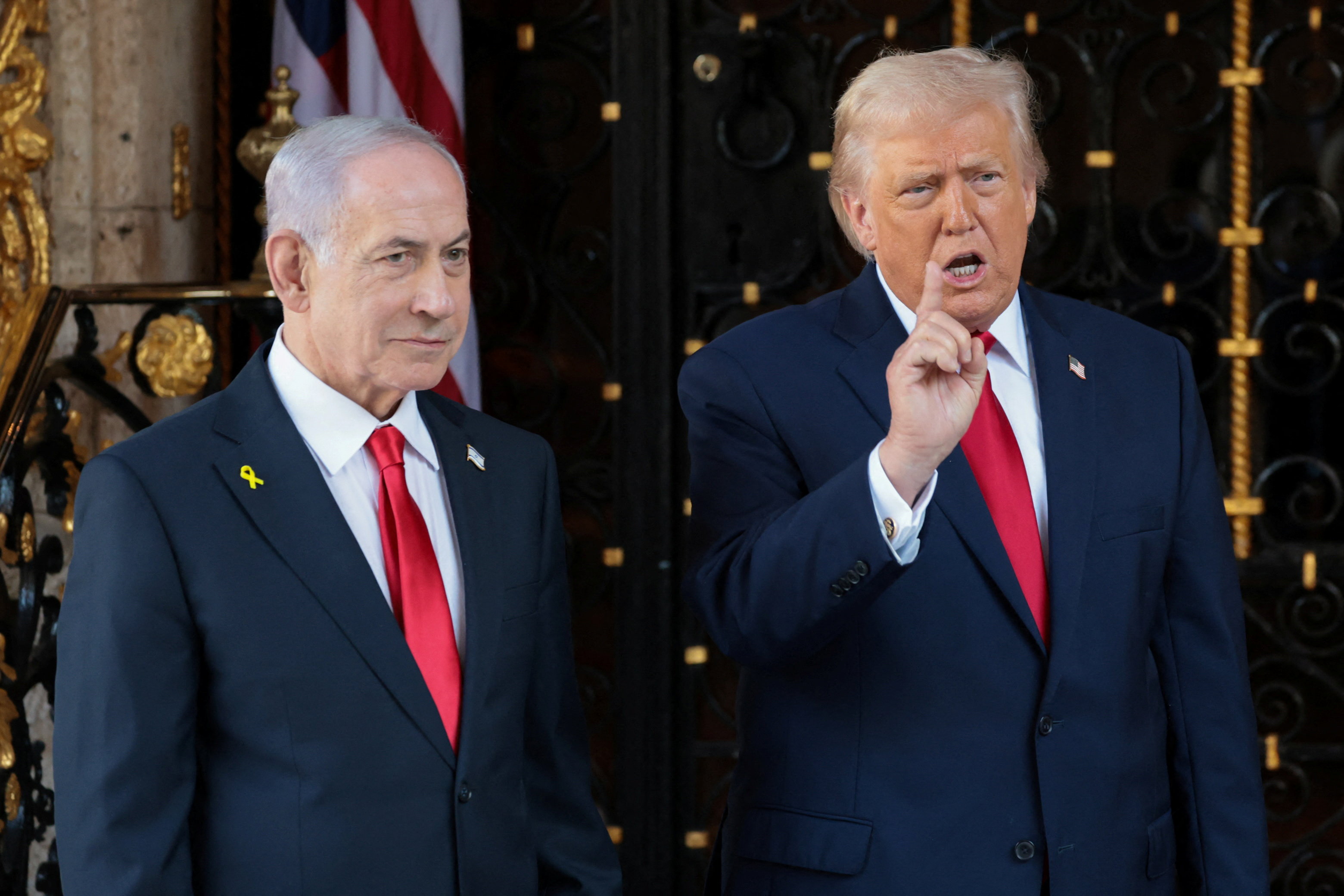
Trump’s Board of Peace envisages a Palestinian technocratic government backed by an international force, but Netanyahu’s government largely declined to proceed with the plan amid concerns about alienating right-wing coalition partners.
Trump endorsed Netanyahu before the election and is now pressing him to advance a plan that could be easier for his rival to implement. His intervention suggests Washington wants progress regardless of who forms the next government.
For Eisenkot, the plan could provide political cover. He could frame cooperation as a security arrangement to remove Hamas, bring in outside forces and prevent permanent Israeli rule over more than 2 million Palestinians.
He could also argue that humanitarian recovery serves Israeli security interests. Prolonged displacement, inadequate sanitation and the absence of a functioning government could contribute to further instability and increase the risk of renewed conflict.
As a former chief of staff and wartime Cabinet member who lost a son and two nephews in Gaza, Eisenkot could argue that military operations need to be accompanied by a longer-term political strategy.
But his prospective coalition may prove less coherent than the plan he is being asked to implement.
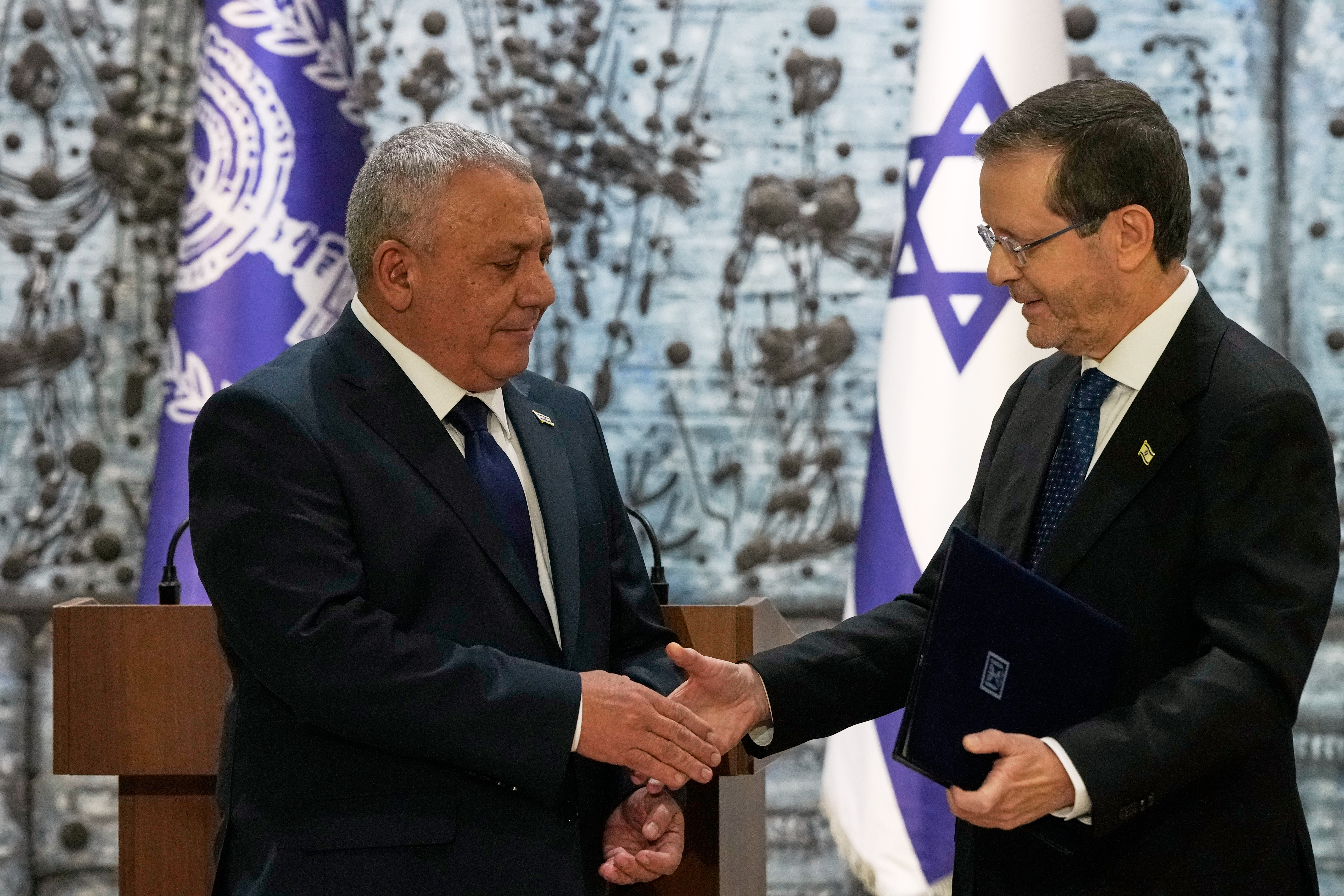
President Isaac Herzog gave Eisenkot the mandate after parties representing 67 members of the 120-seat Knesset recommended him, compared with 46 for Netanyahu. He has 28 days, with a possible 14-day extension, to form a government.
His potential partners agree that Netanyahu should go. They differ, however, on what should follow him.
Naftali Bennett’s B’Yachad supports keeping Israeli forces along the Yellow Line until Hamas is disarmed, by force if diplomacy fails, while Avigdor Lieberman’s Yisrael Beiteinu rejects Palestinian statehood and proposes handing Gaza to an external body after Hamas is destroyed.
Yair Golan’s Democrats oppose annexation and speak more openly about separation and a political settlement, while Arab parties, whose support could be decisive, are likely to demand recognition of Palestinian rights and changes to Israeli policies concerning occupation and displacement.
Those positions overlap only partially with Trump’s road map. The right can support disarmament and outside administration without accepting Palestinian sovereignty. The Democrats and Arab parties can support Palestinian governance and reconstruction while rejecting an indefinite Israeli military presence.
The coalition may hold while the language remains general. It could face greater strains when implementation requires specific decisions.
Would foreign forces replace Israeli troops or operate alongside them? Would Israel admit shelter materials and heavy machinery at the scale aid agencies say is required? Would reconstruction lead toward Palestinian self-determination or prolonged external administration?
Each decision could threaten Eisenkot’s coalition negotiations or the stability of any government he forms.
His routes to office are narrow. Reliance on Arab parties is opposed by some right-wing allies. Ultra-Orthodox support would bring demands over military service exemptions. A unity deal with Likud could preserve elements of the political arrangement he campaigned to replace.
Unlike previous opposition coalitions that sought to avoid contentious decisions on the Palestinian issue, an Eisenkot government would face immediate questions about Gaza’s future. Demilitarization, humanitarian access, reconstruction and governance would all require decisions.
There are reasons to believe he would handle Washington’s pressure differently. Trump administration officials have grown frustrated with Netanyahu, and Axios reported before the election that some believed a government without his far-right partners would be easier to work with.
Eisenkot’s emphasis on institutions and planning could also make him more receptive to a phased international mechanism. However, greater cooperation with Washington would not necessarily translate into a substantially different approach to the Palestinian question.
Eisenkot has not made Palestinian statehood the foundation of his alternative, and his coalition would include influential figures who reject it. Even if he implements Trump’s model, he may present it primarily as a means of managing Gaza’s security and governance rather than resolving the wider conflict.
The opposition can agree that Hamas should not govern Gaza and perhaps that Israel should not govern it directly. But it remains divided over who should govern, what rights Palestinians should exercise and what political arrangements should follow the war.
Trump’s pressure may temporarily bridge those divisions. His plan allows the Israeli right to emphasize disarmament, the center to emphasize regional security, and the left and Arab parties to emphasize Palestinian administration and reconstruction.
Meanwhile, if Eisenkot becomes prime minister, Washington may find a more receptive counterpart. Whether that translates into meaningful change in Gaza will depend on decisions concerning border crossings, reconstruction, governance and the future role of Israeli forces.
Replacing Netanyahu may be Eisenkot’s route to office. Trump’s Gaza plan could provide an early indication of how far his approach to the conflict would differ from that of his predecessor.