- Explosives shipment may be seen as justification for military action
BEIRUT: Direct Israeli threats have once again placed the Lebanese capital in the crosshairs, amid Israeli media reports that Israel could use Iran-backed Hezbollah’s acknowledgment of an explosives shipment bound for Beirut’s southern suburbs to justify further military action.
The shipment was allegedly intended to help rebuild the group’s military capabilities and support attacks on Israeli targets.
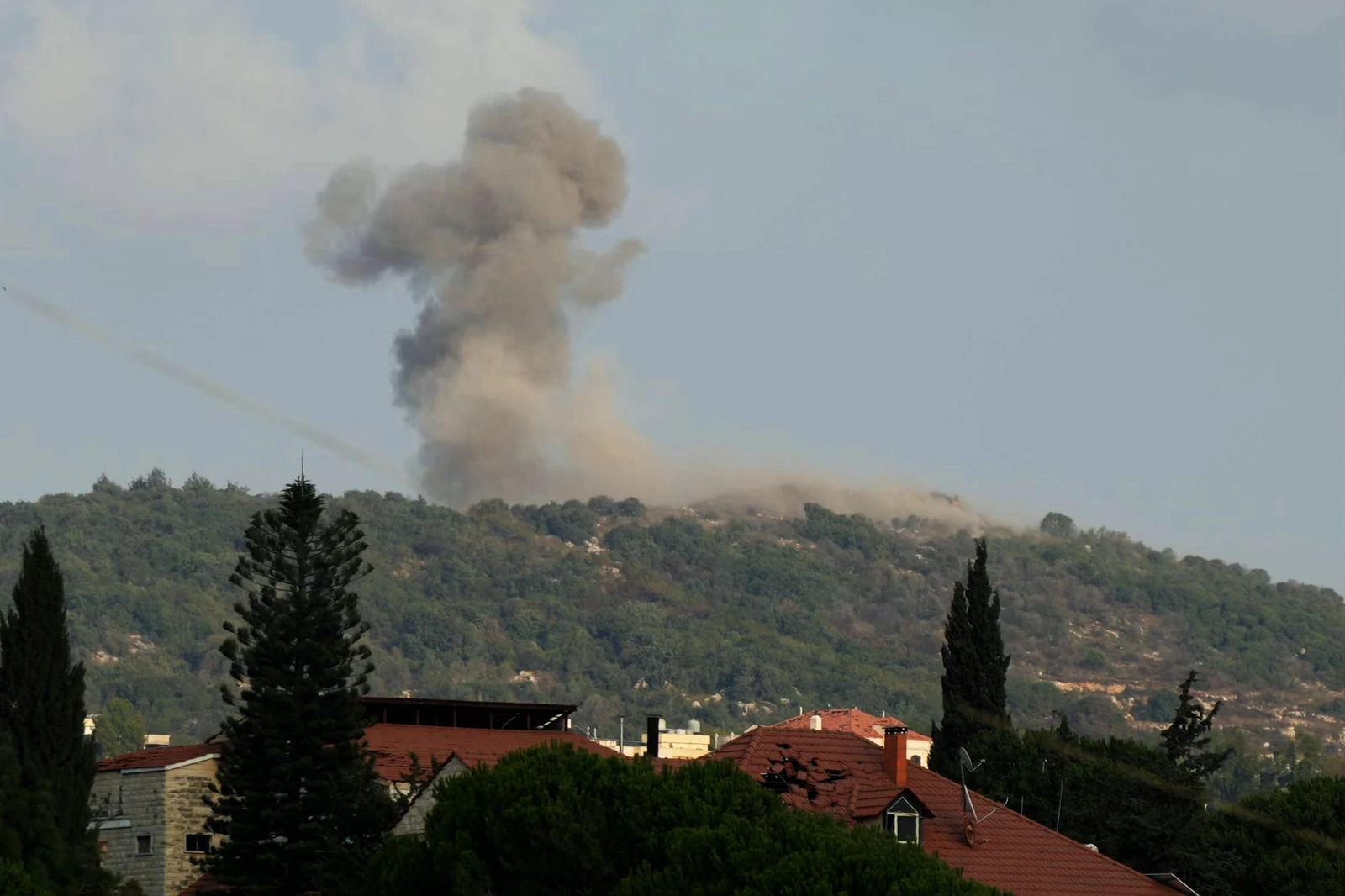
Israeli airstrikes hit towns in southern Lebanon on Monday, while military drones flew at low altitude over Beirut.
Ali Al-Amin, editor-in-chief of the Janoubia news website, told Arab News: “The region is only hours, days or a few weeks away from a major military confrontation.”
He warned that any renewed use of Hezbollah’s weapons against Israel would give the enemy “a free gift by providing a pretext to destroy what remains of the villages and towns and displace the people of the south.”
Al-Amin said the military option had failed to establish a balance of deterrence.
He said: “The only remaining solution for Lebanon and its Shiite community is an immediate return to the protection of the state and the Lebanese army, and adherence to the Taif Agreement and international resolutions.”
The Lebanese Health Ministry said at the weekend that Israeli military action in Lebanon between March 2 and Oct. 30, 2026, had killed 4,389 people and wounded 12,428.
The combined toll from the two rounds of conflict since Oct. 8, 2023, stood at 8,956 dead and 30,664 wounded.
Lebanon says Israel continues to occupy about 700 sq. km of Lebanese territory and controls other villages through military force. Israeli officials have threatened to expand the incursion as far as Nabatiyeh and Tyre and drive residents north toward the Awali River.
Al-Amin said Hezbollah’s decision to drag Lebanon into another support front would amount to “a suicidal operation.” He added that the group was unlikely to intervene if any US-Iran confrontation remained limited.
An official Lebanese source told Arab News that there had been no progress in direct negotiations between Lebanon and Israel and that no diplomatic contacts were currently underway.
“Lebanon has entered an election-related diplomatic freeze because elections are approaching in both the United States, the sole sponsor of the Lebanese-Israeli negotiations, and Israel,” the source said.
Lebanese President Joseph Aoun said several days ago that the necessary progress in negotiations with Israel had yet to be achieved.
“We remain committed to diplomatic solutions for resolving disputes,” he said.
Israeli newspaper Maariv reported on Monday that the Israeli military was preparing for the possibility that Hezbollah could enter a conflict in support of Iran. Preparations reportedly include a large-scale mobilization of reservists and strikes against Hezbollah targets across Lebanon.
Hezbollah’s Secretary-General Naim Qassem said last week that the resistance would continue and refused to discuss the group’s weapons while Israeli occupation and attacks persisted.
He demanded the withdrawal of Israeli forces from Lebanon in accordance with the Nov. 27, 2024, agreement and UN Security Council Resolution 1701.
Although Qassem acknowledged that the cost of resistance was high, he said that “surrender and concessions would leave nothing.”
Meanwhile, the investigation into the explosives shipment that two Hezbollah members were transporting from the Bekaa Valley to Beirut’s southern suburbs has seen a new judicial development.
Lebanese army Intelligence has identified a suspect referred to in the military judiciary’s preliminary investigation as “Abu Haidar,” and passed the information to the military court.
Judge Claude Ghanem, the government commissioner to the Military Court, subsequently filed charges against the suspect.
The number of people charged in the case has risen to 13. The full identities of five suspects remain unknown.
Ghada Abu Alwan, the Military Court’s first investigating judge, is expected on Wednesday or Thursday to set dates for questioning Ali Al-Kurdi and Haitham Amhaz.
The two men were arrested at an Internal Security Forces’ checkpoint in Dahr Al-Baidar while allegedly transporting the explosives in a car.