

With COP31, the 31st Conference of the Parties to the UN Framework Convention on Climate Change, set to open in Antalya, Turkiye, next week, the international community faces serious challenges. Running through Nov. 20 at the Antalya Expo Center, the summit — hosted by Turkiye under COP President Murat Kurum, with Australia’s Chris Bowen leading the negotiations — must turn dialogue into global action and shift from commitment to implementation.
This should not just be another round of aspirational statements. The science is unambiguous: the window to limit global warming to 1.5 degrees Celsius above preindustrial levels has effectively closed and a further rise is now described as imminent and unavoidable. The task is to make that overshoot as short and shallow as possible while protecting the most vulnerable.
Turkiye secured the hosting rights after a prolonged competition with Australia that was resolved at COP30 in Belem, Brazil, through a pragmatic compromise. Turkiye provides the venue and presidency, while Australia leads the formal negotiations and a pre-COP process was held in the Pacific, including Fiji, with a leaders’ element in Tuvalu, to keep that region’s existential concerns visible.
Turkiye’s selection is significant for several reasons. As an emerging economy sitting between Europe and Asia, it can act as a bridge between developed and developing nations. It has emphasized solidarity with vulnerable regions — including the Pacific — while promoting a global rather than purely regional focus.
The country’s own Zero Waste Project and recent climate law and emissions trading system give it domestic credibility to push an implementation agenda. The COP31 motto, “Where dialogue turns into global action,” captures the intended shift.
As an emerging economy sitting between Europe and Asia, Turkiye can act as a bridge between developed and developing nations
Dr. Majid Rafizadeh
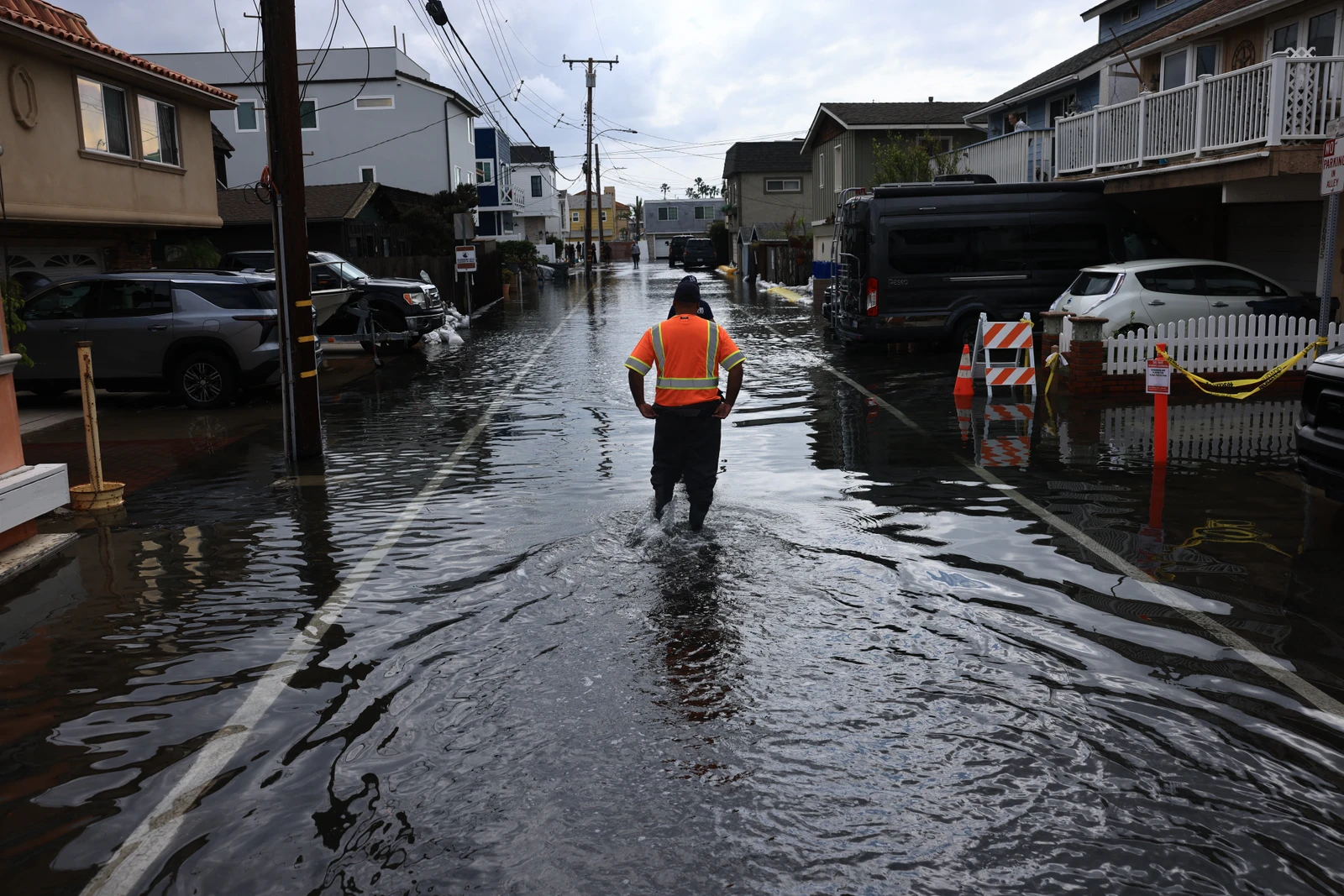
Recent years have delivered a brutal catalogue of extremes that illustrate both the scale of the crisis and its unequal impacts. Europe has endured heat waves that have caused tens of thousands of excess deaths. In Nepal, glacier-related floods and landslides have killed about 1,400 people this year alone, as well as leaving thousands missing and causing about $4.7 billion in damage — about 10 percent of Nepal’s national gross domestic product — highlighting the acute vulnerability of Himalayan systems.
Hurricane Melissa, a Category 5 storm, killed nearly 100 people across the Caribbean, especially in Jamaica and Haiti, and inflicted more than $12 billion in damage. Indonesia has faced massive wildfires, Southeast Asia has been hit by powerful cyclones and floods, and a developing “super El Niño” threatens to push tens of millions more people into acute hunger through droughts, floods and crop failures across Africa, Latin America, Asia and the Pacific.
The regions most affected are those least responsible for cumulative emissions: small island developing states facing sea-level rise and stronger storms; countries in the Sahel and southern Africa confronting drought and food insecurity; South and Southeast Asia dealing with floods, heat and glacial melt; and mountain communities whose water security is eroding. These populations already live with high vulnerability and limited adaptive capacity. Meanwhile, conflict-affected areas face a double burden, as climate shocks compound instability.
Wealthy industrial nations carry the primary historical responsibility. Their long-term emissions have driven the bulk of Earth’s warming. They also possess the financial resources, technology and institutional capacity to lead the transition and to support others.
Climate finance remains the clearest test of whether this imbalance will be addressed in practice rather than rhetoric
Dr. Majid Rafizadeh
Yet the costs of the impacts — loss of life, livelihoods, infrastructure and ecosystems — fall disproportionately on the poorer countries that have contributed least to the problem. Climate finance remains the clearest test of whether this imbalance will be addressed in practice rather than rhetoric.
Countries must submit or strengthen their national climate plans and back them with policies and investment, not just targets. Developing countries need predictable, largely grant-based support for adaptation and damage.
In fact, adaptation finance should be increased, maybe tripled by 2035, and the Loss and Damage Fund must become operational and adequately resourced. Coastal and mountain communities need support for adaptation that reduces risk, rather than the world simply reacting after disasters.
Words alone will not change trajectories. Concrete, time-bound actions can. This means that, by the end of 2026 or early 2027, the Loss and Damage Fund should be fully operational for the most vulnerable countries so that communities hit by events like Nepal’s floods or the Caribbean’s hurricanes can receive support without years of delay.
Between 2027 and 2030, the bulk of the next round of climate finance commitments should also be delivered, with a rising share of grants rather than loans that increase debt. By 2030, measurable progress is also needed on electrification and renewable deployment.
Adaptation finance should be significantly increased, with transparent tracking of whether funds reach the local level in the most exposed regions, such as the Pacific islands, the Sahel, the Himalayas and small island states.
These steps are practical. They require political will, budgetary allocations in wealthy capitals, the reform of multilateral development banks and genuine partnerships rather than loans or conditioned charity.
Finally, technology transfers and debt relief instruments must accompany money so that support does not create new burdens.
In conclusion, COP31 is arriving at a critical moment, as the world is entering a period of temperature overshoot and with extreme events already claiming lives and livelihoods on a growing scale. The real test is whether governments and institutions can convert the language of urgency into actions and measurable delivery. The communities on the front lines of heat, flood, drought and sea-level rise need assistance and results.
COP31 must be remembered not for another set of carefully worded statements and conclusions but as the beginning of a more practical and equitable phase of climate action.
Dr. Majid Rafizadeh is a Harvard-educated Iranian-American political scientist. X: @Dr_Rafizadeh


