
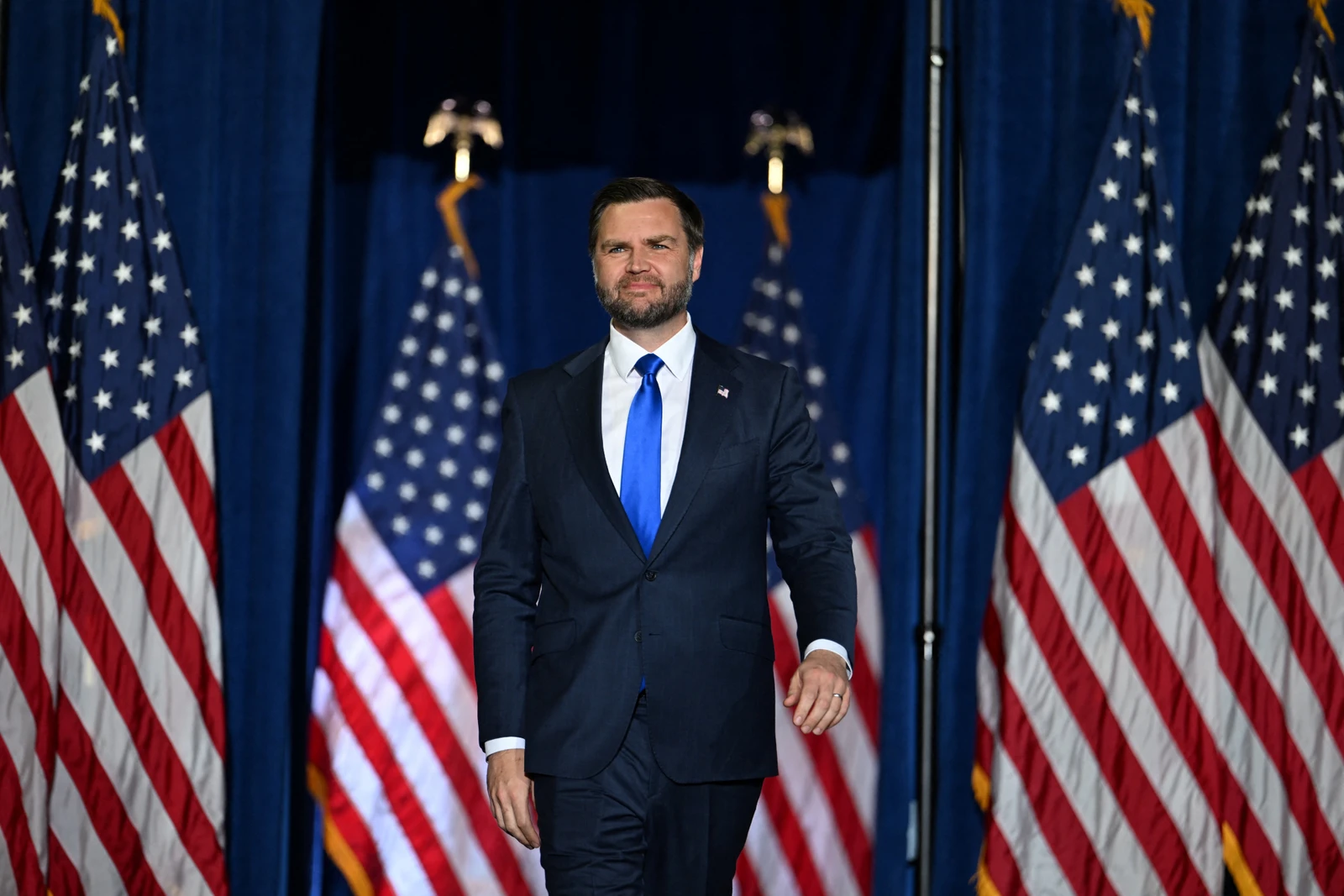

Vice President J.D. Vance has been outspoken about the US midterm election results. In a long post on X, he predicted that “there will be a lot of infighting and arguing over what happened and why that is … but the real reason we lost is obvious to almost everyone.” He added: “The reason we lost is the war. The president himself said so last night.”
Vance explained what he meant: The administration’s agenda has deviated from what the public wanted, which is putting America first, addressing economic issues such as rising prices, ending the war with Iran and changing the US’ relationship with Israel, adding that “the above four reasons are why many of them voted for Democrats.” He favored diplomacy, defending Fox News host Rachel Campos-Duffy for calling for a diplomatic resolution to the conflict, calling her advice “sound.”
In fact, long before the midterm elections took place on Tuesday, Vance appeared to favor diplomacy and he was dismissed for it as a lightweight and not being in sync with President Donald Trump. His fortunes may have improved by the rebuke the voters gave the administration.
A week ago, Vance sent a letter to Mohsen Rezaei, the hawkish secretary of Iran’s Supreme National Security Council, offering to restart diplomacy and a way out of renewed hostilities after the elections. The letter asked Iran to make commitments on its nuclear program at the start and reopen the Strait of Hormuz within seven days in return for some US sanctions relief.
Vance’s letter was a sign that the US favored diplomacy, even before American voters made that choice clearer
Dr. Abdel Aziz Aluwaisheg
In an apparent public rebuff of Vance’s diplomatic gesture, Iran’s chief negotiator, Parliament Speaker Mohammed Baqer Qalibaf, wrote on X last week: “Iran’s conditions have been repeatedly and clearly stated to the mediators. The carrot-and-stick approach has no effect on Iran. Progress can only be achieved once Iran’s seven conditions have been agreed upon.” Those conditions include lifting sanctions, ending asset freezes and ending the war “on all fronts.” Iran has also resisted the return of International Atomic Energy Agency inspectors, ostensibly out of fear that information on the location and state of the enriched uranium may be leaked.
Because of the mistrust between the two parties, Iran is reluctant to offer commitments such as exporting its highly enriched uranium to a third country before reciprocal sanctions relief on Iranian oil exports takes place. During previous discussions on the margins of the UN General Assembly in New York in September, Tehran suggested that the nuclear talks could start six or seven days after the US restores the sanctions waiver on its oil exports and the Strait of Hormuz is reopened.
Despite Iran’s tough public posturing, discussions behind closed doors have been more about sequencing and guarantees than on substance; hence the search for third-party guarantees that the two sides adhere to such a bargain.
Before the elections, preparations were underway for a massive US military campaign. Before he was taken ill last week, Democratic Sen. Chris Murphy wrote on X: “Trump is reportedly planning to restart war with Iran after the election. Some of us have been briefed on the war plan. And while I cannot disclose any details, I can say this: the plan is insane. It will not achieve objectives and will set off a new cycle of escalation.”
In comments at the Middle East Institute, Murphy added: “I did get a fairly detailed conversation about what the war plan would be … I will just say this: their plan is insane. It will lead to devastating escalation and the likely destruction of our commitment to the rule of law.” He added: “The plan they have developed will lead, in my judgment, to a prolongation and escalation of this war that will be devastating to our security interest.”
The midterms’ effect on America’s Iran policy will be limited to the margins of foreign policy, at least in the short run
Dr. Abdel Aziz Aluwaisheg
As evident from comments from top officials, Iran also seemed to have equally insane plans to strike not only US interests in the region but also targets outside the region, in addition to internet cables, electricity grids and other civilian targets in the Gulf.
Despite such ominous military planning, Vance’s letter was a sign that the US favored diplomacy, even before American voters made that choice clearer. It is true that he had long been skeptical about the war but the letter was reportedly approved by Trump before it was sent out to Iran.
Much now depends on Iran’s response to Vance’s letter and the gestures included in his comments on the election results. Qalibaf’s reaction to Vance’s assessment of the election results is not encouraging. He wrote on X on Wednesday: “Conscience or the cost of living, Americans said no to war, and we endorse this message. If the US govt betrays their public will to serve international paymasters and blackmailers, it will learn our no comes with a nightmare.” He added on Thursday: “Losing gambler energy, can't walk away from the table. Boss is prepping the next war phase while America teeters on an Israel-first cliff. Skip the TED Talk. Why not say this to your boss?”
It would be dangerous if Tehran thinks that the election results mean war is off the table or that the US may abandon its confrontation with Iran. It is true that the administration will lose Congress’ semiautomatic approval of its war plans, as Republicans have lost their majority and the Democrats have the upper hand in both houses, with Trump becoming a lame duck president.
But these changes do not translate into major changes in US foreign policy, at least not for now. Based on the historical record in such situations, Trump will still drive on foreign policy, with many institutional and political advantages over Congress, unlike with domestic politics, where Congress will likely become more assertive come January, when the new legislators are sworn in.
The Democrats could theoretically use the War Powers Resolution to call for an end to the war against Iran but they would not have the supermajority needed to override Trump’s likely veto.
It is also possible that Congress could stop funding the war, but there is no precedent of withholding funding for US forces during an armed conflict. There also simply would not be enough Democratic legislators to do so.
So, the midterms’ effect on Iran policy will be limited to the margins of foreign policy, at least in the short run, but more will stay the same. In fact, when US presidents have lost congressional majorities in the past, they usually turn to foreign policy, over which they have greater say, to preserve their legacy.
In addition, the current Congress will call the shots until Jan. 3. That is almost two months during which the administration could advance many of its Gulf-related priorities, including agreements and arms deals. On moves toward Iran, the current lawmakers are unlikely to oppose Trump’s policy.
What does this mean for the Gulf? Current mediation efforts should continue, by Qatar, the Makkah alliance, China and others, to avert an almost certain resumption of the war, despite the US midterm results. At the same time, the Gulf Cooperation Council countries should continue their defense preparations to ward off any attacks should the war resume.
Dr. Abdel Aziz Aluwaisheg is the GCC assistant secretary-general for political affairs and negotiation. The views expressed here are personal and do not necessarily represent those of the GCC.
X: @abuhamad1


