
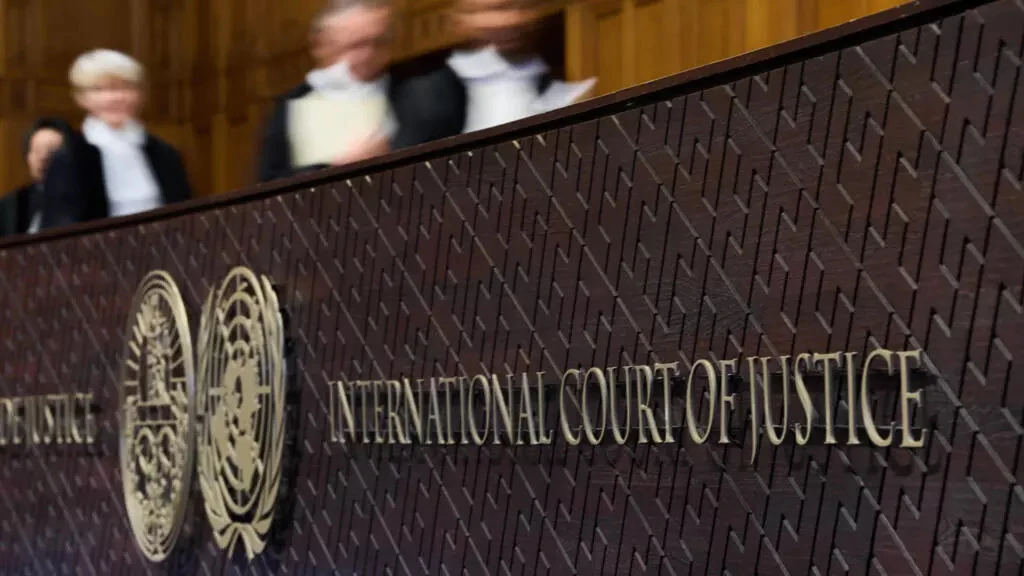

When three Rohingya survivors entered the International Court of Justice in The Hague earlier this year to give evidence about what had happened to them and their families, something unusual took place.
This is the world’s principal court for disputes between states. Its own statute is explicit: only states may be parties before it. Individuals cannot bring cases, however grave the abuses they have suffered. Yet, during the merits hearings in Gambia v. Myanmar, the judges heard directly from Rohingya witnesses about atrocities committed during Myanmar’s military operations. Their testimony took place in closed sessions and was an exceptionally rare occurrence in an interstate case.
That matters for reasons extending far beyond Myanmar.
International justice has traditionally been constructed around institutions. States bring cases. Governments appoint lawyers. Judges interpret treaties. Prosecutors present evidence. Victims may provide testimony but they often remain at the edge of processes supposedly created to deliver justice for what happened to them.
The Rohingya case raises an important question: Should international justice continue to be something conducted primarily for victims or should victims have a greater role in shaping it? The distinction is significant.
Accepting that only states can litigate does not require accepting that victims should remain peripheral
Dr. Azeem Ibrahim
Gambia deserves enormous credit for bringing Myanmar before the International Court of Justice in 2019 under the Genocide Convention. Without another state acting, the Rohingya themselves could not have initiated the case at the world court. Article 34 of the court’s statute allows only states to be parties. Its very architecture therefore means that people who experienced alleged atrocities depend on governments to transform their suffering into an international legal dispute.
There are good historical reasons for this system. The International Court of Justice was designed to resolve disputes between sovereign states, not to function as an international human rights tribunal. Allowing every individual affected by government conduct to become a party would fundamentally alter the court and could make proceedings unmanageable.
But accepting that only states can litigate does not require accepting that victims should remain peripheral.
The International Criminal Court provides a useful contrast. Under the Rome Statute, victims whose personal interests are affected can present their views and concerns independently of the prosecution, subject to judicial control. The court even has institutional structures specifically dedicated to victim participation and reparations.
The International Court of Justice operates differently because it determines state responsibility rather than individual criminal guilt. But cases involving genocide, racial discrimination and other grave violations increasingly concern not simply abstract relationships between governments but communities whose survival, identity and future are directly at stake. Their participation can strengthen justice in at least three ways.
The first is evidential. Atrocities are frequently denied by the states accused of committing them. Documents disappear. Governments challenge reports produced by investigators. Witnesses may be dispersed across refugee camps and several countries. Direct testimony allows judges to encounter evidence not simply as statistics or summaries in reports but through individuals capable of explaining what they experienced.
A court may focus on whether a legal threshold has been met. Survivors may want something much broader
Dr. Azeem Ibrahim
Legal Action Worldwide, which supported the Rohingya witnesses, says three survivors testified during the January hearings. The organization also spent years collecting hundreds of pages of survivor testimony for the proceedings.
The second benefit is legitimacy. International justice often suffers from an enormous distance between institutions and the people in whose name they operate. Proceedings happen in The Hague. Lawyers debate legal standards. Judgments can run to hundreds of pages. Meanwhile, victims remain in refugee camps or displaced communities thousands of kilometers away.
That distance can make justice feel abstract even when courts reach legally important decisions.
Allowing survivors to participate more meaningfully can narrow that gap. It reminds international institutions that atrocity cases are not simply exercises in treaty interpretation. Their conclusions affect real communities seeking recognition of what happened to them.
The third reason may be the most important: victims and lawyers do not always define justice in the same way. A court may focus on whether a legal threshold has been met. Survivors may want something much broader.
Rohingya representatives have repeatedly spoken about citizenship, land, recognition, security and the ability to return home. These objectives extend far beyond a judicial declaration that a treaty was breached. Legal Action Worldwide’s recent work with Rohingya communities emphasizes that justice for many survivors includes reparations and restoration of rights as well as accountability. This matters because international institutions can technically deliver justice while failing to deliver what victims understand justice to mean.
A judgment may establish responsibility without returning someone’s property. A conviction may punish a perpetrator without restoring citizenship. A finding of genocide may acknowledge a crime while leaving the community targeted by it permanently displaced.
Victim participation therefore should influence not only how evidence is gathered but how remedies are understood. That does not mean courts should simply adopt whatever outcomes victims demand. Justice requires impartiality. Different survivors may want different things and governments accused of wrongdoing retain procedural rights.
Nor should participation become symbolic. Flying a handful of survivors to The Hague while decisions continue to be made entirely around them would risk creating the appearance of inclusion without substance. The objective should instead be meaningful participation.
Courts and states involved in mass atrocity cases should develop clearer mechanisms for consulting affected communities, protecting witnesses, providing translation and psychological support, and ensuring that victims’ views about remedies reach judges. Where formal standing is impossible, representation and structured consultation can still be strengthened.
The Rohingya witnesses who appeared before the International Court of Justice this year therefore represent something larger than one evidential moment in one case.
For decades, Rohingya have been spoken about by Myanmar governments, foreign governments, international organizations, humanitarian agencies and lawyers. Their political status, citizenship and future have repeatedly been decided by others. Appearing before the world’s highest court allowed some of them to do something different. They spoke for themselves.
The court is now deliberating on its judgment. Whatever it ultimately decides, the proceedings have already raised a question international justice should not ignore. The institutions created to respond to humanity’s gravest crimes cannot merely ask whether victims have been heard as witnesses. They must increasingly ask whether victims have been heard as participants in justice itself.
Dr. Azeem Ibrahim is the director of special initiatives at the New Lines Institute for Strategy and Policy in Washington. X: @AzeemIbrahim


