

Writing in 1919, British geographer Halford Mackinder, considered by many to be one of the architects of modern geopolitics, described the strategic importance of what he called the “world island” — the connected landmass of Asia, Europe and Africa. Sitting at the hinge of this so-called world island is the Middle East, making it one of the most strategic regions in the world. Yet, for too long, the region’s potential for global and regional transport has not been fully realized.
Moving beyond traditional discussions about which shipping lanes are open or closed, there are four recent initiatives worth examining: Iraq’s Development Road, the India-Middle East-Europe Economic Corridor, the Gulf Cooperation Council railway project and the proposed north-south railway corridor connecting Turkiye and Saudi Arabia through Syria and Jordan. If realized, these projects could make the Middle East one of the most important regions in the world for global transport and trade.
In fact, all four initiatives have seen important developments in recent weeks. In late October, Iraq announced further progress on the engineering designs for its Development Road project. On Nov. 5, the Organisation for Economic Co-operation and Development published a major report examining the potential of the India-Middle East-Europe Economic Corridor. On Nov. 8, the GCC member states signed an agreement in Bahrain reaffirming their commitment to a regional railway network. And, on Nov. 9, Syria and Jordan signed a memorandum of understanding to improve railway connectivity between the two countries.
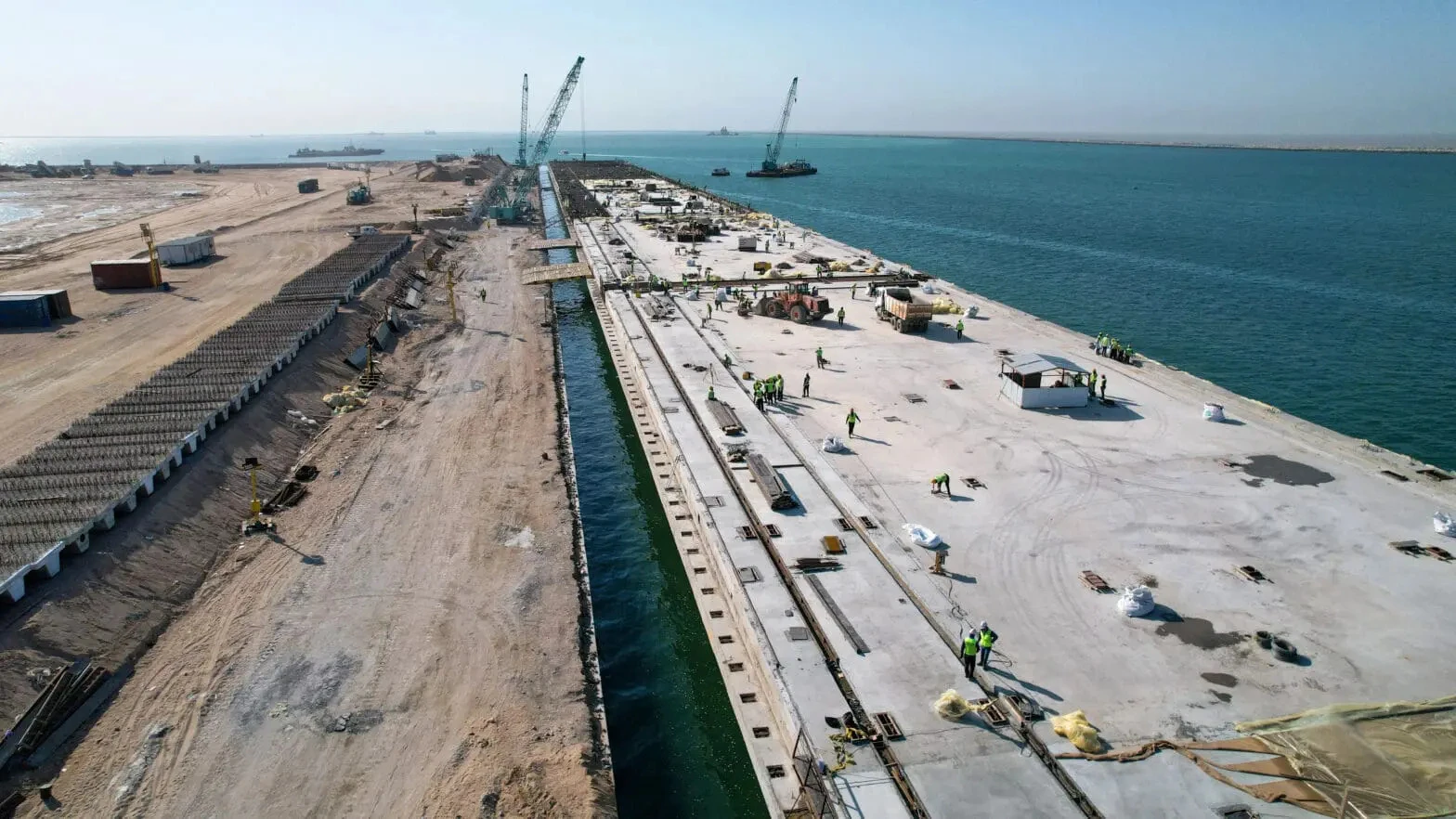
The Iraqi Development Road, commonly referred to as the “dry canal,” is an ambitious project involving Iraq, Turkiye, Qatar and the UAE. The ultimate aim is to connect Iraq’s Grand Faw Port on the Gulf to European markets through Turkiye. Recently, the engineering designs for the approximately 1,200-km project entered their final stages, with the designs expected to be completed before the end of this year. Iraqi officials have indicated that the first phase could be finished as early as 2028, although other official projections suggest a longer timeline.
These projects could make the Middle East one of the most important regions in the world for global transport and trade
Luke Coffey
This initiative seeks to put Iraq’s strategic position on a more stable footing, while bolstering Turkiye’s ambitions to become a regional transport hub. When completed, Iraqi officials estimate that cargo could reach European markets from the Middle East in just 25 days, compared with the 36 days required when using the Suez Canal.
However, as with all ambitious infrastructure projects, funding remains uncertain. The Development Road is estimated to cost about $17 billion and it remains unclear who will ultimately foot the bill.
Another major initiative is the India-Middle East-Europe Economic Corridor, or IMEC. The idea is to connect markets in South Asia to European and global markets by utilizing new transport infrastructure through the UAE, Saudi Arabia, Jordan and Israel.
While this sounds good in theory, several geopolitical and physical obstacles must be overcome. First proposed in September 2023, enthusiasm for the project stalled following the outbreak of war in Gaza, although there has been renewed diplomatic interest in 2026. Also, Jordan remains the main rail gap along the route, with major investment and construction needed.
In addition, with everything happening around the Strait of Hormuz, it is right to question the wisdom of leaving Oman out of the initiative. Utilizing Oman’s Duqm Port would allow cargo to bypass the Strait of Hormuz altogether, providing another option for transporting goods into the Arabian Peninsula.
The third initiative is the GCC’s plan to connect all six member states by rail by December 2030. Already, Gulf officials estimate that the project is about 56 percent complete, although this figure includes planning, engineering and other preparatory work, in addition to actual railway construction. Such a network could play an important role not only in improving transport and trade among GCC members but also in connecting the broader Development Road and IMEC initiatives.
Some might view these different projects as competing with one another. But in reality, this is not a zero-sum game
Luke Coffey
The fourth and final initiative, also focused on improving rail connections in the Middle East, is the Turkish-Saudi proposal to improve railway links between Anatolia and the Arabian Peninsula, based loosely on the old Hijaz Railway.
With this initiative, however, the consequences of years of civil war in Syria are being felt. The biggest gap in the proposed railway network remains between Syria and Jordan. Turkiye is already working to restore railway connections to Aleppo but about 400 km of missing or damaged rail infrastructure remains along the broader route through Syria toward the Jordanian border.
Earlier this month, Syria and Jordan signed a memorandum of understanding covering railway rehabilitation and feasibility studies for the construction of a railway connecting Damascus and Amman.
Because the original Hijaz Railway used narrow-gauge tracks, while the proposed modern freight corridor would require standard-gauge infrastructure, this is not simply a matter of renovating an older railway line. Instead, significant sections of new railway infrastructure will have to be constructed.
Some might view these different projects as competing with one another. But in reality, this is not a zero-sum game. Although geopolitical rivals Turkiye and Israel are advocating different trade routes through the Iraqi Development Road and IMEC, the two initiatives could ultimately complement each other. Both major rail projects can also complement the Development Road and IMEC and, with some strategically placed branch lines, could even connect these different initiatives.
Having multiple options for transporting goods across the Middle East would help reduce dependence on any single route, while providing alternatives when geopolitical tensions or other disruptions threaten global commerce. It is the global consumer and the international economy that benefit from redundancy and diversity in trade routes.
Therefore, while there is considerable discussion about keeping shipping lanes open across the broader Middle East, policymakers should not overlook the region’s potential to serve as the transport hinge connecting Asian, European and African markets to the global economy.
Luke Coffey is a senior fellow at the Hudson Institute. X: @LukeDCoffey


