
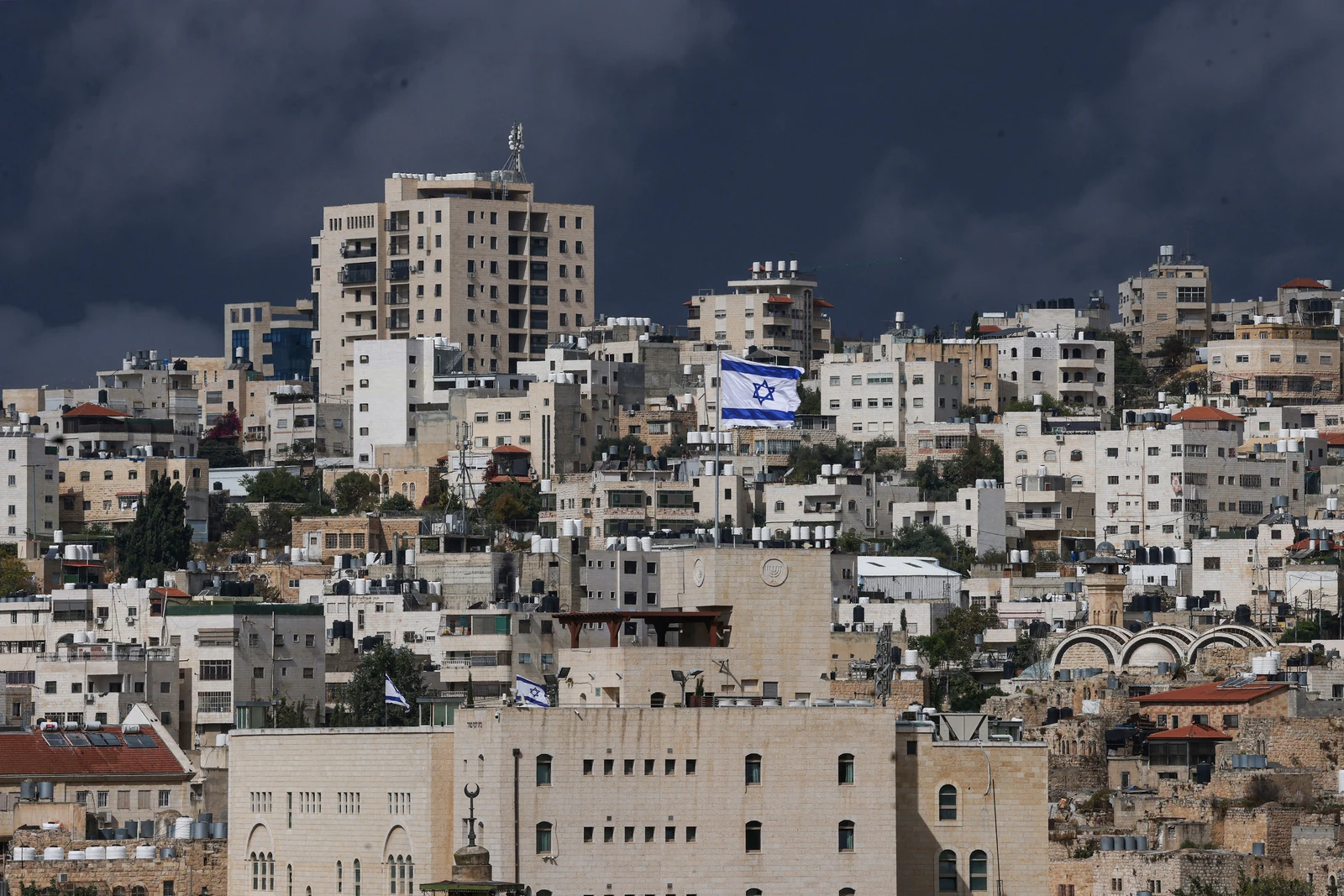

What Israel is doing throughout Palestine is nothing more than an extension of the Nakba in slow motion. The worst case is Gaza, where Israel callously ignores a “ceasefire” by killing civilians daily and denying the food, shelter and medical needs of 2 million suffering Palestinians, while continuing to encroach on Palestinian lands, compressing the population into ever-smaller areas. But the situation in the West Bank — and, by extension, what the Israelis call “East Jerusalem,” which, in addition to the holy city, includes 28 West Bank villages — must also be considered.
To understand how this is an extension of the Nakba, it is important to look back at what transpired in 1948 and why it happened.
When Jewish leaders in Palestine were presented with the 1948 UN partition plan, they accepted it despite having reservations about the viability of their proposed state. While the area reserved for the Israeli state included 80 percent of all Jewish inhabitants of Palestine, the area’s population was still evenly divided between Arabs and Jews. And despite the fact that the partitioned area included almost all of the Jewish-owned land in Palestine, that amounted to less than 10 percent of the total area, while Arabs owned four times more.
The Arabs of Palestine rejected the partition. They felt it was unjust both that the Israeli state received the largest portion of the land and that, despite being almost half the population of the new state, they were to be reduced to a minority.
Israel’s goal in 1948, as described by David Ben-Gurion, who became Israel’s first prime minister, was to use force to create more favorable conditions for their proposed “Jewish state.” Ben-Gurion and his allies laid out a detailed plan that involved terrorizing Arabs out of their homes in order to expand the areas set aside for their state. As this campaign of terror and evictions unfolded, armies from the surrounding Arab states responded. Israeli propagandists used this response to justify their tactics, claiming self-defense. But in reality, their campaign of terror began months earlier and no Arab army ever entered the areas set aside for the Israeli state. The Arabs only attempted to salvage the parts of Palestine that were to be the Palestinian state.
During the first years of Oslo, the Israelis refused to allow Palestinians to develop an independent economy
Dr. James J. Zogby
When the dust settled, 700,000 Arabs had been forced to flee and Ben-Gurion was able to boast of a “double miracle” — his new state had “more land and less Arabs.” In the years that followed, Ben-Gurion’s plan continued to be implemented. Arabs who tried to return were shot and killed, their homes and lands were confiscated and more than 420 Arab villages were laid waste and plowed under. Where Arabs remained, in the Galilee and what was called the “Triangle,” their villages and towns were surrounded and their lands seized.
All of this was by design. And it is important to note this because the same design can be seen in the way Israel is operating, to different degrees, in both the West Bank and Gaza today.
Thirty years ago, I was in the State Department office of a member of the Clinton administration’s “peace team.” On his wall there hung a map of the West Bank, with Area A (under the control of the Palestinian Authority), Area B (under joint Israeli-Palestinian control) and Area C (under Israeli control) each in different colors. I was there to present a document I had prepared on Israeli impediments to the implementation of the Oslo Accords.
Whether he was being naive or disingenuous, the State Department official said, pointing to the green dots of Area A: “As we progress, these green dots will expand and be connected until Palestinians will be able to exercise control over the entirety of this land.” Based on my experiences working with the US peace team, the Israelis and the Palestinians, I responded: “What if they are never allowed to connect? And all we have are these little Bantustans surrounded by hostile Israeli control?”
This is where we are today. During the first years of Oslo, the Israelis refused to allow Palestinians to develop an independent economy. Using their control over Area B and Area C, they constrained Palestinian movement of goods and people so that the major source of income for Palestinians was serving as day laborers in Israel or Israeli settlements. When hostilities began and permits were denied to Palestinian workers, they became more dependent on aid or remittances from abroad.
In recent years, the Israeli plan to complete the conquest of Palestine has accelerated. What is unfolding in the West Bank is not, as the Israelis say, “actions by a handful of rogue youths,” but rather the implementation of the same slow-motion Nakba. Settlements and outposts are being placed in locations designed to cut Palestinians off from one another. Thousands of homes are being demolished, agricultural lands are being seized and Palestinians in smaller towns and villages that are in the way are being terrorized into leaving, consolidating them in areas where they can be more easily controlled.
The design is clear. The green dots of Area A will be severed from one another and never connected. This is not happenstance. It is an extension of the same thinking that brought on the Nakba or its elaboration in the infamous Drobles Plan of the mid-1970s. This envisioned completing the conquest of the West Bank by seizing land, expanding settlements and building Jewish-only roads and infrastructure, making a contiguous Palestinian entity an impossibility.
Taken together, Israel’s actions since the 1948 Nakba constitute an eight-decade process of displacement in service of the ultimate goal of erasing the independent Palestinian presence on this land.
Dr. James J. Zogby is co-founder of the Arab American Institute. He has served in official roles in numerous presidential campaigns and is Director of Zogby Research Services.


