- Kim Jong Un arrived in Dandong, China from North Korea using a new bridge
- The bridge deepens economic ties between China and North Korea
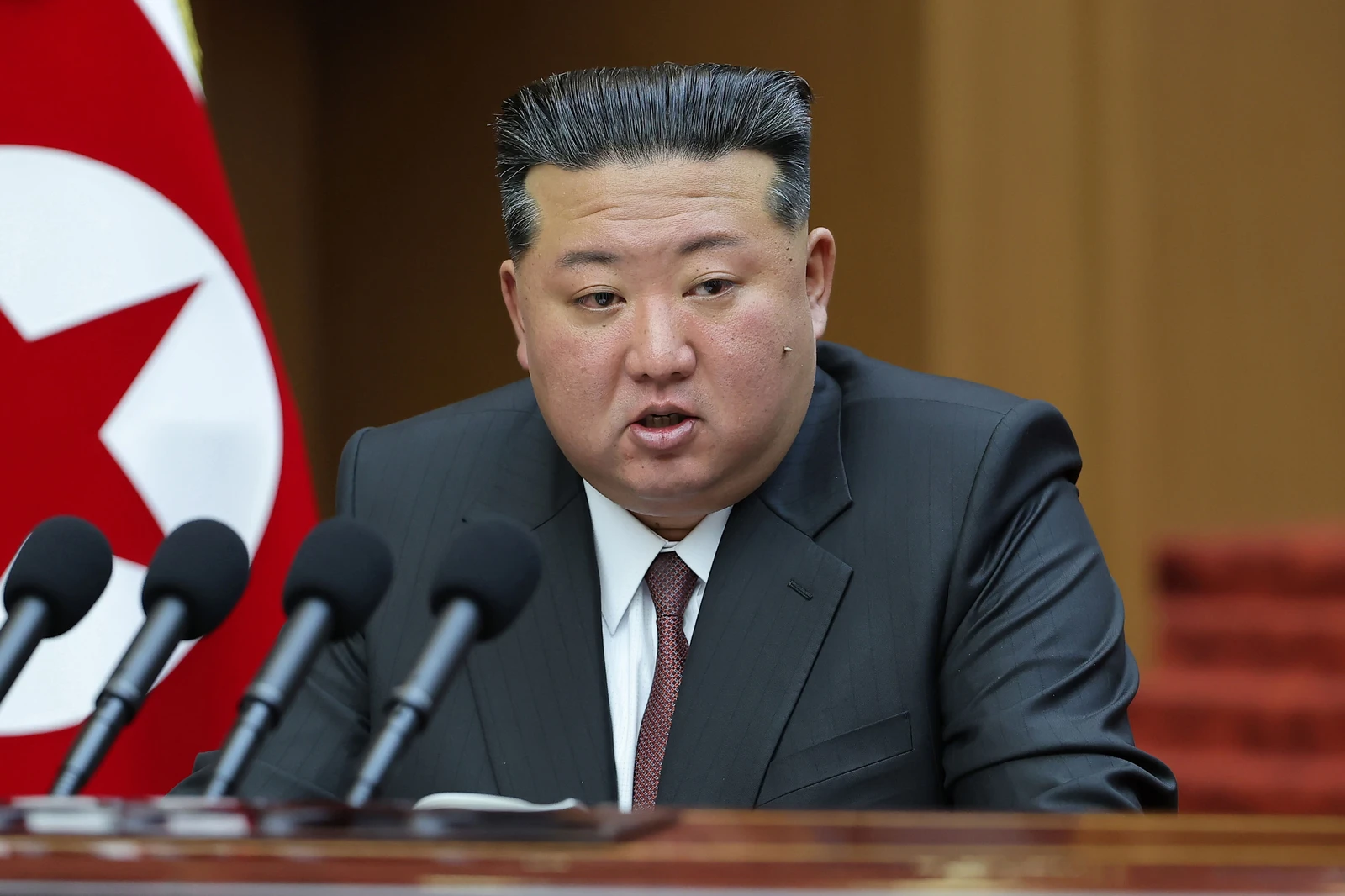
SEOUL: North Korean leader Kim Jong Un arrived in China’s border city of Dandong via a newly opened bridge linking the two countries, South Korea’s Yonhap news agency said on Saturday.
The announcement came about a week after the major new bridge was officially opened, 12 years after its completion, deepening economic ties between China and diplomatically isolated, nuclear-armed North Korea.
China is North Korea’s largest trading partner and a vital source of diplomatic, economic and political support for Pyongyang, although ties have not always been smooth.
“Kim arrived in Dandong through the New Yalu River Bridge earlier in the day,” Yonhap reported, citing an unidentified government source.
AFP has contacted China’s foreign ministry for confirmation.
The four-lane bridge was completed in 2014 but its opening was delayed due to a lack of connecting roads and customs facilities on the North Korean side, according to South Korean news reports.
Since Russia launched its full-scale invasion of Ukraine in 2022, Pyongyang has become a key Kremlin ally, sending troops to support Moscow’s war effort in return for economic benefits and military technology.
The opening of the new bridge came a little more than a month after North Korea and Russia opened their first road bridge, with Pyongyang lauding it as a sign of closer ties.
Hours prior to Yonhap’s report on Kim’s arrival in China, North Korea’s state media said their leader urged his military to train to become the strongest in the world at a two-day meeting of company commanders in Pyongyang.
Kim’s call for what he dubbed a “Korean-style military revolution” came the same week Seoul’s military proposed talks to clarify the border after an explosion inside the heavily fortified Demilitarised Zone (DMZ) further strained inter-Korean ties.
Seoul and Pyongyang remain technically at war as the 1950-53 Korean War ended in an armistice, not a peace treaty.
South Korea proposed on Friday military talks with North Korea to clarify their border and restore communication channels, after Seoul blamed the DMZ blast, which injured South Korean soldiers, on North Korean land mines. Pyongyang strongly rejects the claim.
North Korea, which also previously rejected the South’s demand for an apology over the explosion, has not responded to Friday’s proposal.
‘Implicit acceptance’
Despite long-running UN sanctions, North Korea has enshrined its status as a nuclear-armed state in law, with its regime repeatedly declaring its atomic arsenal permanent and irreversible.
South Korea’s dovish President Lee Jae Myung — who has repeatedly offered Pyongyang talks without preconditions — suggested in September that Washington seek a freeze, rather than the immediate elimination, of its nuclear program in return for sanctions relief.
Critics say such an approach risks tacitly accepting North Korea as a nuclear-armed state while allowing Pyongyang to win sanctions relief without giving up its arsenal.
Analysts say China has also appeared to move toward implicit acceptance.
Kim hosted Chinese President Xi Jinping in Pyongyang in June, soon after Xi held back-to-back summits in Beijing with Trump and Putin.
Neither Pyongyang nor Beijing mentioned North Korean denuclearization in their official statements — an omission experts saw as a sign of China’s tacit consent.
Kim’s visit comes as Xi and other top Chinese officials prepare to meet in Beijing on Monday for an important political gathering, the fifth plenary session of Communist Party’s powerful Central Committee.