- Restricted access to 220 schools and displacements leave thousands of West Bank children without textbooks or places to study
- Israeli troops withdraw from Hebron on Monday after operation lasting 10 days that followed attack in which 2 Israeli soldiers were killed
LONDON: Nearly 80,000 Palestinian students missed school last week amid an Israeli military operation in Hebron, the General Union of Palestinian Teachers said, shortly before an Israeli military official confirmed on Monday that troops had withdrawn from the occupied West Bank city.
The military restrictions disrupted access to 220 public, private and UN-run schools in the central Hebron education district and forced 537 families from their homes, the union said on Sunday in a statement reported by the Palestinian WAFA news agency.
The Israeli operation began after an attack on Oct. 23 in which two soldiers were killed and Sunday marked its 10th consecutive day. It displaced or otherwise affected more than 3,300 Palestinians, particularly in the areas of Al-Jalda and Ain Deir Bahha, Palestinian media reported.
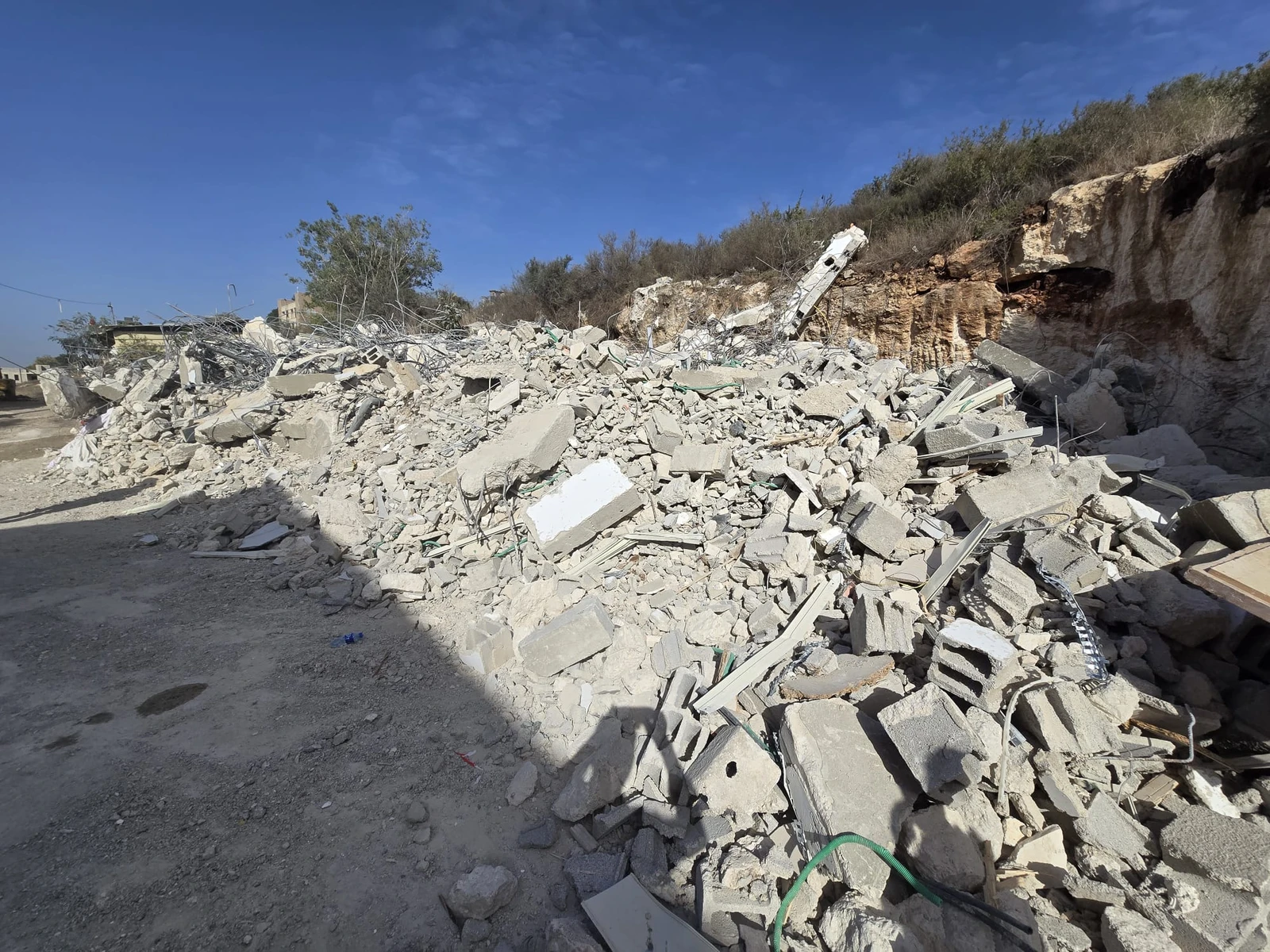
Fifteen homes and other structures were reportedly demolished as Israeli troops sealed off Hebron and surrounding villages, seized houses and turned them into military posts. Damage to infrastructure was said to have caused further disruption to daily life.
For displaced students, the disruption extended beyond missed lessons; many lost access to their textbooks and places to study, while teachers struggled to reach their classrooms, the union said.
Israeli forces detained 10 teachers from Jinba Basic Mixed School for several hours on Sunday on Khallat Al-Dabaa Road in Masafer Yatta, south of Hebron, union officials said, as soldiers held their vehicle, leaving students waiting.
The disruptions in Hebron came amid broader barriers to education reported across the West Bank, including East Jerusalem.
“What we’re seeing is a systematic dismantling of Palestinian education,” Alexandra Saieh, head of global strategic influencing and policy at Save the Children International, told Arab News.
She cited the defunding of the UN Relief and Works Agency for Palestine Refugees, the Palestinian Authority’s financial crisis, settler violence and Israeli-imposed restrictions on movement as overlapping barriers that were preventing children from consistently attending school.
“Children in the West Bank are facing unprecedented obstacles to accessing adequate education,” she said, adding that the pressures threatened an entire generation’s right to learn and grow with dignity.
Save the Children said on Oct. 26 that more than twice as many Palestinian students in the West Bank had experienced disruptions to education during the first 50 days of the school year compared with the same period a year ago. It attributed the disruptions to attacks by settlers, which it described as state-backed, and restrictions imposed by the Israeli military.
The Education Cluster, a humanitarian coordination group co-led by Save the Children and UNICEF, documented 174 education-related incidents between Sept. 1 and Oct. 20, affecting 140 schools and about 24,500 students, a 121 percent increase from about 11,100 students affected by such incidents during the same period a year ago.
The effects of this were not restricted to academic performance, Saieh warned: “Constantly missing school and being blocked from accessing consistent education impacts Palestinian children far beyond formal education; schools also support children’s well-being and cognitive development.”
Repeated absences can cause children to miss developmental milestones, struggle in subsequent exams and graduate late, narrowing the opportunities for further study and employment, she added.
The teachers union condemned road closures and detentions of teachers and students as “an assault on the right to education and on people’s lives and dignity.” It urged education unions worldwide to press their governments to take action to help reopen routes to Palestinian schools and protect students and teachers.
Meanwhile, aid groups were working to help students make up lost learning time. Saieh said Save the Children offered remedial classes for children who missed school or were struggling academically, alongside support for children’s councils to advocate for better education.