
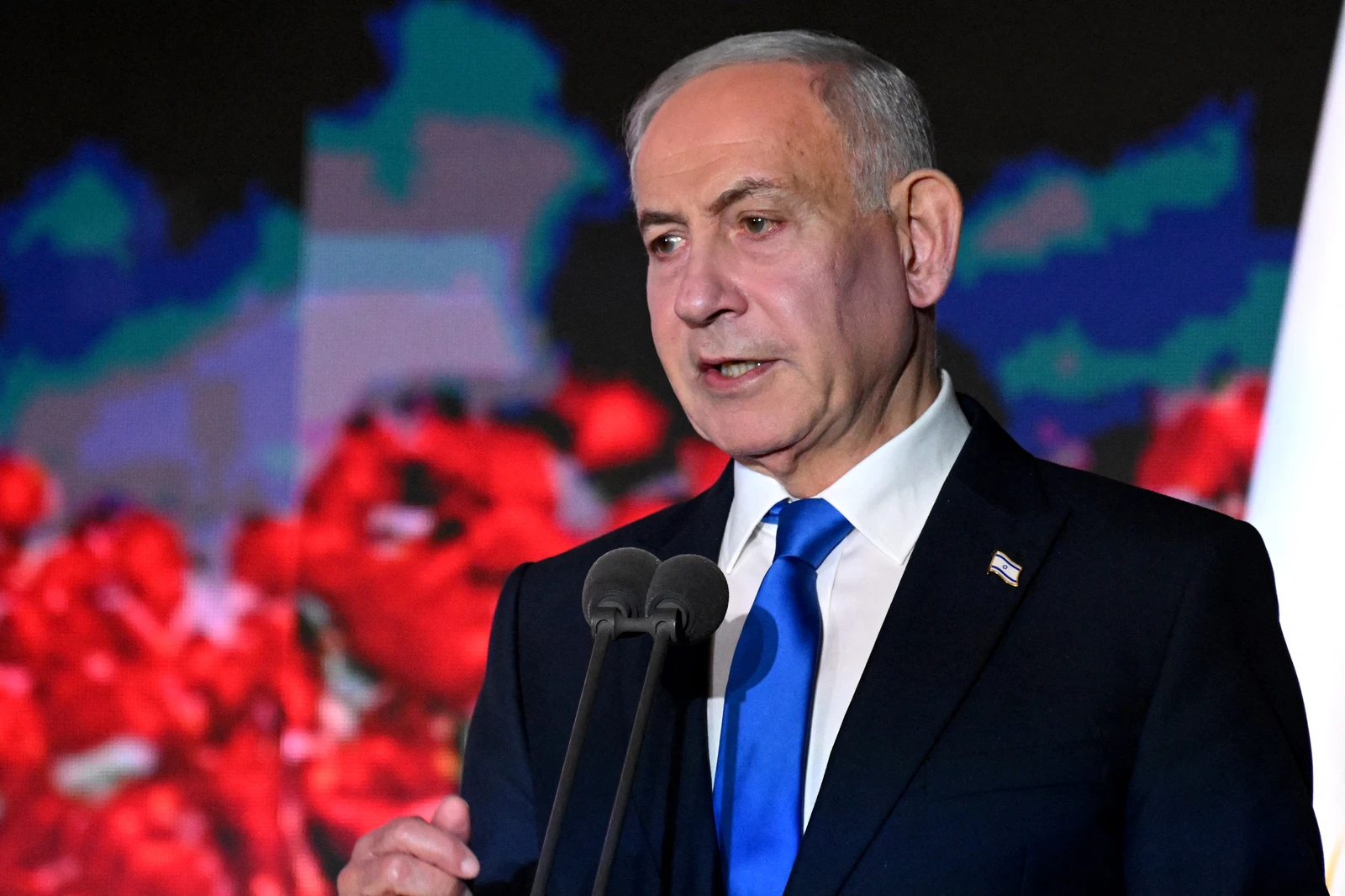

Israel’s latest election has left the country facing a familiar political question: Can Benjamin Netanyahu finally be removed from power or will he once again find a way to remain prime minister? The results have weakened his governing bloc but they have not delivered a decisive victory to his main challenger, Gadi Eisenkot. The outcome is less a clear rejection of Netanyahu than a reminder of how difficult it remains to assemble a government in Israel’s deeply divided political landscape.
Netanyahu’s bloc secured 53 seats in the 120-member Knesset, while the opposition bloc led by Eisenkot won 48. Palestinian-led parties captured 19 seats, placing them in a potentially decisive position. With 61 seats required for a parliamentary majority, neither of the two main camps can govern on its own. The arithmetic makes coalition negotiations central to the next phase of Israeli politics — and leaves Netanyahu’s political future unresolved.
Eisenkot has a plausible route to the premiership but it is not an easy one. His opposition bloc would need to secure the support of Palestinian lawmakers, either through a formal coalition or an arrangement that allows a government to take office with their backing. Such cooperation is not unprecedented in Israeli politics but it remains deeply controversial among many Jewish Israeli parties and voters. Several opposition leaders have resisted relying on Palestinian parties, even as their numbers may prove essential to ending Netanyahu’s rule.
The question, therefore, is not simply whether Palestinian lawmakers are willing to support Eisenkot. It is whether Eisenkot and his partners are prepared to accept that support and withstand the political consequences. The Palestinian parties have their own constituencies, priorities and conditions. Their participation cannot be treated as an automatic extension of the opposition’s campaign, nor should their voters be reduced to instruments in a contest between two Jewish Israeli political camps.
The Netanyahu bloc’s loss of its previous majority is significant but it does not make his departure inevitable
Hani Hazaimeh
Netanyahu, meanwhile, remains a formidable political operator. His bloc’s loss of its previous majority is significant but it does not make his departure inevitable. He can seek to persuade lawmakers from rival parties to defect, explore alternative coalition arrangements or wait for the opposition to fracture over the question of Palestinian support. A prolonged stalemate could also leave him serving as caretaker prime minister while negotiations continue. In Israel’s fragmented parliamentary system, the largest bloc does not necessarily form the government and a candidate who appears to have lost an election may still survive the political aftermath.
Eisenkot’s prospects should therefore be assessed with caution. A successful campaign against Netanyahu does not automatically translate into a stable governing coalition. The opposition is made up of parties with different political instincts and competing priorities. Their common objective — ending Netanyahu’s tenure — may not be enough to hold them together once they must agree on security policy, religious exemptions, the economy, the judiciary and the future of the Occupied Territories.
Even if Eisenkot succeeds in forming a government, expectations of a dramatic transformation in Israeli policy would be premature. His military background and political positioning distinguish him from Netanyahu and he has presented himself as a leader capable of restoring unity and improving Israel’s international standing. But a change of prime minister is not necessarily a change of national direction.
Eisenkot has not offered a clear commitment to Palestinian statehood and his approach to security remains rooted in the use of military power. His government could differ in tone, coalition composition and certain policy choices without fundamentally changing the realities facing Palestinians.
Palestinian lawmakers may hold the key but whether that key can unlock a viable government remains uncertain
Hani Hazaimeh
That distinction matters across the region. Netanyahu’s departure, if it happens, would be politically consequential. It could alter the relationship between Israel’s government and its international partners, change the dynamics of domestic debate and create openings for different diplomatic approaches. But it would not, by itself, end the occupation, halt settlement expansion or resolve the conflict. Those outcomes would require decisions that go far beyond replacing one Israeli leader with another.
There is also a broader democratic question at stake. Palestinian citizens of Israel have participated in the election and their representatives have won a substantial number of seats. If their support becomes decisive, treating that support as illegitimate would expose the limits of Israel’s democratic claims. Parliamentary representation cannot be welcomed only when it serves the interests of the dominant political parties. At the same time, the opposition’s willingness to work with Palestinian lawmakers must be judged by whether it recognizes their political agency and addresses the concerns of the communities they represent — not merely by whether it helps to remove Netanyahu.
For now, the election has opened a period of uncertainty rather than settled the question of leadership. Netanyahu has been weakened but he is not yet finished. Eisenkot has an opportunity but he has not secured the numbers or the political consensus needed to govern. Palestinian lawmakers may hold the key but whether that key can unlock a viable government remains uncertain.
The region should watch these negotiations closely but without excessive optimism. A new Israeli government could bring a different political style and perhaps some changes in policy. Yet the central test will not be who occupies the prime minister’s office. It will be whether the government takes concrete steps to end the occupation, restrain violence, respect Palestinian rights and pursue a political settlement. Until those questions are addressed, the replacement of Netanyahu — even by a leader promising change — will remain a shift in leadership, not necessarily a turning point.
Hani Hazaimeh is a senior editor based in Amman.
X: @hanihazaimeh


