- Mohammed Khurram Khan and other World Academy of Sciences fellows will be inducted on Jan. 1 next year
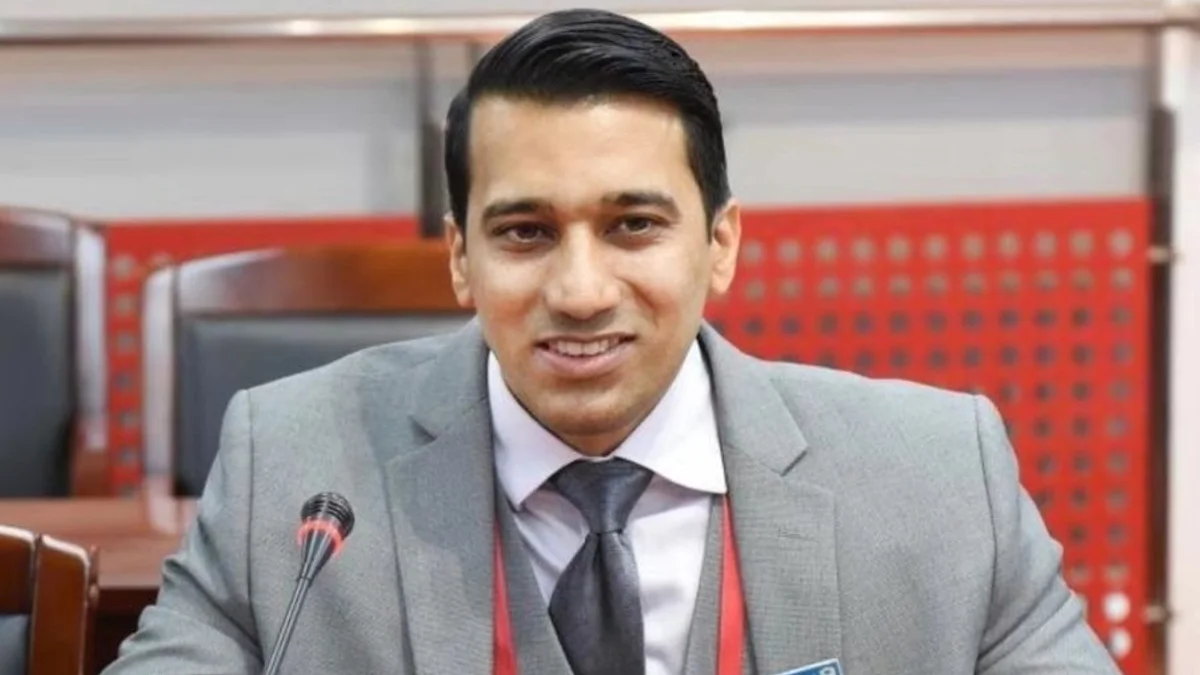
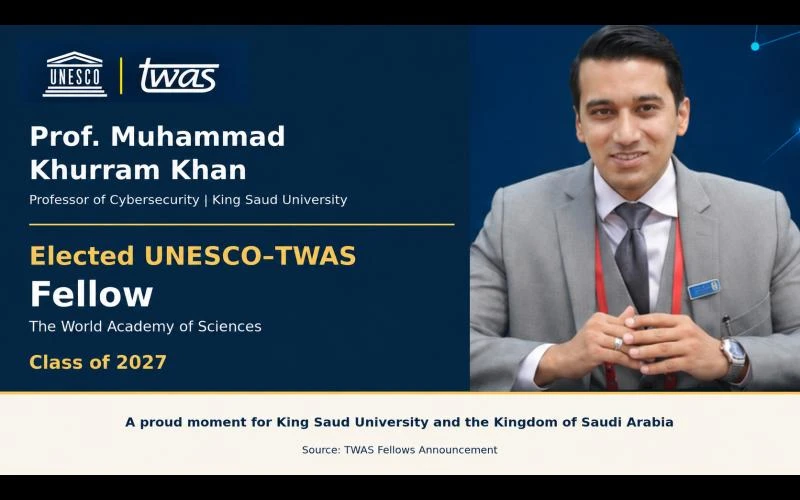
RIYADH: A professor of cybersecurity at the center of excellence in information assurance at King Saud University, Mohammed Khurram Khan, has been elected a fellow of The World Academy of Sciences.
Khan joins the TWAS Class of 2027, which brings together distinguished researchers from countries including the US, Canada, UK, China, Singapore, Belgium, Austria and Brazil, among others.
TWAS recently elected 87 new fellows as regular members of the academy and, for the first time, four as honorary members. They will be inducted on Jan. 1 next year.
Established in 1983 under the leadership of Nobel laureate Abdus Salam, UNESCO’s TWAS advances scientific excellence and capacity in developing countries.
Based in Trieste, Italy, the academy’s elected fellows represent 112 countries and include 11 Nobel laureates, reflecting the international reach and distinction of its scientific community.
According to KSU, the distinction recognizes Khan’s outstanding scientific contributions to cybersecurity, complemented by his professional leadership, scientific impact, policy engagement and technological innovation, and reinforces the university’s international standing in research and academic excellence.
Speaking to Arab News on Monday, Khan said: “Being elected a fellow of UNESCO’s The World Academy of Sciences is a profound honor. Joining a global community of distinguished scientists, including Nobel laureates, is a significant milestone in my career and an encouragement to contribute further to science and society.”
He added: “This achievement reflects the supportive research environment at King Saud University and the dedication of the colleagues, collaborators and students with whom I have worked. It creates opportunities to strengthen international scientific partnerships and highlights the contributions researchers in Saudi Arabia are making to address the problems of global importance.
“For the Kingdom, scientific excellence and cybersecurity are closely connected to the ambitions of Vision 2030. A thriving digital economy depends on people’s confidence that their identities, data and essential services are secure.
“As AI and connected technologies transform healthcare, transportation and public services, cybersecurity research must help protect lives and livelihoods while enabling innovation and prosperity.”
Scientific recognition carries a responsibility to turn knowledge into lasting public benefit, Khan said.
“I remain committed to making digital life safer, strengthening public trust in technology and preparing young researchers to lead future advances,” the professor added.
Election to TWAS is a lifetime honor based on internationally recognized scientific excellence. Candidates undergo a rigorous, multistage assessment involving specialist Membership Advisory Committees, the Elections Committee and the TWAS Council, followed by a majority vote of the membership.
The process recognizes sustained and significant contributions with their impact to the advancement of science.
TWAS’ recognition of Khan highlights his work on cybersecurity, digital authentication, privacy protection, digital trust, Internet of Things and cyber-physical systems security, and AI-enabled cyber defense, said KSU, adding that his research addresses challenges central to public trust in digital technologies, including protecting sensitive information, verifying digital identities and strengthening the security of connected systems.
Khan’s academic record combines sustained scholarship with technological invention. He has authored more than 550 scientific publications and holds 12 granted US patents in cybersecurity.
Research.com ranks him second in Saudi Arabia in its 2026 Computer Science ranking, further recognizing his sustained research influence and scholarly contributions.
Khan received two consecutive KSU Awards for Scientific Excellence in Research Productivity in 2015 and in Inventions, Innovations and Technology Licensing in 2016.
His subsequent honors include the Cybersecurity Excellence Award in 2024, the Lifetime Achievement Award in Cybersecurity in 2025, the Education and Talent Development Award in 2025 and the Cybersecurity Innovator of the Year Award in 2026.
At KSU, he played a leading role in developing the bachelor’s degree track in cybersecurity.
Khan serves as editor-in-chief of Telecommunication Systems, an international journal published by Springer-Nature and indexed in the Science Citation Index Expanded.
His public-interest engagement includes contributions to UN forums and G20-related cyber policy initiatives, alongside leadership of an International Telecommunication Union task group on children’s online protection in the metaverse.