- 16 teams participated in Saudi Arabia's first Childhood Hackathon held in Dhahran
- The hackathon, organized by Inmaa Childhood Care Association, runs for 4 days
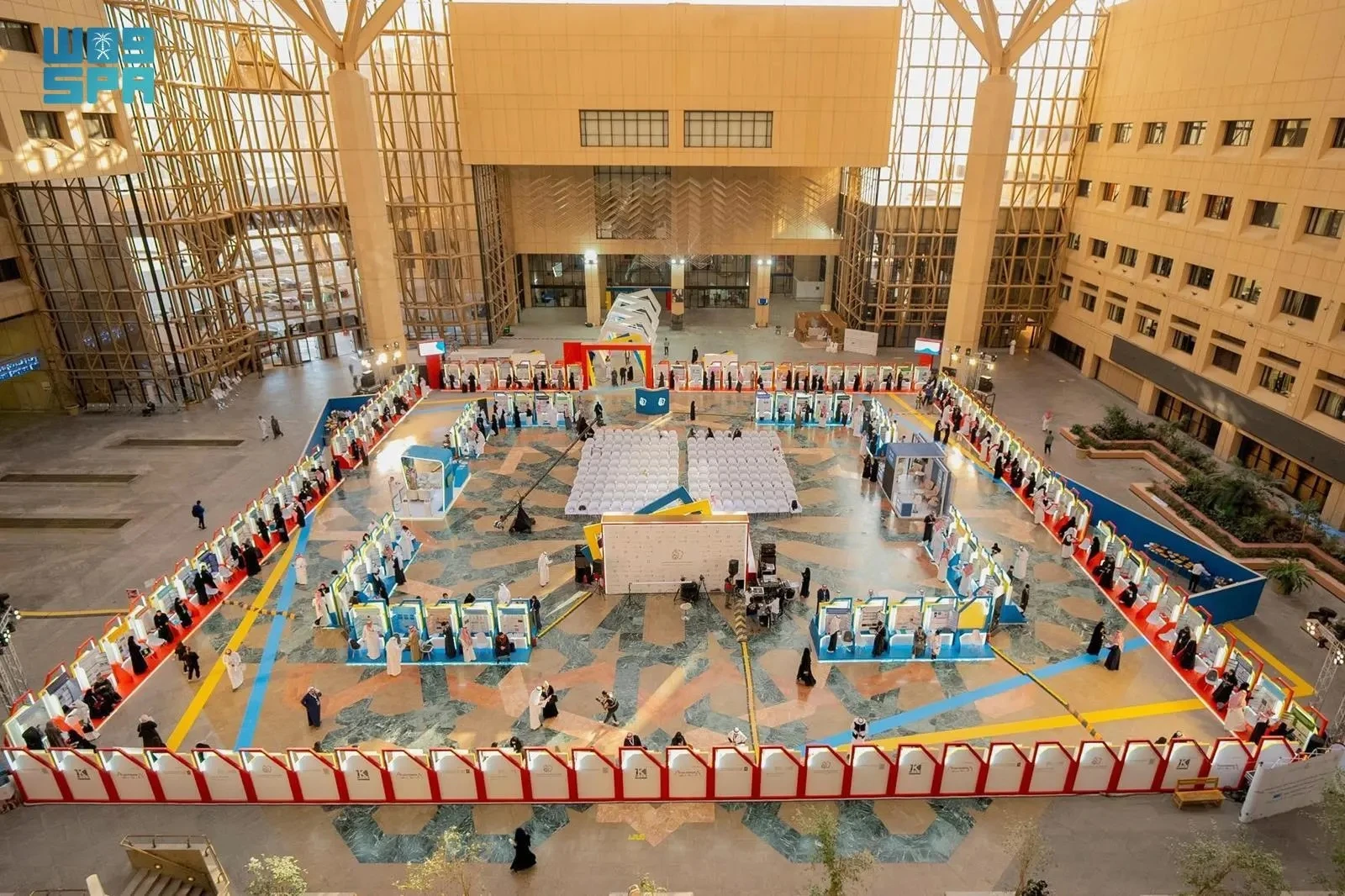
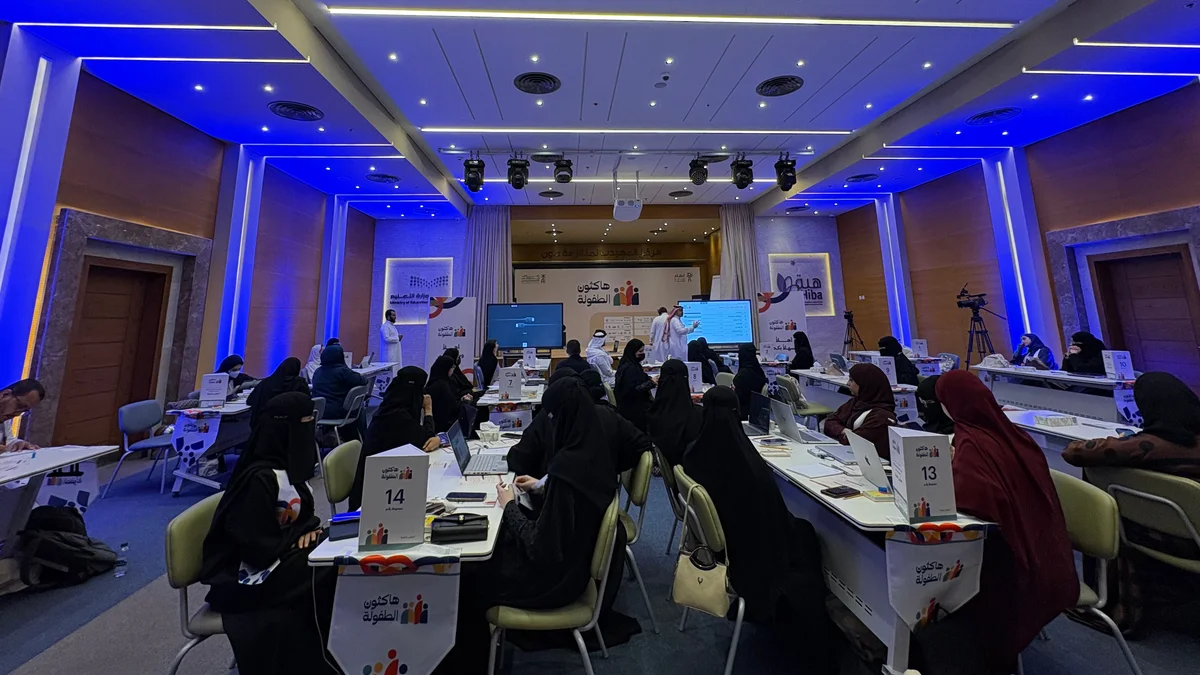
DHAHRAN: Sixteen teams gathered in Dhahran on Sunday for Saudi Arabia’s first Childhood Hackathon, developing innovative solutions to challenges affecting children across the Kingdom.
The four-day hackathon will bring together participants who will help solve a pressing issue in the community in relation to children.
Hosted at the Almuhaidib Down Syndrome Center and organized by Inmaa Childhood Care Association, the initiative is supported by Eastern Region Gov. Prince Saud bin Naif bin Abdulaziz, as well as several local and regional entities.
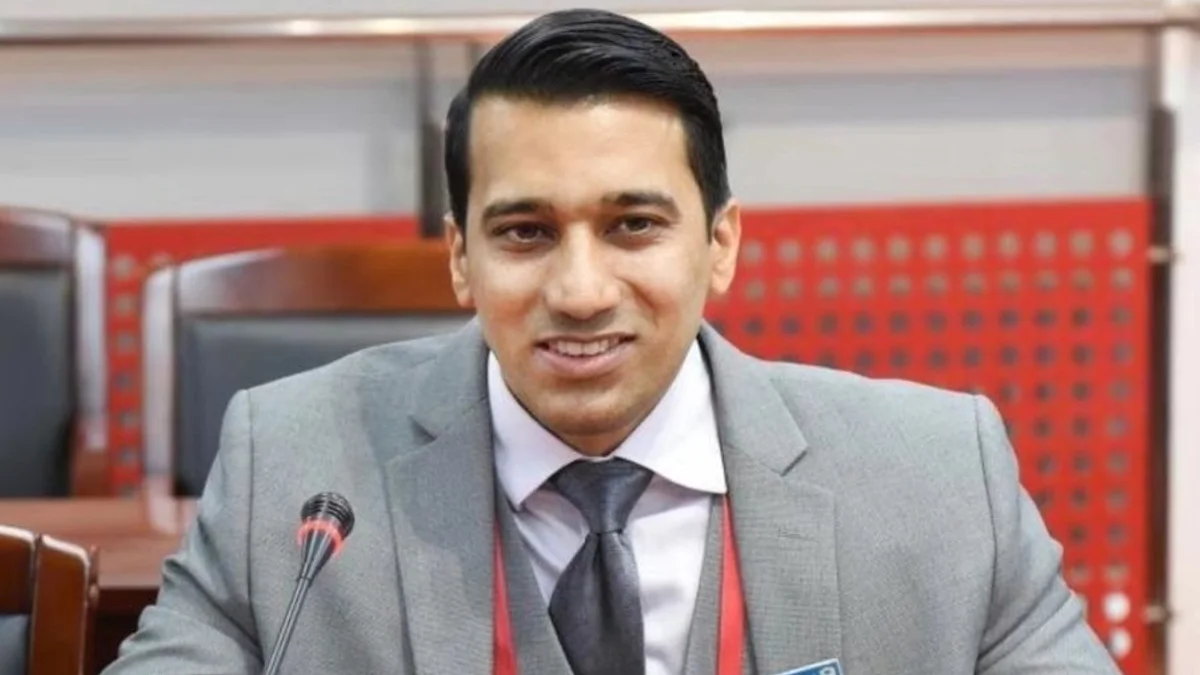
Executive director Abdulrahman Khudair Alkhudair gave Arab News an exclusive tour of the space, in which the teams were populating their projects.
“This is considered the first hackathon dedicated to childhood on a national level in the Kingdom and aligns with the current focus, as Saudi Arabia designated 2026 as the Year of Artificial Intelligence,” he said.
“Regarding this hackathon, it is also unique because it aligns with the Kingdom’s digital transformation, as we aim to innovate programs with a sustainable impact for those working with children. Instead of creating a program that serves only a small group — say, 40 or 50 people — we strive to develop initiatives that reach a much larger audience. This hackathon can achieve that,” he said.
They received 761 team registrations upon the call for pitches last month, each with a proposed project designed to benefit children or those who work with them.
The 16 teams comprise three to five members each, mostly from the Eastern Province, and aim to develop solutions to challenges affecting children across the Kingdom.
The participants include university students as well as university professors — some of whom are experts in technology and childhood-related fields.
As for the competition itself, the teams are vying for cash prizes: a first-place prize of SR30,000 ($7,977) along with other two awards — bringing the total prize pool to SR60,000.
“In the Eastern Province alone, there are 1.5 million children, which we classify as up to age 18. When you consider this figure — and this is just for the Eastern Province, not the entire Kingdom — one has to ask: what kind of effort, perhaps technological in nature, is required to reach them all? Even if we were to establish a thousand organizations, we still wouldn’t be able to cover 1.5 million children,” he said.
Arab News spoke to one participating group, that did not only think out of the box but went all the way to outer space.
Prof. Soha Mansour, lecturer at the College of Science and Humanities in the Department of Early Childhood at Imam Abdulrahman Bin Faisal University in Jubail, talked to Arab News about her group, made of four of her senior students.
“Our project began by asking: ‘What does society need?’ We realized that most existing ideas were quite traditional, so we sought to move beyond conventional approaches,” she said. “We considered the field of space exploration. Children are introduced to basic concepts such as the planets in our solar system from a young age. Yet, no one addresses future careers in this field or fosters this curiosity they have from kindergarten.”
The core idea was to build a comprehensive space-themed simulation tailor-made for kindergarteners, between ages four to six.
“We designed it to include several distinct zones: an exploration area, a maintenance and repair lab, and finally, a command deck — complete with computers and various pieces of equipment. We also included a dedicated area for putting on spacesuits.”
They used artificial intelligence to help with this and to create visuals, including a videos with a young explorer they named Saud.
They immediately started on the idea upon seeing the prompt posted on social media last month and commuted nearly an hour each way from Jubail to be there in-person.
Mansour’s student and team member Manal Al-Shammari said: “Through this simulation, we create a smart and safe space environment where children can explore through realistic tasks.
“This fosters scientific thinking, spatial reasoning, teamwork, and discovery within various sectors of space exploration,” she told Arab News.
Her classmate Hasana Abed added: “We chose the topic of space exploration and in doing so, we set several objectives: our goal goes beyond simply teaching children about space; we aim to spark a passion for science and technology from a young age, identify talents early on, and help cultivate a generation capable of leading the future of the space sector in the Kingdom.”
Remas El-Backmi said: “Our team focused on kindergarteners. Although they are not the primary decision-makers, our project’s development and the various stages we undertook were guided by their actual needs and expectations. We created an engaging educational experience catering to the developmental characteristics of young children.”
Their teammate Rimas Al-Zahrani summed it up best.
“As a team, we noticed that children's curiosity about space is very strong, but what is currently available to them is limited to just abstract pictures and verbal, theoretical explanations. These do not satisfy their imagination nor do they build real skills. We are making learning about space immersive, interactive and fun.”
That team, along with all others competing, will have a chance to present their projects in front of the complete cohort on Nov. 11 when the hackathon ends.
The top three groups will receive the cash prizes and further support in bringing those ideas to life.
“But perhaps the biggest win of all is the gift of offering a better future for children,” Alkhudair said.